Global Whey Protein Market Size, Share, Trends & Growth Forecast Report Segmented By Type (Isolates, Concentrates, Hydro Lysate), Application (Nutritional, Personal Care, Feed, Food), And Region (North America, Europe, APAC, Latin America, Middle East And Africa) – Industry Analysis From 2026 To 2034
Global Whey Protein Market Size
The global whey protein market size was calculated to be USD 9.35 billion in 2025 and is anticipated to be worth USD 18.85 billion by 2034 from USD 10.11 billion in 2026, growing at a CAGR of 8.10% during the forecast period.
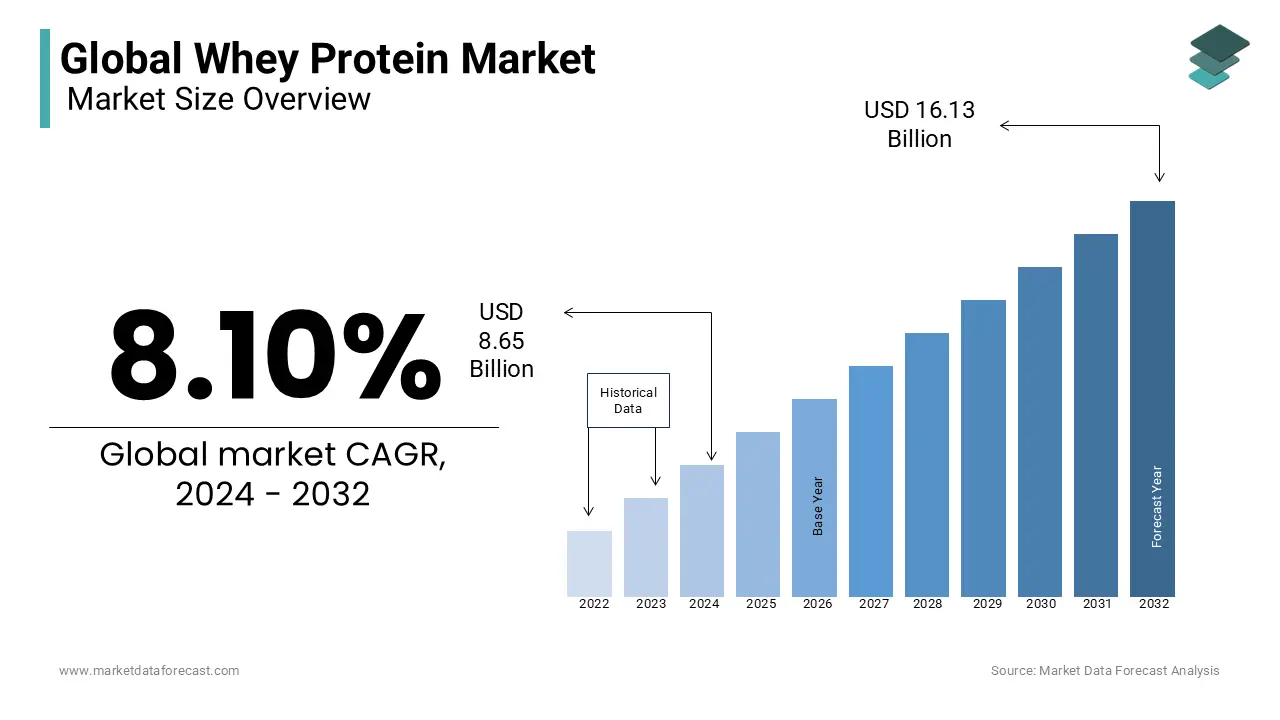
The Whey Protein is derived as a byproduct of cheese production with high biological value and rapid absorption. Predominantly utilized in sports nutrition, clinical nutrition, and weight management, whey protein exists in three primary forms: concentrate, isolate, and hydrolysate. Its significance extends beyond athletic communities, increasingly being integrated into medical dietary regimens for elderly populations and patients recovering from malnutrition.
MARKET DRIVERS
Rising Prevalence of Protein Deficiency and Sarcopenia Driving Medical Utilization
The escalating global burden of protein-energy malnutrition and age-related muscle loss among geriatric populations is driving the growth of the whey protein market. According to the World Health Organization, over 14 million adults aged 65 and above in the European Union suffer from sarcopenia, which is a condition marked by progressive loss of muscle mass and function, where whey protein supplementation has demonstrated efficacy in preserving lean tissue.
Expansion of Fitness Culture and Growth in Recreational Gym Participation
The worldwide proliferation of fitness consciousness and structured physical activity regimens is likely to leverage the growth of the whey protein market. As per the International Health, Racquet & Sportsclub Association (IHRSA), global health club membership surpassed 220 million in 2023, reflecting a 12% increase since 2019, with countries like India and Brazil witnessing the most rapid growth in gym enrollment. This behavioral shift is closely linked to increased protein supplementation, with surveys conducted by the Council for Responsible Nutrition indicating that 43% of U.S. adults regularly consume protein supplements, predominantly whey-based. The integration of fitness apps, wearable technology, and social media fitness influencers further amplifies consumer awareness and normalizes protein supplementation across diverse age groups.
MARKET RESTRAINTS
Lactose Intolerance and Dairy Allergies Limiting Consumer Accessibility
The high prevalence of lactose intolerance and cow’s milk protein allergy in specific ethnic and regional populations is limiting the growth of the whey protein market. Additionally, as per the European Academy of Allergy and Clinical Immunology, cow’s milk allergy affects nearly 2–3% of infants in developed nations, many of whom carry sensitivities into adulthood, thereby excluding them from conventional whey products. These physiological barriers necessitate costly processing techniques like ultrafiltration and enzymatic hydrolysis to reduce allergenicity, increasing production complexity and limiting market penetration in price-sensitive regions.
Environmental Concerns Associated with Dairy Farming Practices
Sustainability challenges linked to dairy production are additionally hindering the growth of the whey protein market. As per the United Nations Environment Programme, global dairy farming accounts for approximately 4% of total anthropogenic greenhouse gas emissions, with methane from enteric fermentation and manure management being the primary contributors. Additionally, as per the Food and Agriculture Organization, dairy systems require nearly 1,000 liters of water to produce one liter of milk, raising concerns about resource intensity, particularly in water-stressed regions such as the Middle East and North Africa. Consumers, especially in Western Europe and North America, are increasingly scrutinizing the ecological footprint of animal-derived proteins. These environmental pressures compel the whey industry to invest in carbon-neutral dairies and circular processing models to maintain consumer trust and regulatory compliance.
MARKET OPPORTUNITIES
Innovation in Clinical and Medical Nutrition Applications
The expanding integration of whey protein into evidence-based clinical nutrition protocols is creating new opportunities for the growth of the whey protein market. A multicenter trial published in Clinical Nutrition demonstrated that patients receiving whey supplementation before surgery experienced a 27% reduction in postoperative complications. Furthermore, the growing incidence of chronic diseases such as chronic obstructive pulmonary disease (COPD) and cancer cachexia, which affect over 250 million people globally as per the World Health Organization, creates a robust demand for specialized nutritional support. Manufacturers are now collaborating with healthcare providers to develop medical foods with standardized whey profiles, opening high-margin avenues in regulated healthcare channels.
Emergence of Emerging Markets with Rising Disposable Incomes
The socioeconomic transformation in emerging economies, where rising middle-class populations are adopting Westernized wellness routines, is substantially enhancing the growth of the whey protein market. In India, e-commerce platforms reported a 35% surge in whey protein sales between 2021 and 2023, driven by urban millennials and digital fitness adoption. Additionally, the proliferation of localized brands offering regionally tailored flavors and affordable sachet packaging has lowered entry barriers.
MARKET CHALLENGES
Supply Chain Volatility Due to Dairy Commodity Fluctuations
The inherent instability of dairy supply chains, which are susceptible to climatic, geopolitical, and economic disruptions, is hampering the growth of the whey protein market. Similarly, the Russia-Ukraine conflict disrupted 15% of Europe’s dairy feed supply, increasing production costs for Western European dairies as per the European Milk Board. These fluctuations directly impact whey protein pricing and availability, complicating long-term procurement planning for manufacturers. Moreover, seasonal variations in milk yield, with up to 20% lower production during summer months in temperate zones, necessitate strategic inventory management.
Increasing Regulatory Scrutiny on Labeling and Ingredient Transparency
Stringent regulatory oversight on nutritional labeling and product claims is greatly influencing the growth of the whey protein market. As per the U.S. Food and Drug Administration, over 30% of protein supplements tested in 2022 contained discrepancies between labeled and actual protein content, prompting tighter compliance requirements. Additionally, China’s State Administration for Market Regulation introduced new dietary supplement labeling rules in 2023, demanding full disclosure of processing aids and allergens. These evolving standards necessitate substantial investment in quality assurance, third-party testing, and regulatory affairs teams.
REPORT COVERAGE
| REPORT METRIC | DETAILS |
| Market Size Available | 2025 to 2034 |
| Base Year | 2025 |
| Forecast Period | 2026 to 2034 |
| CAGR | 8.10% |
| Segments Covered | By Type, Application, And Region |
| Various Analyses Covered | Global, Regional, and Country Level Analysis; Segment-Level Analysis; DROC; PESTLE Analysis; Porter’s Five Forces Analysis; Competitive Landscape; Analyst Overview of Investment Opportunities |
| Regions Covered | North America, Europe, APAC, Latin America, Middle East & Africa |
| Market Leaders Profiled | Hilmar Cheese Company, Maple Island Inc, Glanbia, Saputo Inc, Davisco Foods International Inc, Alpavit, Fonterra Cooperative Group Ltd, Milk SpecialityGlobals, Wheyco Gmbh, Milkaut SA |
SEGMENTAL ANALYSIS
By Type Insights
Whey Protein Concentrate segment was the largest and held 58.2% of the global whey protein market share in 2025 with the cost-efficiency and broad applicability across multiple industries. WPC, typically containing 34–80% protein, is widely favored in mass-market nutritional supplements and functional foods due to its lower production cost compared to isolates and hydrolysates. According to the U.S. Department of Agriculture, the average production cost of WPC is 25–30% lower than that of whey protein isolate (WPI), making it the preferred choice for budget-conscious brands in emerging economies.
Whey Protein Isolate segment is growing with an expected CAGR of 9.4% during the forecast period with the rising consumer demand for high-purity, low-lactose protein products, particularly among fitness enthusiasts and medically sensitive populations. WPI contains over 90% protein and less than 1% lactose, rendering it suitable for lactose-intolerant individuals, a demographic that comprises an estimated 68% of the global population according to the National Institutes of Health. Furthermore, the surge in clinical nutrition applications has elevated WPI’s relevance; a 2022 study published in Clinical Nutrition found that 81% of medical protein supplements used in European hospitals contain whey isolate due to its superior bioavailability and rapid absorption kinetics.
By Application Insights
The nutritional application segment dominated the whey protein market by capturing a prominent share in 2025 with the escalating focus on dietary protein intake for muscle synthesis, weight management, and metabolic health. The integration of whey into sports nutrition products is particularly pronounced, with the Council for Responsible Nutrition reporting that 45% of American adults use protein supplements, primarily for fitness and recovery purposes.
The personal care segment is likely to grow with an expected CAGR of 10.2% in the coming years with the bioactive properties of whey peptides in skin regeneration and anti-aging formulations. Whey-derived lactoferrin and glycomacropeptides have demonstrated collagen-stimulating effects, with clinical trials by the Japanese Society of Anti-Aging Medicine showing a 29% improvement in skin elasticity after eight weeks of topical whey application. Additionally, consumer preference for natural, bio-sourced ingredients is accelerating adoption.
REGIONAL ANALYSIS
North America Market Analysis
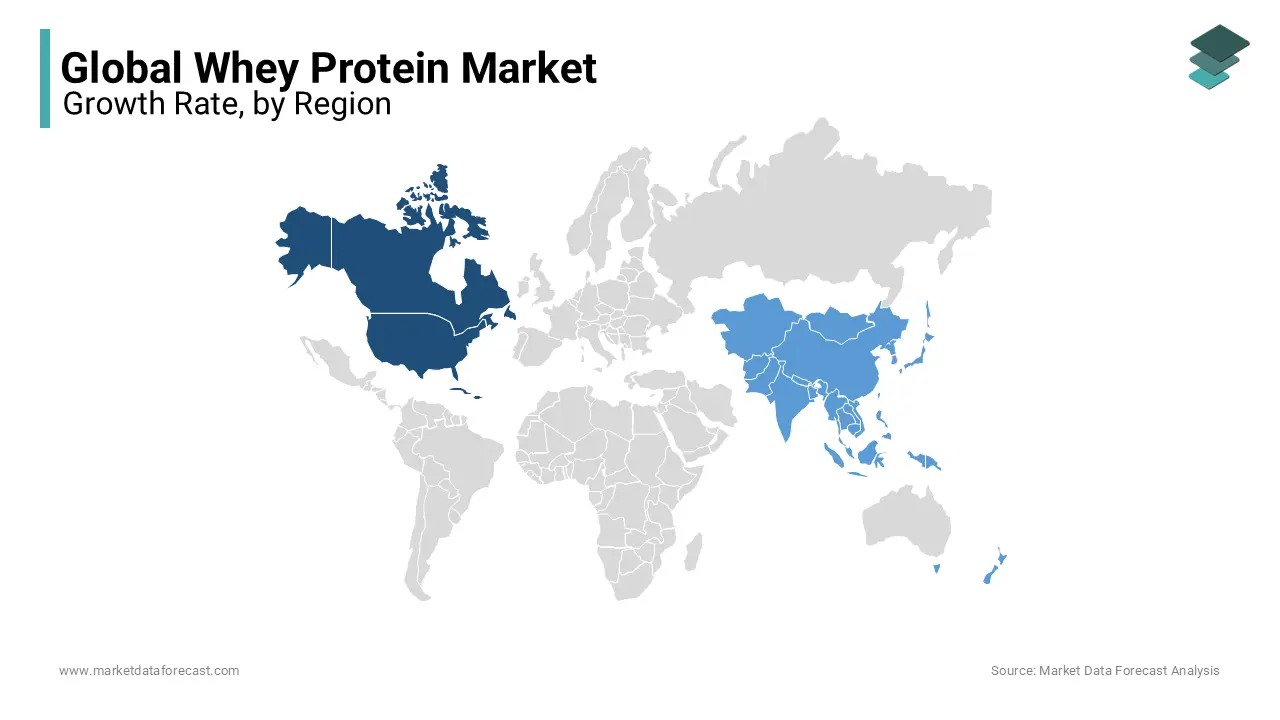
North America was the top performer in the whey protein market by capturing 34.3% of share in 2025 with deeply entrenched fitness culture and robust regulatory frameworks that ensure product integrity. The United States alone accounts for over 80% of regional consumption, with the Council for Responsible Nutrition indicating that 52 million Americans regularly consume whey-based supplements. The integration of whey into meal replacement bars and clinical nutrition products has been amplified by rising obesity rates. According to the Centers for Disease Control and Prevention, 41.9% of U.S. adults are obese, driving demand for high-protein, low-calorie diets. Furthermore, partnerships between supplement brands and telehealth platforms have enabled personalized nutrition plans by enhancing consumer adherence and market penetration.
Europe Market Analysis
Europe whey protein market growth is likely to grow with the stringent food safety standards and a strong tradition of dairy innovation. Germany, the Netherlands, and France are the primary consumption hubs, with Germany alone contributing 22% of regional sales due to its high health consciousness and aging population. The European Society for Clinical Nutrition and Metabolism reveals that 34% of hospital patients in Germany receive whey-enriched diets to combat malnutrition. Additionally, the EU’s Farm to Fork Strategy has incentivized sustainable dairy processing, enabling whey valorization and reducing waste.
Asia-Pacific (APAC) Market Analysis
The Asia-Pacific whey protein market growth is likely to grow with the rapid urbanization and rising disposable incomes in India, China, and Indonesia. China’s State Administration for Market Regulation has approved over 1,200 whey-based health food products since 2020, reflecting regulatory support for functional nutrition.
Latin America
Latin America whey protein market growth is likely to grow with Brazil and Mexico leading regional adoption. Additionally, public health initiatives are beginning to incorporate protein fortification; the Pan American Health Organization notes that 12 Latin American countries have introduced whey-fortified school feeding programs to combat childhood malnutrition, which is benefiting over 8 million children.
Middle East and Africa (MEA) Market Analysis
The Middle East and Africa whey protein market growth is likely to grow in the coming years. Gulf Cooperation Council (GCC) nations, particularly the UAE and Saudi Arabia, are spearheading demand due to government-backed fitness initiatives like Saudi Vision 2030, which aims to increase physical activity participation to 40% of the population by 2030. The Dubai Health Authority reports a 25% annual increase in supplement sales since 2021, driven by expatriate communities and youth engagement in bodybuilding.
COMPETITION OVERVIEW
The whey protein market exhibits intense competition characterized by technological differentiation, brand loyalty, and rapid innovation. While established dairy processors dominate ingredient supply, specialized nutrition companies are gaining ground through niche formulations and direct-to-consumer models. Competitive advantage is increasingly derived from clinical validation, supply chain transparency, and digital engagement rather than price alone. The convergence of sports nutrition, medical foods, and personal care applications has expanded battlegrounds beyond traditional supplements. Companies are investing heavily in R&D to develop bioactive peptides and improved delivery systems.
KEY MARKET PLAYERS
Some of the companies that are playing a dominating role in the global cookware market include
- Hilmar Cheese Company
- Maple Island Inc
- Glanbia
- Saputo Inc
- Davisco Foods International Inc
- Alpavit
- Fonterra Cooperative Group Ltd
- Milk SpecialityGlobals
- Wheyco Gmbh
- Milkaut SA
Top Strategies Used By Key Market Participants
Key players in the whey protein market are deploying vertical integration, strategic partnerships, product innovation, geographic expansion, and sustainability certification as core growth strategies. Companies are acquiring dairy cooperatives or investing in proprietary processing facilities to control quality and reduce dependency on third-party suppliers. Collaborations with fitness platforms, healthcare institutions, and e-commerce retailers are enhancing consumer reach and brand credibility. Product differentiation through low-lactose, allergen-free, and flavored variants is addressing diverse dietary needs. Expansion into emerging markets is being accelerated through localized manufacturing and culturally adapted formulations. Additionally, obtaining carbon-neutral certifications and promoting regenerative farming practices are strengthening brand equity amid rising environmental consciousness among consumers and regulators.
Leading Players in the Whey Protein Market
Glanbia Nutritionals
Glanbia Nutritionals has established a formidable presence in the Asia Pacific whey protein landscape through strategic collaborations and localized innovation. The company operates advanced manufacturing facilities in New Zealand, leveraging the region’s high-quality dairy supply to serve both regional and global markets. In 2023, Glanbia launched a tailored line of low-lactose whey isolates for the Southeast Asian market, addressing rising consumer sensitivity concerns. It has also partnered with fitness platforms in India and Australia to integrate its protein formulations into digital wellness programs.
Fonterra Co-operative Group
Fonterra has emerged as a pivotal player in the Asia Pacific whey protein sector, capitalizing on New Zealand’s premium dairy reputation and sustainable farming practices. The company supplies bulk whey ingredients to major supplement brands across China, Indonesia, and Vietnam, while also developing value-added solutions for infant nutrition and medical foods. In 2022, Fonterra inaugurated a dedicated whey processing hub in Tauranga to increase the output of high-purity isolates. It has also engaged in public-private partnerships in Thailand and the Philippines to fortify community nutrition programs with whey-enriched products.
Darling Ingredients Inc.
Darling Ingredients has strategically expanded its footprint in the Asia Pacific whey protein market by integrating advanced bioprocessing technologies with global supply chain logistics. Though traditionally known for animal byproduct valorization, the company has redirected focus toward high-value human nutrition, particularly in hydrolyzed whey peptides for clinical and sports applications. In 2023, Darling launched a joint venture with a South Korean biotech firm to develop bioactive whey fractions for anti-aging and immune-support supplements. The company has also enhanced its cold-chain distribution network across Japan and Australia to ensure product integrity.
MARKET SEGMENTATION
This research report on the global whey protein market has been segmented and sub-segmented based on type, application, & region.
By Type
- Isolates
- Concentrates
- Hydro lysate
By Application
- Nutritional
- Personal Care
- Food
- Feed
By Region
- North America
- Europe
- Asia-Pacific
- Latin America
- Middle East and Africa
Frequently Asked Questions
1. What are the key trends shaping the whey protein market?
Key trends shaping the whey protein market include the demand for clean-label and natural ingredients, increasing consumer preference for plant-based alternatives, product innovation focused on flavor variety and functionality, strategic partnerships and collaborations among industry players, and the rising popularity of personalized nutrition solutions.
2. What are the opportunities for growth and innovation in the whey protein market?
Opportunities for growth and innovation in the whey protein market include expanding into new application areas such as sports nutrition, clinical nutrition, and infant formula, developing value-added products with enhanced functionality and nutritional benefits, exploring emerging markets in developing countries, and investing in research and development to uncover new health benefits and applications for whey protein.
3. What are some challenges facing the whey protein industry?
Challenges facing the whey protein industry include fluctuations in raw material prices, competition from alternative protein sources, concerns regarding allergen city and intolerance, regulatory complexities, and the need for sustainable sourcing and production practices to address environmental concerns.
4. What are the major types of whey protein?
The main types include whey protein concentrate (WPC), whey protein isolate (WPI), and whey protein hydrolysate (WPH).
5. What are the key applications of whey protein?
Whey protein is widely used in sports nutrition, dietary supplements, infant formula, functional foods, bakery products, and dairy beverages.
6. What factors are driving growth in the whey protein market?
Rising health awareness, increasing gym and fitness participation, growing demand for protein-rich diets, and expanding sports nutrition consumption are major growth drivers.
7. Who are the primary consumers of whey protein?
Athletes, bodybuilders, fitness enthusiasts, elderly consumers, and individuals following high-protein or weight-management diets are key consumers.
8. Which regions dominate the whey protein market?
North America and Europe lead the market due to strong sports nutrition demand, while Asia-Pacific shows rapid growth potential.
9. What are the key distribution channels?
Health stores, supermarkets, specialty nutrition stores, pharmacies, and online retail channels dominate distribution.
10. What is the future outlook of the whey protein market?
The market is expected to grow steadily, supported by rising protein consumption trends, functional food demand, and expanding fitness culture worldwide.
Related Reports
Access the study in MULTIPLE FORMATS
Purchase options starting from
$ 2500
Didn’t find what you’re looking for?
TALK TO OUR ANALYST TEAM
Need something within your budget?
NO WORRIES! WE GOT YOU COVERED!
Call us on: +1 888 702 9696 (U.S Toll Free)
Write to us: sales@marketdataforecast.com