- Product Description Description
- Table of Contents TOC
- List of Table & Figure LOT
- Get Free Sample PDF Sample PDF
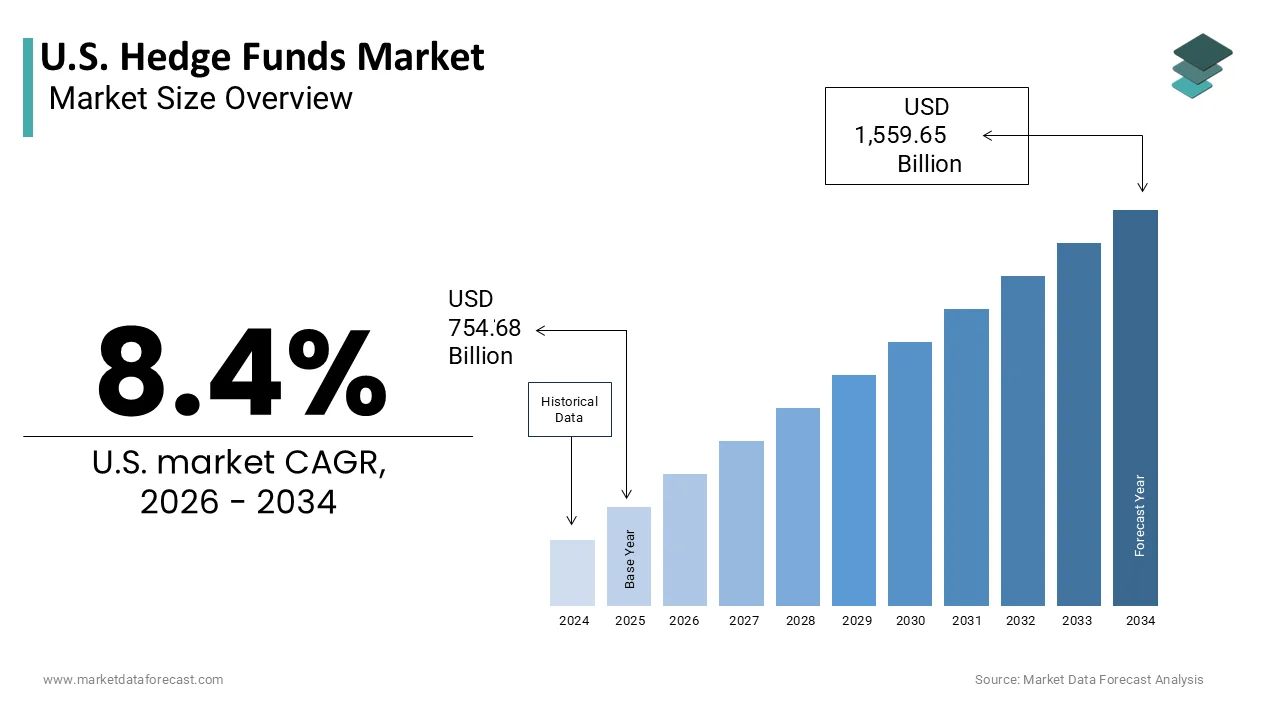
Market Size, 2025
$754.68 BnMarket Estimate, 2026
$818.07 BnMarket Forecast, 2034
$1,559.65 BnCAGR, 2026–2034
8.4%Executive Summary: U.S. Hedge Funds Market
- Market Scope: Comprehensive analysis of the U.S. hedge funds sector, covering fund types, investment methods, institutional and individual end-users, regional dynamics (New York, California, Connecticut, Illinois), and competitive industry landscapes.
- Market Valuation: Valued at USD 754.68 billion in 2025, estimated to reach USD 818.07 billion in 2026, and projected to expand to USD 1,559.65 billion by 2034, growing at a steady CAGR of 8.40% from 2026 to 2034.
- Primary Growth Drivers: Increasing allocation by institutional investors seeking portfolio diversification and the adoption of advanced quantitative strategies utilizing artificial intelligence and machine learning.
Key Market Segment Metrics
| Category | Leading Segment (Base Position) | Fastest-Growing / High-Growth Segment |
|---|---|---|
| By Type | Domestic Hedge Funds (occupied 45.3% share in 2025 due to robust regulatory frameworks and institutional capital concentration) | Fund of Funds (fastest CAGR of 6.5% driven by demand for multi-strategy diversification and top-tier manager access) |
| By Method | Long and Short Equity (accounted for 56.4% share in 2025 leveraging fundamental stock selection and risk management) | Event-Driven Strategy (fastest CAGR of 7.2% fueled by robust merger and acquisition activity across corporate markets) |
| By End User | Institutional Investors (held a major share in 2025 backed by massive asset scales of public/private pensions and endowments) | Individual Investors (fastest CAGR of 8.0% enabled by the democratization of alternative products like liquid alternatives and ETFs) |
| By Region / Country | United States / New York & Connecticut (primary global financial nerve centers hosting major hedge fund headquarters) | California & Illinois (high-growth hubs expanding quantitative trading, tech integration, and private credit solutions) |
Major Market Players & Industry Landscape
Market Structure: Highly competitive landscape balancing large multi-strategy powerhouses utilizing massive technological resources with specialized boutique firms targeting niche market alphas.
Key Companies: Bridgewater Associates LP, Citadel LLC, Millennium Management LLC, Renaissance Technologies LLC, D. E. Shaw & Co., L.P., Two Sigma Investments LP, AQR Capital Management LLC, Point72 Asset Management LP, Elliott Investment Management L.P., Balyasny Asset Management LP, Tiger Global Management LLC, and Davidson Kempner Capital Management LP.
 Download Free Sample Report
U.S. Hedge Funds Market Size
The United States Hedge Funds Market was valued at USD 754.68 billion in 2025, is estimated to reach USD 818.07 billion in 2026, and is projected to reach USD 1,559.65 billion by 2034, growing at a CAGR of 8.4% from 2026 to 2034.
The hedge funds employ diverse and often complex strategies to generate absolute returns. These entities operate with significant flexibility, allowing them to utilize leverage,e short selling,, ng and derivatives across various asset classes, including equities, fixed income,e commodities, and currencies. As per data from the Securities and Exchange Commission, the number of registered investment advisers managing private funds has seen consistent growth, reflecting the enduring appeal of these vehicles among institutional investors and high-net-worth individuals. This ecosystem thrives on the expertise of portfolio managers, who navigate volatile market conditions with strategies designed to mitigate downside risk, while capturing upside potential. The regulatory environment remains stringent yet adaptive, ensuring transparency and investor protection without stifling innovation. Their ability to adapt to macroeconomic shifts makes them indispensable components of diversified investment portfolios.
MARKET DRIVERS
Increasing Allocation by Institutional Investors Seeking Diversification
The institutional investors, such as pension funds, endowments, trusts, and insurance companies, are increasingly allocating capital to hedge funds to enhance portfolio diversification and reduce overall volatility. This trend is driven by the need to achieve target returns ilow-yieldield environment, where traditional fixed-income instruments offer limited upside. The strategic shift reflects a broader recognition of the uncorrelated return profiles that hedge funds can provide relative to public equity and bond markets. The long-term liability matching requirements of pension plans, which seek stable returns irrespective of market cycles. The large public pension funds have gradually increased their exposure to alternative assets over the past decade to bridge funding gaps. The complexity of modern financial markets necessitates specialized management skills that hedge fund managers possess, enabling them to exploit inefficiencies and arbitrage opportunities.
Adoption of Advanced Quantitative Strategies and Artificial Intelligence
The integration of artificial intelligence and machine learning into investment processes by attracting capital from tech-savvy investors is accelerating the growth of the United States hedge fund market. These advanced quantitative strategies enable managers to analyze vast datasets, identify patterns, and execute trades with speed and precision that surpass human capabilities. According to a survey by BarclayHedge, nearly 60% of hedge fund managers reported using some form of machine learning or artificial intelligence in their investment decision-making processes. This technological evolution allows for the development of sophisticated models that can predict market movements and manage risk more effectively. The demand for such strategies is fueled by the increasing availability of alternative data sources, including satellite imagery, social media sentiment, ent and credit card transactions. As per the Alternative Investment Management Association, funds employing quantitative strategies have demonstrated resilience during periods of stress due to their systematic approach. The ability to process information in real time provides a competitive edge in capturing fleeting market opportunities. This technological arms race encourages continuous innovation and attracts talent from the technology sector, further enhancing the intellectual capital within the industry. Investors are drawn to the potential for superior risk-adjusted returns offered by these data-driven approaches.
MARKET RESTRAINTS
Stringent Regulatory Compliance and Reporting Requirements
The evolving landscape of regulatory compliance and reporting obligations, which increase operational costs and complexity, is hampering the growth of the United States hedge fund market. Following the implementation of the Dodd-Frank, Wall Street Reform, and Consumer Protection Act, hedge fund advisers are subject to enhanced scrutiny by the Securities and Exchange Commission. According to the Securities and Exchange Commission, registered investment advisers must file detailed Form PF reports providing regulators with comprehensive data on their assets, liabilities, es and risk exposures. These requirements impose a substantial administrative burden on firms, particularly smaller entities that lack the resources to maintain dedicated compliance teams. The cost of regulatory adherence includes hiring legal experts, investing in compliance software,e and undergoing regular audits. This financial strain can erode profit margins and limit the ability of firms to invest in new strategies or technologies. Furthermore, the global nature of hedge fund operations means they must navigate a patchwork of international regulations, including the European Union Alternative Investment Fund Managers Directive. This fragmented regulatory environment creates uncertainty and complicates cross-border marketing efforts. The threat of stricter regulations looms large as policymakers continue to monitor systemic risks posed by large leveraged positions.
High Fee Structures and Performance Pressure
The traditional fee structure of hedge funds, characterized by management and performance fees,s faces increasing scrutiny and resistance from investors demanding greater value alignment. This factor is hampering the growth of the United States hedge fund market. As per the research, the average net return for hedge funds has hovered around 6% annually over the past decade, which is comparable to or lower than certain equity indices after fees. This performance gap has led to a rise in fee concessions, including lower management fees and higher hurdle rates before performance fees are applied. As per the Hedge Fund Research Index, many investors are negotiating fee breaks based on asset tiers or locking in lower rates for longer commitment periods. The pressure to deliver alpha in an efficient market environment is intensifying, making it difficult for managers to justify high fees. Additionally, the transparency demands of institutional investors require detailed breakdowns of costs and performance attribution, further straining manager-investor relationships. The inability to consistently beat the market after fees has resulted in capital outflows from underperforming funds.
MARKET OPPORTUNITIES
Expansion into Private Credit and Direct Lending Opportunities
The emergence of hedge funds with private credit and direct lending, as traditional banks retreat from certain lending activities, is setting up new opportunities for the growth of the United States hedge fund market. Hedge funds are leveraging their expertise in risk assessment and structuring to provide financing solutions to companies and distressed entities. Hedge funds can capitalize on their ability to move quickly and structure bespoke deals that traditional lenders may avoid. The flexibility of hedge fund structures allows them to hold illiquid assets for longer periods, aligning with the nature of private credit investments. This expansion diversifies revenue streams beyond traditional trading strategies and provides a steady income component through interest payments. The growing appetite for alternative credit among institutional investors seeking uncorrelated returns further supports this trend. Hedge funds are also exploring opportunistic credit strategies involving distressed debt and special situations. These areas offer the potential for high returns through active workout and restructuring efforts.
Integration of Environmental, Social and Governance Criteria
The incorporation of environmental, al social, and governance criteria into investment processes offers hedge funds a pathway to attract capital from socially conscious investors and mitigate long-term risks. The integration of environmental, social, and governance criteria at the level of the growth of the United States hedge fund market. Hedge funds are developing specialized strategies that focus on companies with strong sustainability profiles or those transitioning to greener business models. This trend is not merely ethical but also financial, as companies with robust governance and environmental practices tend to exhibit lower volatility and better long-term performance. Hedge funds can leverage their active management capabilities to engage with company management on sustainability issues, driving positive change and unlocking value. The demand for transparent impact reporting is pushing hedge funds to adopt standardized metrics and third-party verification. This evolution opens up new client segments,s including family offices and foundations with specific mission-related investment goals. The regulatory push towards climate risk disclosure also favors funds that are ahead of the curve in integrating these factors. The alignment of financial returns with positive societal impact creates a compelling narrative for capital allocation.
MARKET CHALLENGES
Talent Acquisition and Retention in a Competitive Landscape
The attracting and retaining top-tier talent amidst intense competition from technology firms and other financial sectors is likely to be a challenge for the growth of the United States hedge fund market. The skill set required for modern hedge fund management includes advanced quantitative analysis p, programming, and data science, which are highly sought after in the tech industry. According to the Bureau of Labor Statistics, the employment of financial analysts and software developers is projected to grow much faster than the average for all occupations, driving up compensation expectations. Hedge funds must offer competitive compensation packages, including substantial bonuses and equity stakes, to secure skilled professionals. The loss of key portfolio managers or researchers can significantly impact fund performance and investor confidence. The cultural shift towards remote work and flexible hours also pressures traditional hedge fund structures to adapt their operational models. Younger professionals prioritize purpose and work-life balance, which may conflict with the high-pressure environment of hedge funds. This talent war increases operational costs and distracts management from core investment activities. The scarcity of experienced professionals with a track record of generating alpha further exacerbates the issue. Funds that fail to build a strong and stable team risk losing their competitive edge.
Cybersecurity Threats and Data Privacy Risks
Hedge funds are increasingly vulnerable to cybersecurity threats and data privacy breaches given their reliance on digital infrastructure and sensitive proprietary information. The cybersecurity threats and data privacy risks are additionally hindering the growth of the United States hedge fund market. A successful breach can result in significant financial losses, reputational damage,e and regulatory penalties. Hedge funds must invest heavily in cybersecurity measures, including encryption, multi-factor authentication, and continuous monitoring systems. The complexity of cyber threats requires specialized expertise,se which is scarce and expensive. The interconnectedness of financial systems means that a breach at one firm can have systemic implications. Insurance premiums for cyber liability are rising, reflecting the heightened risk profile. The fear of intellectual property theft discourages collaboration and innovation within the industry. Clients are conducting rigorous due diligence on cybersecurity protocols before allocating capital.
REPORT COVERAGE
| REPORT METRIC | DETAILS |
| Market Size Available | 2025 to 2034 |
| Base Year | 2025 |
| Forecast Period | 2026 to 2034 |
| Segments Covered | By Type, Method, End User, and Region. |
| Various Analyses Covered | Global, Regional and Country-Level Analysis, Segment-Level Analysis, Drivers, Restraints, Opportunities, Challenges; PESTLE Analysis; Porter’s Five Forces Analysis, Competitive Landscape, Analyst Overview of Investment Opportunities |
| Countries Covered | California, Washington, Oregon, New York, United States |
| Market Leaders Profiled | Bridgewater Associates LP, Citadel LLC, Millennium Management LLC, Renaissance Technologies LLC, D. E. Shaw & Co., L.P., Two Sigma Investments LP, AQR Capital Management LLC, Point72 Asset Management LP, Elliott Investment Management L.P., Balyasny Asset Management LP, Tiger Global Management LLC, Davidson Kempner Capital Management LP |
SEGMENTAL ANALYSIS
By Type Insights
The domestic hedge fund segment was the largest by occupying 45.3% of the United States hedge funds market share in 2025 due to the robust regulatory framework and the concentration of institutional capital within the country. According to the Securities and Exchange Commission, registered investment advisers managing domestic funds must adhere to rigorous reporting standards, including the filing of Form PF, which provides regulators with detailed insights into risk exposures. This level of transparency appeals to large institutional investors such as public pension plans,s which are mandated to prioritize fiduciary responsibility. As per the National Association of State Retirement Administrators, public pension funds in the United States hold over 4.5 trillion dollars in assets and increasingly favor domestic structures due to the ease of legal recourse and regulatory alignment. Investors are more willing to allocate significant capital to domestic entities where they can conduct thorough due diligence without the complexities of cross-border legal frameworks. This regulatory environment ensures that domestic funds maintain high standards of governance, which is a factor for long-term capital preservation.
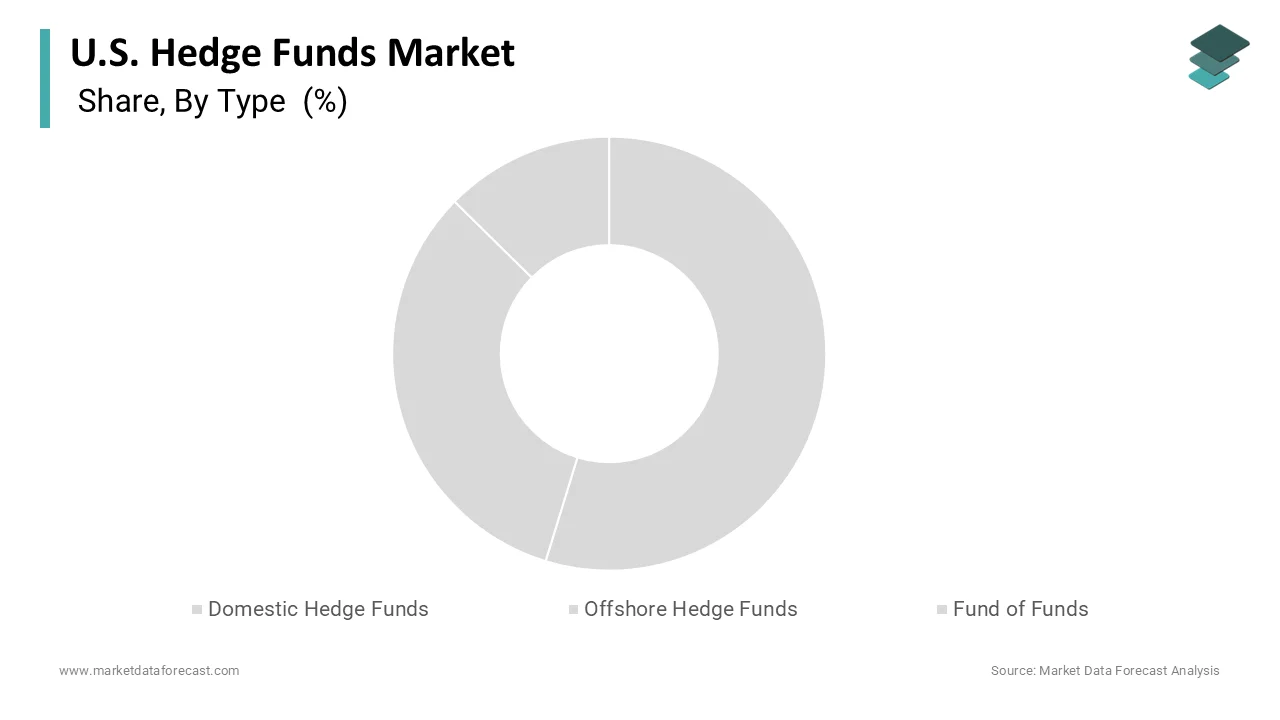
The fund of funds segment is expected to witness the fastest CAGR of 6.5% from 2026 to 2034, owing to the increasing demand for diversified exposure to multiple hedge fund strategies through a single investment vehicle. As per the Alternative Investment Management Association, fund of funds allow access to top-tier managers who may be closed to new direct investors, thereby democratizing access to exclusive opportunities. This structure is especially attractive to family offices and high-net-worth individuals who require professional oversight of their alternative investments. The ability to rebalance allocations dynamically in response to changing market conditions adds another layer of value. Investors benefit from the expertise of the fund of funds manager who possesses specialized knowledge in identifying skilled hedge fund operators. This professional selection process reduces the likelihood of investing in underperforming or fraudulent schemes. The convenience of consolidated reporting and administrative services further enhances the appeal of this segment.
By Method Insights
The long and short equity strategy segment accounted in holding 56.4% of the US hedge funds market share in 2025 due to its fundamental approach to stock selection and risk management. The dominance of the long and short equity segment is driven by the enduring relevance of fundamental stock selection expertise in generating alpha. Managers in this segment utilize deep industry knowledge and financial analysis to identify mispriced securities, which is a skill that remains highly valued despite the rise of quantitative methods. The ability to conduct thorough due diligence on company management, business models, and competitive landscapes provides a sustainable edge. Investors appreciate the transparency of this strategy as the underlying assets are publicly traded equities,s which are easy to value and monitor. The flexibility to adjust net exposure allows managers to protect capital during market downturns while participating in upswings. This adaptability makes long-short equity a core holding in many institutional portfolios. The vast universe of publicly traded companies in the US offers ample opportunities for idea generation. Furthermore, the liquidity of equity markets enables efficient execution of trades, minimizing transaction costs.
The event-driven strategy is projected to register the fastest CAGR of 7.2% during the forecast period, with the robust level of mergers and acquisitions activity in the United States. According to Refinitiv US, merger and acquisition volumes have remained elevated as companies seek growth through consolidation and strategic realignment. Event-driven funds capitalize on these transactions by investing in companies involved in mergers, spin-offs, or acquisitions, aiming to profit from the price discrepancies that arise during the deal process. The complexity of modern deals requires specialized expertise in regulatory approval processes and financing structures, which event-driven managers possess. The availability of dry powder among private equity firms also fuels deal flow, creating more opportunities for event-driven strategies. Investors are drawn to the uncorrelated nature of these returns, which are less dependent on overall market direction. The ability to analyze legal and regulatory risks gives these funds a competitive advantage in executing trades. The increasingly cross-border nature of deals also expands the opportunity set for US-based managers.
By End User Insights
The institutional investors segment held a significant share of the US hedge funds market in 2025, with the massive scale of assets managed by public and private pension funds. According to the Federal Reserve Board, pension funds in the United States hold over 3.5 trillion dollars in assets, representing a significant source of capital for alternative investments. These institutions have long-term investment horizons and liability matching requirements that align well with the lock-up periods and return profiles of hedge funds. The university endowments with large asset bases allocate substantial portions of their portfolios to hedge funds to achieve inflation-beating returns. The fiduciary duty of these institutions mandates a diversified approach to risk management, which hedge funds provide through their low correlation with traditional assets. The professional investment staff employed by these institutions possesses the expertise to evaluate complex hedge fund strategies. This internal capability facilitates larger and more frequent allocations to hedge funds. The collective bargaining power of institutional investors also allows them to negotiate favorable fee terms and liquidity provisions.
The individual investor segment is expected to witness the fastest CAGR of 8.0% from 2026 to 2034, owing to the democratization of hedge fund strategies through liquid alternative mutual funds and exchange-traded funds. The assets in liquid alternative funds have grown significantly as they offer retail investors access to hedge fund-like strategies with daily liquidity. These products are structured to comply with regulations that protect retail investors, such as limits on leverage and illiquid assets. The lower minimum investment requirements make these products accessible to a broad range of investors. Financial advisors play a crucial role in educating clients about the benefits and risks of alternative strategies. The transparency of daily pricing and holdings appeals to retail investors who are accustomed to conventional mutual funds. The integration of alternative strategies into model portfolios offered by robo-advisors further accelerates adoption. This accessibility transforms hedge fund strategies from exclusive instruments to mainstream investment options.
COMPETITIVE LANDSCAPE
The competition in the United States hedge fund market is intense and characterized by a high degree of fragmentation among numerous established and emerging players. Large multi-strategy firms dominate the landscape by leveraging extensive resources and diverse talent pools to offer comprehensive investment solutions. These giants compete fiercely on performance consistency, technological innovation,n and client service quality to retain institutional capital. Smaller boutique firms differentiate themselves by specializing in niche strategies or unique market insights that larger entities may overlook. The barrier to entry remains high due to significant regulatory compliance costs and the need for sophisticated infrastructure. Competition is further exacerbated by the pressure on fees as investors demand lower costs and greater transparency in return for their capital. Firms are increasingly investing in advanced data analytics and artificial intelligence to gain a competitive edge in trade execution and risk management. The war for talent is another critical aspect, with top portfolio managers and quantitative analysts being highly sought after. Strategic partnerships and acquisitions are common as firms seek to expand their capabilities and reach.
KEY MARKET PLAYERS
Some of the companies that are playing a dominating role in the U.S. Hedge Funds Market include
- Bridgewater Associates LP
- Citadel LLC
- Millennium Management LLC
- Renaissance Technologies LLC
- D. E. Shaw & Co., L.P.
- Two Sigma Investments LP
- AQR Capital Management LLC
- Point72 Asset Management LP
- Elliott Investment Management L.P.
- Balyasny Asset Management LP
- Tiger Global Management LLC
- Davidson Kempner Capital Management LP
MARKET SEGMENTATION
This research report on the U.S hedge fund market is segmented and sub-segmented into the following categories.s
By Type
- Domestic Hedge Funds
- Offshore Hedge Funds
- Fund of Funds
By Method
- Long and Short Equity
- Event Driven
- Global Macro
- Relative Value
- Managed Futures
- Others
By End User
- Institutional Investors
- Individual Investors
By Country
- New York
- California
- Connecticut
- Illinois
- Rest of the United States