Global Sports Nutrition Market Size, Share, Trends & Growth Forecast Report Segmented By Distribution Channel (Fitness Institutions, Large Retail & Mass Merchandisers, Small Retail, Drug & Specialty Stores, Online), Type (Creatine, BCAA, Protein Powder, Iso Drink Powder, Supplement Powder, RTD Protein Drinks, Protein Bars, Carbohydrate/Energy Bars, Iso & Other Sports Drinks, Carbohydrate Drinks) and and Region (North America, Europe, Asia-Pacific, Latin America, Middle East and Africa), Industry Analysis (2026 to 2034)
Market Size, 2025
$22.02 BnMarket Estimate, 2026
$24Market Forecast, 2034
$47.82 BnCAGR, 2026–2034
9%Global Sports Nutrition Market Size
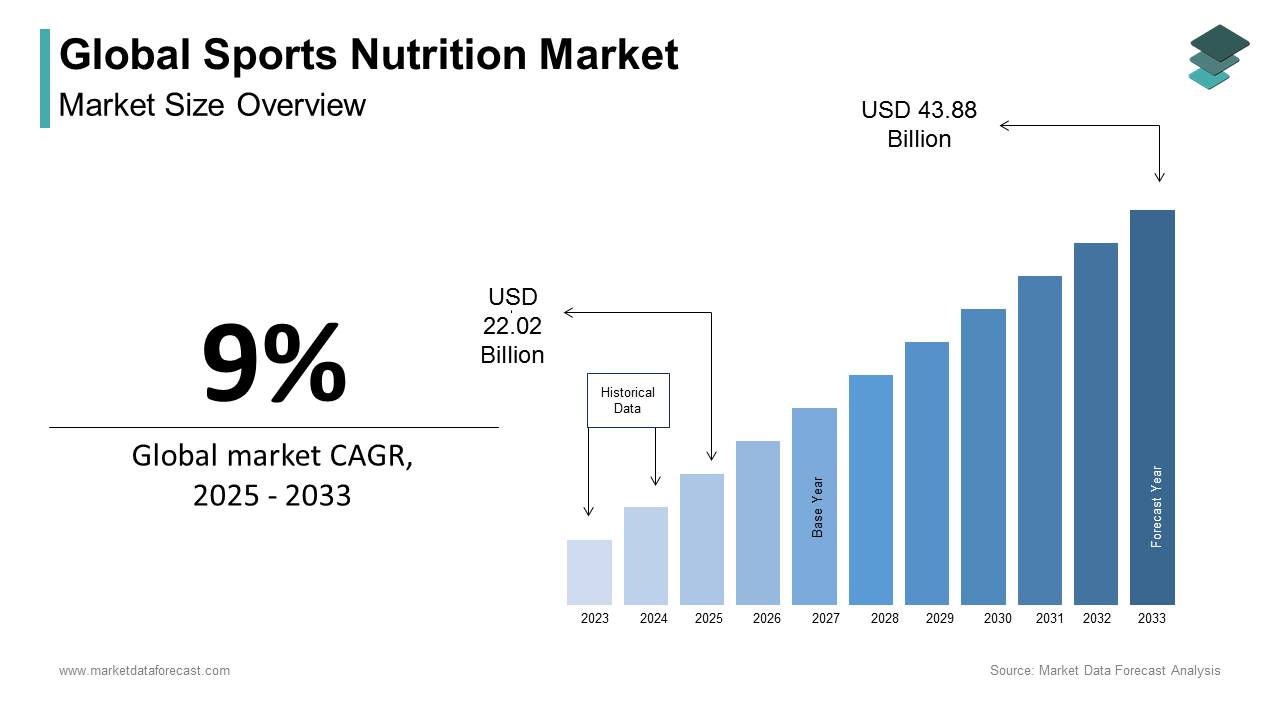
The global sports nutrition market size was valued at USD 22.02 billion in 2025. The global market growth is expected to be worth USD 24 Billion in 2026 and is further expected to grow at a CAGR of 9% during the forecast period and reach a value of USD 47.82 Billion by 2034.
Sports Nutrition refers to the dietary supplements industry focused on enhancing athletic performance, supporting recovery, and optimizing physical conditioning through scientifically formulated products such as protein powders, energy bars, sports drinks, and amino acid supplements. These products are tailored to meet the metabolic and physiological demands of individuals engaged in structured physical activity, ranging from amateur fitness enthusiasts to elite athletes. The market has evolved beyond traditional gym-goers, now integrating into mainstream lifestyles influenced by rising health consciousness and preventive wellness practices.
The World Health Organization also highlights that physical inactivity remains a leading risk factor for non-communicable diseases, prompting public and private health initiatives to promote active lifestyles, further legitimizing the role of sports nutrition in daily regimens. Additionally, regulatory bodies such as the European Food Safety Authority and the U.S. Food and Drug Administration have established frameworks for health and nutrient claims, lending credibility to product formulations. The integration of clinical research into product development has elevated the scientific rigor behind sports nutrition, distinguishing it from general dietary supplements and reinforcing consumer trust in efficacy and safety.
MARKET DRIVERS
Rising Participation in Fitness and Recreational Sports
The surge in structured fitness engagement across urban and semi-urban populations has become a pivotal force propelling the sports nutrition market. This growth is particularly pronounced in emerging economies such as India and Indonesia, where middle-class expansion has led to increased discretionary spending on wellness infrastructure. Fitness apps like MyFitnessPal and Strava have reported over 200 million combined active users, indicating a digital shift toward performance tracking and nutritional optimization. Consumers are no longer relying solely on generic diets but are seeking science-backed supplements to align with personalized workout regimens. The integration of wearable technology, which monitors caloric expenditure, heart rate variability, and muscle recovery, has further fueled demand for targeted macronutrient supplementation. As gyms, CrossFit boxes, and boutique studios expand their offerings to include nutrition coaching, the synergy between physical training and dietary supplementation strengthens. This behavioral shift is reinforced by growing awareness of the physiological benefits of protein timing, electrolyte balance, and branched-chain amino acid intake, particularly among young adults aged 18–35. The normalization of fitness as a lifestyle, rather than an elite pursuit, has broadened the consumer base, making sports nutrition products accessible and aspirational across diverse demographics.
Increasing Scientific Validation and Clinical Backing of Ingredients
The credibility and adoption of sports nutrition products have been significantly bolstered by rigorous scientific research validating the efficacy of key ingredients. These have been instrumental in shifting consumer perception from skepticism to trust, particularly in regulated markets such as Germany, Australia, and Japan, where health claims are subject to stringent evaluation. Institutions like the ISSN (International Society of Sports Nutrition) have issued position stands affirming the safety and effectiveness of protein supplementation for active individuals, further legitimizing product use. Additionally, advancements in bioavailability and delivery mechanisms, such as hydrolyzed proteins and nano-emulsified vitamins, have enhanced product performance, driving repeat purchases. Regulatory alignment with scientific standards, as seen in the European Union’s Novel Foods regulation, ensures that only well-researched ingredients enter the market, minimizing consumer risk. This evidence-based framework not only strengthens brand equity but also encourages healthcare professionals to recommend sports nutrition products as part of holistic fitness and rehabilitation programs.
MARKET RESTRAINTS
Regulatory Scrutiny and Inconsistent Global Standards
The sports nutrition market faces significant hurdles due to fragmented and often conflicting regulatory environments across key geographies. In regions such as Southeast Asia and the Middle East, customs authorities frequently block shipments of protein powders or pre-workout formulas due to ambiguous ingredient classifications, particularly for stimulants like caffeine derivatives or nootropics. This has prompted stricter regulatory postures in markets like China and South Korea, where foreign brands must undergo lengthy approval processes before market entry. Besides, the U.S. Food and Drug Administration continues to issue warnings to manufacturers for making unsubstantiated health claims, undermining consumer confidence. The absence of a unified global compliance framework increases operational complexity for multinational brands, requiring costly reformulations and localized compliance teams. These regulatory bottlenecks delay product launches, limit market access, and increase the risk of reputational damage, ultimately constraining the sector’s growth potential despite rising demand.
Consumer Skepticism Due to Product Mislabeling and Quality Concerns
A growing segment of consumers remains cautious about sports nutrition products due to persistent issues related to mislabeling, contamination, and exaggerated efficacy claims. This discrepancy undermines trust, particularly among health-conscious users who rely on precise macronutrient intake. High-profile recalls by major brands, have further eroded consumer confidence. Athletes, especially those in professional or collegiate sports, are increasingly wary of inadvertently ingesting banned substances due to cross-contamination in manufacturing facilities. Third-party certification programs such as Informed-Sport and NSF International have gained traction, but their adoption remains limited to premium brands, leaving a vast portion of the market unverified. This quality inconsistency is particularly acute in e-commerce channels. Until transparency and traceability become industry-wide norms, consumer hesitation will persist, limiting market expansion.
MARKET OPPORTUNITIES
Expansion of Personalized Nutrition and AI-Driven Formulations
The convergence of biotechnology and digital health is unlocking unprecedented opportunities in personalized sports nutrition. This insight has catalyzed the development of DNA-based and microbiome-informed supplement regimens tailored to athletic goals, recovery needs, and genetic predispositions. Companies are now integrating AI algorithms with wearable data to deliver dynamic nutrition plans that adjust in real time based on activity levels, sleep quality, and hydration status. Startups and established players alike are partnering with genomics firms like 23andMe and fitness platforms such as Whoop to offer integrated ecosystems. As consumers demand greater precision and accountability, the shift from one-size-fits-all to adaptive nutrition models presents a transformative growth avenue, particularly in tech-advanced markets like South Korea, Australia, and Singapore.
Growing Demand for Plant-Based and Sustainable Sports Nutrition Products
The shift toward plant-based diets is reshaping the sports nutrition landscape, creating a lucrative niche for sustainable, ethically sourced performance supplements. As per the United Nations Environment Programme, the global food system contributes nearly 30% of greenhouse gas emissions, with animal agriculture accounting for over 14%. This has prompted athletes and fitness consumers to seek alternatives that align with environmental and ethical values without compromising performance. Notably, a 2022 study published in The Journal of the International Society of Sports Nutrition found that plant-based protein supplements support muscle synthesis at levels comparable to whey when properly combined. Brands are responding by launching vegan-certified, non-GMO, and carbon-neutral product lines, often packaged in biodegradable materials. Additionally, certifications like B Corp and Climate Neutral are becoming competitive differentiators. As sustainability becomes a core purchasing criterion, particularly among Gen Z and millennial consumers, the integration of environmental stewardship into product development offers a strategic growth lever for forward-thinking companies.
MARKET CHALLENGES
Ingredient Sourcing Volatility and Supply Chain Disruptions
The sports nutrition industry is increasingly vulnerable to fluctuations in the availability and cost of critical raw materials, particularly protein isolates and functional additives. This shortage led to price spikes and forced manufacturers to reformulate products or delay launches. Similarly, the supply of creatine, primarily synthesized in China, has been affected by regulatory changes in chemical manufacturing and export restrictions. Natural disasters, trade disputes, and pandemics further exacerbate these vulnerabilities, as seen during the 2021 Suez Canal blockage, which delayed shipments of key vitamins and amino acids. Additionally, rising demand for sustainable sourcing practices limits the pool of approved suppliers, increasing dependency on certified vendors. Manufacturers must now invest in vertical integration, long-term contracts, and alternative ingredient development to mitigate risks. However, these strategies require substantial capital and operational flexibility, posing challenges for smaller players. Without resilient supply chains, the industry faces ongoing threats to product consistency, pricing stability, and customer satisfaction.
Proliferation of Unregulated and Private-Label Brands in E-Commerce
The rapid growth of online retail has led to an influx of unregulated, low-cost sports nutrition brands that undermine product integrity and brand trust. This proliferation dilutes market quality and exposes consumers to health risks, leading to increased scrutiny from regulators and healthcare providers. Established brands face margin pressure as consumers opt for cheaper, unverified alternatives, particularly in price-sensitive markets like India and Brazil. Furthermore, digital marketing tactics such as influencer endorsements without scientific backing contribute to misinformation. The absence of uniform global enforcement allows these brands to operate with minimal accountability, creating an uneven playing field. To combat this, industry leaders are investing in blockchain traceability, QR-code verification, and consumer education campaigns, but widespread adoption remains a challenge.
REPORT COVERAGE
| REPORT METRIC | DETAILS |
| Market Size Available | 2025 to 2034 |
| Base Year | 2025 |
| Forecast Period | 2026 to 2034 |
| CAGR | 9% |
| Segments Covered | By Type, Distribution Channel, And Region |
| Various Analyses Covered | Global, Regional and Country Level Analysis; Segment-Level Analysis; DROC; PESTLE Analysis; Porter’s Five Forces Analysis; Competitive Landscape; Analyst Overview of Investment Opportunities |
| Regions Covered | North America, Europe, APAC, Latin America, Middle East & Africa |
| Market Leaders Profiled | Iovate Health Sciences, Abbott, Quest Nutrition, MusclePharm Corporation, B.A. Sports Nutrition, Cardiff Sports Nutrition, Orgain, Cliff Bar & Company, Glanbia plc, and General Nutrition Centers Inc. |
SEGMENTAL ANALYSIS
By Type Insights
The protein powder segment held the largest share of the global sports nutrition market with 34.3% of total revenue in 2025. This dominance is rooted in its foundational role in muscle synthesis, recovery, and satiety management, making it a staple across diverse user groups—from bodybuilders to aging adults seeking lean mass preservation. The versatility of protein powders, particularly whey isolate and casein, allows for integration into smoothies, baking, and clinical nutrition regimens. Innovations such as cold-filtered whey and lactose-free formulations have broadened accessibility for lactose-intolerant consumers. Additionally, the rise of clean-label trends has driven demand for transparent sourcing, with brands highlighting grass-fed dairy and non-GMO certifications. In Asia-Pacific, protein powder adoption is accelerating among post-pandemic wellness seekers, supported by government-backed fitness initiatives in countries like Japan and South Korea. The product’s adaptability across life stages and health objectives ensures its entrenched position as the cornerstone of sports nutrition.
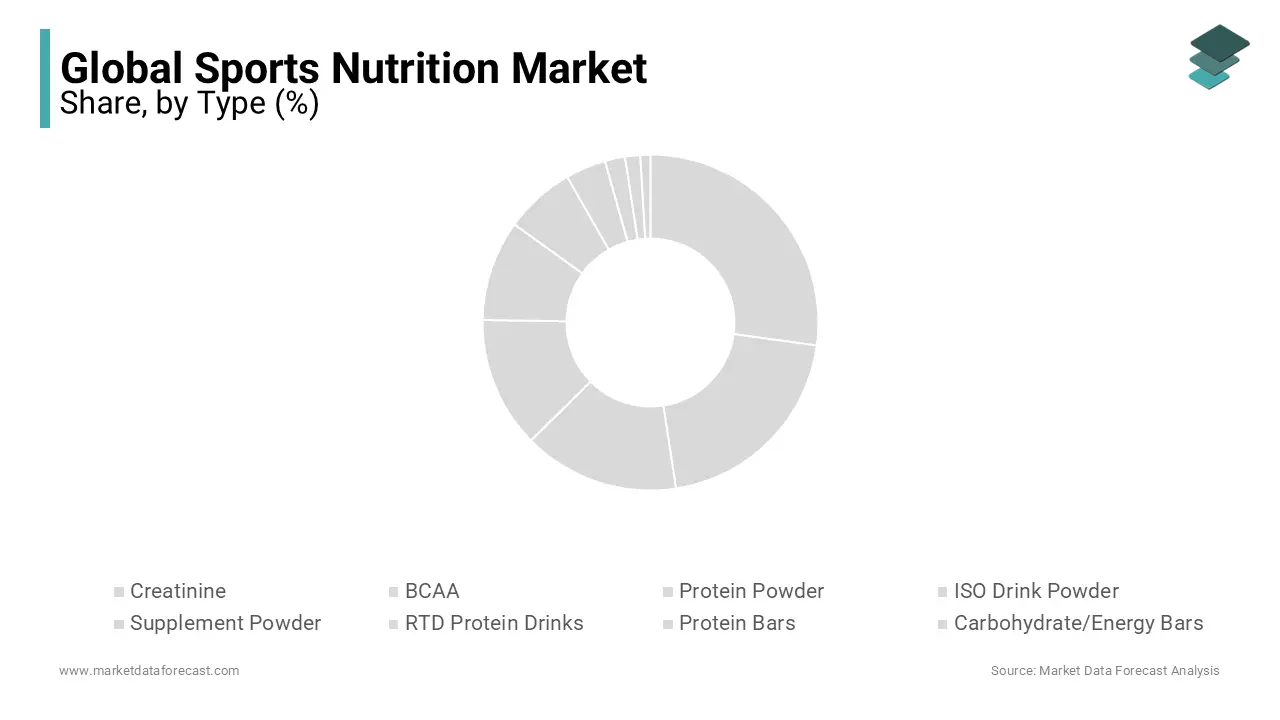
The ready-to-drink (RTD) protein drinks segment is fastest-growing segment within the sports nutrition market and is projected to grow at a CAGR of 10.2% through 2034. This surge is fueled by the modern consumer’s demand for convenience and on-the-go nutrition. Unlike powdered forms requiring preparation, RTD beverages offer immediate consumption, aligning with fast-paced urban lifestyles. The product’s appeal extends beyond athletes to office workers, students, and elderly populations seeking portable protein intake. The Global Panel on Dietary Reference Values highlights that protein distribution across meals is critical for optimal muscle protein synthesis, and RTD drinks facilitate this by serving as effective between-meal supplements. Furthermore, advancements in shelf-stable packaging and aseptic processing have extended product longevity without refrigeration, enabling broader retail distribution. Flavors and formulations are now tailored to local palates, such as matcha-infused RTDs in Japan and spiced lassi variants in India. With sustainability concerns prompting recyclable can designs and plant-based variants, the category is evolving into a mainstream functional beverage.
By Distribution Channel Insights
The online distribution channel dominated the global sports nutrition market by capturing an estimated 36.3% of total sales in 2025. This pre-eminence is primarily driven by the seamless accessibility and personalized shopping experience offered through digital platforms. Consumers increasingly favor online channels for their ability to compare product specifications, access third-party reviews, and receive subscription-based deliveries tailored to their fitness regimens. The integration of AI-driven recommendation engines on platforms like Amazon and iHerb has enhanced user engagement, increasing conversion rates for repeat buyers. Additionally, direct-to-consumer (DTC) models adopted by brands such as MyProtein and Kaged Muscle have eliminated intermediaries, enabling competitive pricing and rapid feedback loops. Mobile commerce, supported by secure payment gateways and same-day delivery networks in regions like South Korea and the UK, further strengthens the channel’s dominance. With younger demographics—particularly Gen Z and millennials—preferring digital-first interactions, the online segment’s leadership is underpinned by a structural shift in consumer behavior rather than transient trends.
The fitness institutions segment is the fastest-growing distribution channel in the sports nutrition market and is projected to expand at a CAGR of 9.6% from 2026 to 2034. This acceleration stems from the rising integration of nutrition services within gym and training environments. Leading fitness chains such as Anytime Fitness and Gold’s Gym have introduced in-house retail zones and personalized supplement bars, where trainers recommend products based on individual performance data. The proximity of consumption and purchase decision-making enhances impulse buying and adherence to regimens. Moreover, these institutions are also leveraging digital dashboards that sync with wearable devices to suggest real-time replenishment of electrolytes or protein post-workout. In emerging markets like India and Brazil, boutique studios and CrossFit affiliates are adopting this model, capitalizing on localized trust and community engagement. The experiential nature of fitness centers, where products are sampled, demonstrated, and endorsed by professionals, gives this channel a distinct advantage in building brand loyalty and reducing consumer skepticism.
REGIONAL ANALYSIS
North America stood as the most mature and dominant region in the global sports nutrition market by commanding a 37.3% share of total revenue in 2025. The region’s leadership is anchored in a deeply ingrained fitness culture, high disposable income, and advanced healthcare infrastructure that supports preventive wellness. The prevalence of performance-oriented training, from collegiate sports to CrossFit, fuels consistent demand for scientifically backed supplements. The Food and Drug Administration’s regulatory framework, while stringent, provides consumer confidence in product safety and labeling accuracy. Additionally, digital health adoption, including fitness tracking apps and tele-nutrition services, further integrates supplementation into daily routines. Major brands like Optimum Nutrition and BSN originate from this region, benefiting from strong R&D ecosystems and aggressive marketing. The presence of elite sports leagues and collegiate athletic programs also drives institutional procurement of sports nutrition products, reinforcing market stability and innovation.
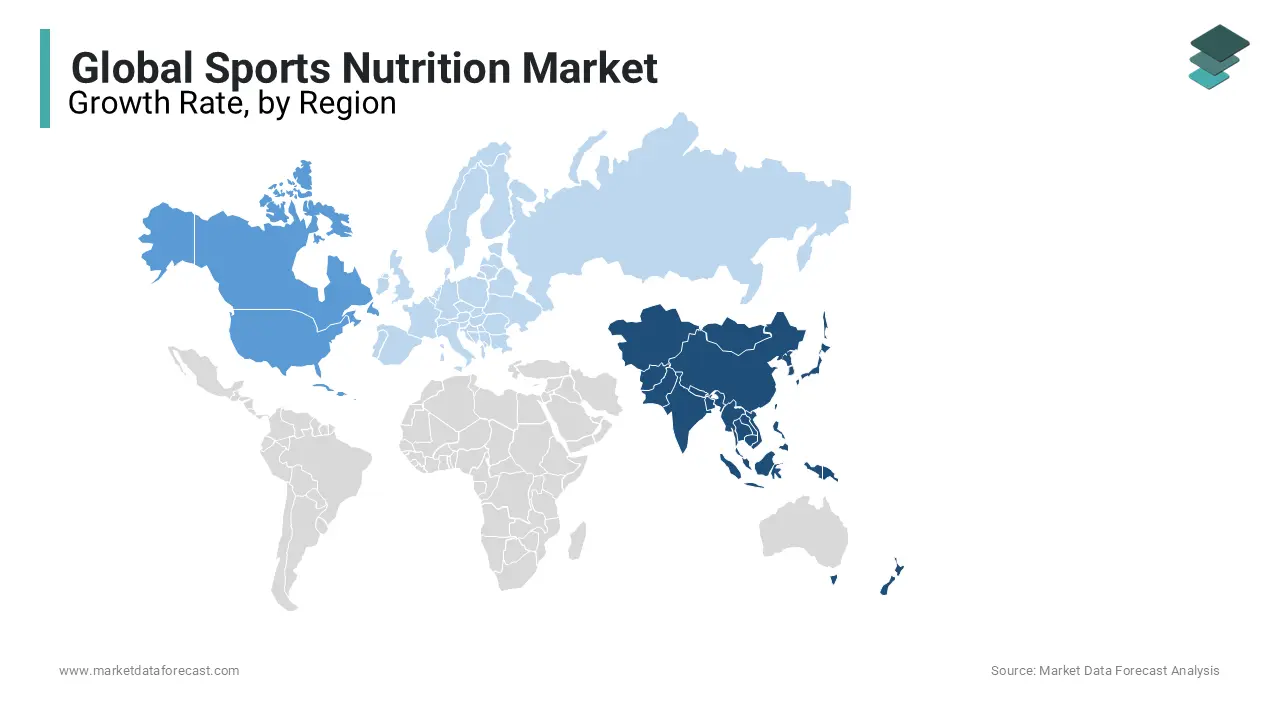
Europe holds a significant market share, with Western Europe leading due to high health consciousness and regulatory rigor. Countries like Germany, the UK, and the Netherlands exhibit strong consumer preference for evidence-based supplements, supported by national sports federations and public health campaigns promoting active lifestyles. The European Food Safety Authority has established strict guidelines for health claims, ensuring product credibility and minimizing misinformation. The rise of plant-based nutrition, particularly in Scandinavia and Austria, has accelerated demand for vegan protein and sustainable formulations. Additionally, e-commerce penetration in the supplement sector expanding in Germany and the UK, enhancing accessibility. Cross-border trade within the EU facilitates brand expansion, while national anti-doping agencies promote clean-label, tested products, reinforcing consumer trust and market integrity.
Asia Pacific is emerging as the most dynamic region due to rapid urbanization and shifting lifestyle patterns. Countries like China, India, and Australia are witnessing a surge in fitness center enrollments. Government initiatives such as India’s Fit India Movement and China’s National Fitness Program 2030 are institutionalizing physical activity, creating fertile ground for sports nutrition adoption. The World Health Organization points out that non-communicable diseases linked to sedentary behavior are rising in the region, prompting preventive health measures. Young, tech-savvy consumers are increasingly influenced by fitness influencers and social media, driving demand for premium supplements. In Japan, the Ministry of Health, Labour and Welfare has approved functional food claims for certain protein products, enhancing market legitimacy. With rising disposable income and expanding e-commerce, the region is poised for accelerated growth in both volume and value.
Latin America accounts for a significant share of the global sports nutrition market. The region’s market is characterized by a growing middle class and increasing participation in recreational sports. Local brands are gaining traction by offering affordable, culturally relevant products, such as açai-based protein blends and energy bars infused with native ingredients. However, regulatory inconsistencies across countries pose challenges, with Argentina and Chile maintaining stricter supplement controls than Peru or Colombia. E-commerce is expanding rapidly. Despite economic volatility, the convergence of fitness culture and wellness aspirations is fostering sustained demand, particularly among younger demographics in metropolitan areas.
Middle East and Africa collectively represent a descent share of the global market, but exhibit nascent yet promising growth potential. The Gulf Cooperation Council (GCC) countries, particularly the UAE and Saudi Arabia, are leading the regional expansion due to government-led wellness initiatives such as Saudi Vision 2030 and UAE’s National Wellbeing Strategy. However, limited regulatory frameworks in countries like Nigeria and Egypt allow unverified products to dominate, undermining trust. The influx of international brands into Dubai and Riyadh, coupled with the growth of fitness expos and marathons, is gradually professionalizing the market. With increasing investment in sports infrastructure and digital connectivity, the region is transitioning from sporadic adoption to structured market development.
KEY MARKET PLAYERS AND COMPETITIVE LANDSCAPE
Major players in the global sports nutrition market include Iovate Health Sciences, Abbott, Quest Nutrition, MusclePharm Corporation, B.A. Sports Nutrition, Cardiff Sports Nutrition, Orgain, Cliff Bar & Company, Glanbia plc, and General Nutrition Centers Inc.
The competitive landscape of the sports nutrition market is marked by a dynamic interplay between established global brands, agile niche players, and disruptive digital-native companies. Legacy brands leverage their reputation, R&D capabilities, and extensive distribution networks to maintain dominance, particularly in performance-focused segments. At the same time, emerging brands are gaining ground by capitalizing on consumer demand for transparency, sustainability, and personalization. These newer entrants often operate on direct-to-consumer models, utilizing social media and influencer marketing to build communities and bypass traditional retail barriers. The market is further fragmented by the proliferation of private-label and regional brands that offer cost-effective alternatives, intensifying price competition. Differentiation is increasingly achieved through innovation in formulation, such as plant-based proteins, gut-health-enhancing additives, and functional blends targeting mental focus and recovery. Regulatory scrutiny and quality concerns have elevated the importance of third-party verification, turning certification into a competitive advantage. Geopolitical variations in consumer preferences—ranging from high-protein demands in Western markets to wellness-oriented supplementation in Asia—require localized strategies. As the boundary between sports performance and everyday wellness blurs, companies must balance scientific rigor with lifestyle branding to stay relevant. This multifaceted environment fosters continuous innovation, making the sports nutrition market both fiercely competitive and rich with strategic opportunity.
TOP PLAYERS IN THE MARKET
Optimum Nutrition (ON)
Optimum Nutrition has established itself as a global benchmark in sports nutrition through its unwavering focus on product quality, scientific formulation, and brand trust. Renowned for its flagship Gold Standard 100% Whey protein, the brand has become synonymous with reliability among athletes and fitness enthusiasts. Its commitment to transparency in labeling and rigorous third-party testing has set industry standards, influencing consumer expectations worldwide. By aligning with professional sports teams, sponsoring fitness events, and engaging certified trainers, Optimum Nutrition has embedded itself within the fitness ecosystem. The brand’s global distribution network ensures accessibility across diverse markets, while its consistent messaging around performance and recovery has strengthened long-term loyalty. Its influence extends beyond commercial success, shaping how supplements are perceived in terms of efficacy, safety, and integration into training regimens.
MusclePharm Corporation
MusclePharm has distinguished itself by merging scientific research with athlete-centric product development, creating formulations co-designed with professional trainers and sports scientists. The brand emphasizes performance-driven nutrition, offering tailored solutions for specific training phases such as pre-workout, endurance, and recovery. Its collaborations with elite athletes and sports organizations have enhanced credibility and visibility across competitive circuits. MusclePharm’s innovation lies in its adaptive approach—frequently reformulating products based on user feedback and emerging nutritional science. It has also prioritized clean-label initiatives, reducing artificial additives and embracing natural ingredients. Through strategic partnerships with fitness facilities and digital platforms, the company has expanded its reach beyond traditional retail. MusclePharm’s identity as a performance-first brand has allowed it to carve a niche in a crowded market, appealing to serious athletes who demand precision and accountability in their supplementation.
Dymatize Enterprises, Inc.
Dymatize has earned a strong reputation for its high-protein formulations and cutting-edge manufacturing processes that prioritize bioavailability and taste. The brand is particularly recognized for its ISO100 hydrolyzed whey protein, which caters to consumers seeking rapid absorption and minimal digestive discomfort. Dymatize invests heavily in research to refine its product profiles, ensuring alignment with evolving nutritional science and athlete needs. Its presence in both mass retail and specialty fitness channels has broadened its consumer base, while consistent engagement with the bodybuilding and strength training communities reinforces brand authenticity. The company emphasizes education, providing nutritional guidance and training resources to enhance user experience. Dymatize’s commitment to quality control and product innovation has made it a preferred choice in competitive markets, where efficacy and consistency are paramount. Its influence extends into shaping industry standards for protein purity and formulation transparency.
TOP STRATEGIES USED BY KEY MARKET PLAYERS
One major strategy adopted by leading players in the sports nutrition market is the integration of scientific validation into product development and marketing. Companies collaborate with sports nutritionists, clinical researchers, and academic institutions to formulate products backed by physiological evidence, enhancing consumer trust and differentiating themselves from generic supplements. This science-led approach extends to transparent labeling, third-party testing, and certification by bodies such as Informed-Sport, reinforcing product integrity.
Another key strategy is brand alignment with athletic communities and fitness influencers. Companies sponsor athletes, fitness competitions, and gym networks to build credibility and visibility. Partnerships with trainers and digital fitness platforms allow for direct engagement with end users, creating authentic touchpoints that drive product adoption and loyalty through trusted voices.
A third pivotal strategy is diversification into clean-label, plant-based, and functional formulations. Responding to evolving consumer preferences, brands are reformulating products to exclude artificial ingredients, incorporate sustainable sourcing, and cater to dietary restrictions. This shift not only broadens market appeal but also positions companies as forward-thinking and socially responsible, strengthening long-term brand equity in a health-conscious landscape.
RECENT HAPPENINGS IN THE MARKET
- In January 2023, Optimum Nutrition launched a new sustainability initiative by introducing recyclable packaging across its core product lines, reinforcing its commitment to environmental responsibility and appealing to eco-conscious consumers.
- In May 2023, MusclePharm partnered with a leading sports science research institute to co-develop next-generation recovery formulas, enhancing the clinical credibility of its product portfolio.
- In September 2023, Dymatize expanded its presence in the Asia-Pacific region by establishing a regional distribution hub in Singapore, enabling faster market access and localized product offerings.
- In November 2023, Optimum Nutrition initiated a global ambassador program, collaborating with certified fitness trainers and nutrition coaches to provide evidence-based education on supplement usage.
- In February 2025, MusclePharm introduced a clean-label reformulation of its entire pre-workout range, eliminating artificial colors and preservatives to align with evolving consumer health preferences.
MARKET SEGMENTATION
This research report on the global sports nutrition market has been segmented and sub-segmented based on type, distribution channel, & region.
By Type
- Creatinine
- BCAA
- Protein Powder
- ISO Drink Powder
- Supplement Powder
- RTD Protein Drinks
- Protein Bars
- Carbohydrate/Energy Bars
- Carbohydrate Drinks
- ISO & Other Sports Drinks
By Distribution Channel:
- Fitness Institutions
- Large Retail & Mass Merchandisers
- Small Retail
- Drug & Speciality Stores
- Online
By Region
- North America
- Europe
- Asia Pacific
- Latin America
- Middle East and Africa
Frequently Asked Questions
1. What is sports nutrition?
Sports nutrition involves dietary products designed to improve athletic performance, recovery, and overall health.
2. Which products are included in the sports nutrition market?
Protein powders, energy bars, hydration drinks, amino acids, and pre/post-workout supplements.
3. What factors are driving the global sports nutrition market?
Rising fitness trends, gym memberships, and awareness about healthy lifestyles.
4. Which consumer groups are key targets for sports nutrition products?
Athletes, fitness enthusiasts, bodybuilders, and active lifestyle consumers.
5. What are the major distribution channels for sports nutrition products?
Specialty stores, supermarkets, gyms, and e-commerce platforms.
6. Which regions dominate the global sports nutrition market?
North America leads, followed by Europe and Asia-Pacific.
7. Who are the major players in the sports nutrition industry?
Key companies include Optimum Nutrition, GNC, MyProtein, and MuscleTech.
8. What challenges does the sports nutrition market face?
Regulatory differences, counterfeit products, and price competition.
Related Reports
Access the study in MULTIPLE FORMATS
Purchase options starting from
$ 2500
Didn’t find what you’re looking for?
TALK TO OUR ANALYST TEAM
Need something within your budget?
NO WORRIES! WE GOT YOU COVERED!
Call us on: +1 888 702 9696 (U.S Toll Free)
Write to us: sales@marketdataforecast.com