- Product Description Description
- Table of Contents TOC
- List of Table & Figure LOT
- Get Free Sample PDF Sample PDF
Market Size, 2025
$427.2 MnMarket Estimate, 2026
$456.25 MnMarket Forecast, 2034
$772 MnCAGR, 2026–2034
6.80%Executive Summary: Global Particle Size Analysis Market
- Market Scope: Global analysis of the particle size analysis market, detailing laser diffraction and dynamic image analysis technologies, wet and dry dispersion types, offline versus online modes, regulatory frameworks, and regional adoption.
- Market Valuation: Valued at USD 427.2 million in 2025, reaching USD 456.25 million in 2026, and projected to expand to USD 772 million by 2034, growing at a robust CAGR of 6.8% from 2026-2034.
- Primary Growth Drivers: Pharmaceutical Quality by Design (QbD) mandates, advanced battery material development for electric mobility, and the integration of real-time Process Analytical Technology (PAT).
Key Market Segment Metrics
| Category | Leading Segment (Base Position) | Fastest-Growing / High-Growth Segment |
|---|---|---|
| By Technology | Laser Diffraction Technology (captured 56.5% market share in 2025, backed by ISO 13320 standards and versatility) | Imaging Analysis (promising CAGR of 15.4%, driven by the need for shape-sensitive characterization and morphology) |
| By Dispersion Type | Wet Dispersion Systems (commanded 60.9% market share in 2025, favored for superior deagglomeration energy transfer) | Dry Particle Analyzers (noteworthy CAGR of 10.2%, fueled by high-throughput QC environments without liquid handling) |
| By Mode of Analysis | Offline Laboratory Systems (occupied 70.3% market share in 2025, providing foundational regulatory validation and versatility) | Online and At-Line Systems (notable CAGR of 14.4%, propelled by real-time process control and Industry 4.0 transitions) |
| By Region | North America (dominated with 35.1% market share in 2025, backed by US pharma R&D and defense material funding) | Europe / APAC (high-growth and modernizing hubs driven by strict chemical regulations, battery production, and industrial expansion) |
Major Market Players & Industry Landscape
Market Structure: Highly competitive global marketplace featuring specialized analytical instrument manufacturers focusing on high-resolution laser diffraction, dynamic imaging, and automated dispersion systems.
Key Companies: Malvern Panalytical Ltd, Horiba Ltd, Beckman Coulter Inc., Agilent Technologies Inc., Microtrac MRB, Micromeritics Instruments Corporation, IZON Science Limited, Sympatec GmbH, Shimadzu Corporation, Anton Paar GmbH, Brookhaven Instruments Corporation, Bettersize Instruments Ltd, Particle Sizing Systems, LLC, and Retsch GmbH.
 Download Free Sample Report
Global Particle Size Analysis Market Size
The particle size analysis market was valued at USD 427.2 million in 2025, is estimated to reach USD 456.25 million in 2026, and is projected to reach USD 772 million by 2034, growing at a CAGR of 6.8% from 2026 to 2034.

Particle size analysis encompasses the scientific measurement and characterization of dimensional distributions within particulate matter to ensure material performance across industrial applications. This analytical discipline serves as a critical quality control mechanism in pharmaceuticals, mining, ceramics, and food processing, where particle dimensions directly influence dissolution rates, flowability, and chemical reactivity. According to the United States Pharmacopeia General Chapter 429, over 70% of active pharmaceutical ingredients require strict particle size specifications to guarantee bioavailability and therapeutic efficacy in solid dosage forms. According to the International Organization for Standardization, more than 35 distinct standards govern particle characterization methods, reflecting the technical complexity inherent in measuring diverse materials ranging from nanometres to millimetres. According to the European Medicines Agency, approximately 40% of drug product manufacturing deviations stem from inadequate powder characterization, leading to batch failures that cost manufacturers an average of 250,000 euros per incident. These measurements enable engineers to predict bulk behavior during processing and end-use performance in final products. Advanced techniques, including laser diffraction and dynamic image analysis, have replaced traditional sieving for many applications due to superior resolution and reproducibility. Consequently, particle size analysis functions as the foundational metrology ensuring consistency in modern manufacturing supply chains, where material properties determine commercial viability and regulatory compliance simultaneously.
MARKET DRIVERS
Pharmaceutical Quality by Design Mandates Accelerate Analytical Adoption
Regulatory frameworks increasingly require comprehensive particle characterization as integral components of drug development rather than optional quality checks performed post-production, which is a key factor driving the global particle size analysis market growth. According to the US Food and Drug Administration, 85% of new drug applications submitted in 2024 included detailed particle size distribution data supporting bioequivalence claims and manufacturing process validation. This regulatory imperative transforms particle analysis from laboratory curiosity to mandatory documentation for market approval, creating sustained demand across global pharmaceutical supply chains. According to the International Council for Harmonisation Q8 guideline, particle attributes are explicitly linked to critical quality attributes, requiring continuous monitoring throughout the product lifecycle rather than discrete testing points. According to a study published in the Journal of Pharmaceutical Sciences, formulations with optimized particle size distributions achieved 30% higher dissolution rates compared to unoptimized counterparts, directly impacting therapeutic outcomes. Generic drug manufacturers face particular pressure as they must demonstrate equivalence to reference products through rigorous particle characterization to avoid costly clinical trials. According to the European Pharmacopoeia, monographs were updated in 2024 to include stricter particle size limits for 12 additional active substances, expanding the scope of mandatory testing. These evolving requirements compel manufacturers to invest in advanced analytical instrumentation capable of generating reproducible data acceptable to multiple regulatory jurisdictions simultaneously without method revalidation delays.
Advanced Battery Material Development Demands Precision Characterization
The global transition toward electric mobility creates unprecedented demand for precise particle size control in lithium-ion battery electrode materials, where dimensional uniformity determines energy density and cycle life, which is further propelling the global market expansion. According to the International Energy Agency, global electric vehicle battery production capacity reached 2.5 terawatt-hours in 2024, requiring massive quantities of cathode and anode materials with tightly controlled particle specifications. According to research published in Nature Energy, reducing cathode particle size variation by just 10% improves battery cycle stability by 25%, enabling longer vehicle range and reduced replacement frequency. Battery manufacturers now specify particle size distributions with tolerances narrower than 5%, compared to 15% tolerances common five years ago, reflecting performance demands from automotive original equipment manufacturers. According to the Argonne National Laboratory, optimal graphite anode particles must maintain D50 values between 15 and 20 micrometres to balance fast-charging capability with volumetric energy density, requiring real-time analytical feedback during production. According to China National Bureau of Statistics data, Chinese battery producers accounting for 75% of global cell manufacturing have installed over 500 new laser diffraction systems since 2023 to meet international customer specifications. This precision requirement extends beyond electrodes to electrolyte additives and separator coatings, where nanoparticle agglomeration causes catastrophic cell failures. Consequently, particle size analysis becomes an indispensable process control tool rather than an offline quality check in gigafactory environments producing millions of cells daily.
MARKET RESTRAINTS
Measurement Technique Variability Creates Data Incomparability
Different particle sizing principles yield fundamentally different results for identical samples, creating confusion among users and hindering cross-laboratory data harmonization, which is a significant impediment to the global particle size analysis market. According to the National Institute of Standards and Technology, laser diffraction measurements can differ from dynamic light scattering results by up to 40% for polydisperse nanoparticles due to underlying theoretical assumptions about particle shape and optical properties. This discrepancy forces organizations to maintain multiple instruments and develop correlation models, adding complexity and cost to quality control workflows. According to the American Society for Testing and Materials, no single technique provides universally accurate results across all material types, requiring users to understand fundamental limitations of each method. According to a round-robin study involving 28 laboratories, the coefficient of variation exceeded 20% for submicron particle measurements even when using identical equipment models and standardized protocols. Regulatory agencies struggle to establish universal acceptance criteria when measurement uncertainty spans such wide ranges, particularly for emerging nanomaterials where safety thresholds depend on accurate size determination. According to the International Organization for Standardization, guidance documents addressing technique selection continue to be developed, yet implementation remains inconsistent across industries and geographies. This metrological ambiguity discourages adoption among smaller enterprises lacking expertise to interpret conflicting data or justify expensive multi-technique validation studies required for regulatory submissions and customer qualification processes.
High Capital Investment Barriers Limit Small Enterprise Access
Advanced particle characterization instruments command significant capital expenditures that exclude small and medium enterprises from accessing state-of-the-art analytical capabilities, which is further hampers particle size analysis market growth. According to industry pricing surveys, a fully configured laser diffraction system with automated dispersion units costs between 85,000 and 150,000 dollars, representing a prohibitive investment for contract testing laboratories serving niche markets. Dynamic image analysis systems capable of capturing shape information alongside size distribution require an additional 40,000 to 60,000 dollars, further escalating total ownership costs beyond typical small business equipment budgets. According to manufacturer service agreements, maintenance contracts alone consume 12% to 18% of the initial purchase price annually, creating an ongoing financial burden independent of utilization rates. According to the Small Business Administration, only 23% of US manufacturing firms with fewer than 50 employees possess in-house particle analysis capabilities, forcing reliance on external testing services with turnaround times averaging 7 to 10 business days. This delay impedes rapid formulation optimization and process troubleshooting critical for competitive responsiveness in custom manufacturing sectors. While rental and shared facility options exist, geographic concentration of such resources in major research hubs leaves rural and peripheral industrial regions underserved. Consequently, technological advancement concentrates among large corporations, while smaller innovators remain constrained by analytical access barriers despite possessing novel materials requiring precise characterization for commercialization success.
MARKET OPPORTUNITIES
Real-Time Process Analytical Technology Integration Unlocks Manufacturing Efficiency
Embedding particle size sensors directly into production streams enables continuous quality assurance, replacing delayed offline testing that permits off-specification material accumulation, which is a notable opportunity in the global particle size analysis market. According to the Pharmaceutical Engineering journal, implementing inline particle monitoring reduces batch rejection rates by 35% through immediate process correction before deviations propagate through entire production runs. According to the European Federation of Chemical Engineering, real-time particle characterization saves European chemical manufacturers 2.8 billion euros annually through reduced waste and improved yield consistency. Modern probe-based laser diffraction systems withstand harsh process conditions, including high temperatures and pressures previously incompatible with analytical instrumentation, enabling deployment in reactors and crystallizers. According to a case study from BASF, installing inline particle analyzers in pigment production increased throughput by 18% while maintaining tighter size specifications than achievable with traditional sampling methods. According to the US Food and Drug Administration, process analytical technology adoption is actively encouraged through regulatory incentives recognizing that continuous verification provides superior quality assurance compared to end-point testing. Emerging wireless sensor platforms eliminate installation complexities associated with hardwired systems, making retrofit economically viable for existing facilities lacking original design provisions for inline analytics. This convergence of robust sensor technology and regulatory support creates substantial opportunity for vendors offering integrated solutions bridging laboratory and production environments seamlessly.
Nanomaterial Safety Assessment Drives Specialized Characterization Demand
Expanding commercialization of engineered nanomaterials necessitates specialized particle analysis capabilities beyond conventional sizing techniques to address unique toxicological and environmental concerns. According to the Organisation for Economic Co-operation and Development, over 1,800 nano-enabled consumer products entered global markets between 2020 and 2024, requiring comprehensive particle characterization for regulatory notification and safety assessment. According to the European Chemicals Agency, specific surface area and agglomeration state reporting are mandated for nanomaterials under REACH regulation, creating demand for advanced techniques like nanoparticle tracking analysis and electron microscopy coupled with elemental analysis. According to research published in Environmental Science and Technology, toxicity correlates more strongly with particle number concentration than mass concentration, necessitating counting-based measurement approaches absent from traditional size analyzers. According to the National Nanotechnology Initiative, 1.9 billion dollars was allocated in 2024, partly supporting the development of standardized nanometrology methods addressing current measurement gaps. Consumer goods companies face increasing retailer requirements for nanoparticle disclosure, driving voluntary testing programs even where regulations remain ambiguous. This emerging segment commands premium pricing due to technical complexity and limited vendor competition, creating attractive margins for specialists developing purpose-built nanomaterial characterization platforms. As regulatory frameworks mature globally, demand will expand beyond early adopters to mainstream manufacturers seeking proactive compliance positioning ahead of mandatory requirements.
MARKET CHALLENGES
Sample Preparation Artifacts Compromise Measurement Accuracy
Inadequate dispersion protocols frequently generate misleading particle size data, as agglomerates persist despite instrument sophistication, leading to erroneous conclusions about material properties, which is a significant challenge to the particle size analysis market expansion. According to the Royal Society of Chemistry, sample preparation errors account for 60% of particle size measurement inaccuracies, exceeding instrumental noise contributions by a factor of three in routine analyses. Achieving primary particle dispersion requires balancing sufficient energy input against particle fracture risk, particularly for fragile materials like pharmaceutical crystals and biological powders. According to a collaborative study by the Measurement Standards Laboratory of New Zealand, identical samples prepared using sonication versus mechanical stirring produced D50 values differing by 45%, demonstrating profound sensitivity to dispersion methodology. Wet dispersion introduces additional variables, including solvent compatibility, surfactant selection, and ultrasonic duration, that interact non-linearly, making protocol optimization empirically intensive and material-specific. Dry powder dispersion faces challenges with cohesive fine powders, where interparticle forces exceed aerodynamic separation capabilities, causing persistent agglomeration regardless of air pressure adjustments. According to the International Organization for Standardization, no universal preparation standard exists, requiring laboratories to develop and validate bespoke procedures for each material type, consuming significant technical resources. This preparation dependency undermines confidence in reported results, particularly when comparing data across laboratories using different protocols or when transferring methods between sites without exhaustive revalidation efforts.
Shape Complexity Defies Spherical Model Assumptions
Most particle sizing techniques assume spherical geometry, converting irregular three-dimensional objects into equivalent sphere diameters that misrepresent actual particle morphology and behavior. According to the Powder Technology journal, needle-shaped particles with aspect ratios exceeding 5:1 exhibit laser diffraction size distributions shifted by 30% toward finer sizes compared to true length dimensions, affecting downstream processing predictions. Dynamic image analysis captures shape information but generates multidimensional datasets lacking standardized reporting metrics, making comparison across studies difficult and regulatory acceptance uncertain. According to the National Physical Laboratory, platelet-shaped clay minerals show a 40% discrepancy between volume-weighted and number-weighted size distributions depending on orientation during measurement, introducing ambiguity in result interpretation. Many industrial processes depend on particle shape rather than size alone, yet conventional analyzers provide insufficient shape quantification, forcing users to supplement with separate microscopy campaigns, doubling analytical workload and cost. Machine learning algorithms attempting automated shape classification require extensive training datasets specific to each material type, limiting transferability and increasing implementation complexity. The absence of universally accepted shape descriptors prevents the establishment of meaningful specifications in procurement contracts and quality standards, perpetuating reliance on inadequate spherical approximations despite widespread recognition of their limitations. Until consensus emerges on standardized shape reporting frameworks, users will continue navigating the disconnect between measured parameters and functionally relevant particle characteristics.
REPORT COVERAGE
| REPORT METRIC | DETAILS |
| Market Size Available | 2025 to 2034 |
| Base Year | 2025 |
| Forecast Period | 2026 to 2034 |
| Segments Covered | By Technology, Dispersion Type, Mode of Analysis, End-User Industry, and Region. |
| Various Analyses Covered | Global, Regional, and Country-Level Analysis, Segment-Level Analysis, Drivers, Restraints, Opportunities, Challenges; PESTLE Analysis; Porter’s Five Forces Analysis, Competitive Landscape, Analyst Overview of Investment Opportunities |
| Regions Covered | North America, Europe, APAC, Latin America, Middle East & Africa |
| Market Leaders Profiled | Malvern Panalytical Ltd, Horiba Ltd, Beckman Coulter Inc., Agilent Technologies Inc., Microtrac MRB, Micromeritics Instruments Corporation, IZON Science Limited, Sympatec GmbH, Shimadzu Corporation, Anton Paar GmbH, Brookhaven Instruments Corporation, Bettersize Instruments Ltd, Particle Sizing Systems, LLC, Jinan Winner Particle Instrument Stock Co., Ltd., Retsch GmbH, Otsuka Electronics Co. Ltd., LS Instruments AG, CORDOUAN Technologies SAS, Metso Outotec, and Others. |
SEGMENTAL ANALYSIS
By Technology Insights
The laser diffraction technology segment led the market by capturing 56.5% of the global market share in 2025 and is estimated to maintain dominance in the particle size analysis market throughout the forecast period due to its unparalleled versatility across pharmaceutical, chemical, and mineral processing applications. According to the International Organization for Standardization, ISO 13320 establishes laser diffraction as the reference method for particle sizing, covering measurement ranges from 10 nanometers to 3,500 micrometers, which encompasses 90% of industrial particulate materials. This broad dynamic range eliminates the need for multiple instruments when characterizing polydisperse samples common in real-world manufacturing environments. According to the United States Pharmacopeia General Chapter 429, laser diffraction is explicitly endorsed for pharmaceutical particle characterization, making it a regulatory-compliant choice for drug manufacturers worldwide. According to a survey by the American Chemical Society, 78% of analytical laboratories designate laser diffraction as the primary particle sizing technique due to rapid measurement times averaging less than 60 seconds per sample, including dispersion and cleaning cycles. Unlike imaging methods requiring extensive calibration for each material type, laser diffraction relies on fundamental light scattering physics, enabling universal application without material-specific standards. This operational efficiency translates directly into higher laboratory throughput, justifying capital investment through increased sample processing capacity. Vendors have further entrenched dominance by integrating automated sample changers processing up to 60 samples unattended, addressing high-volume quality control demands that manual techniques cannot satisfy economically.
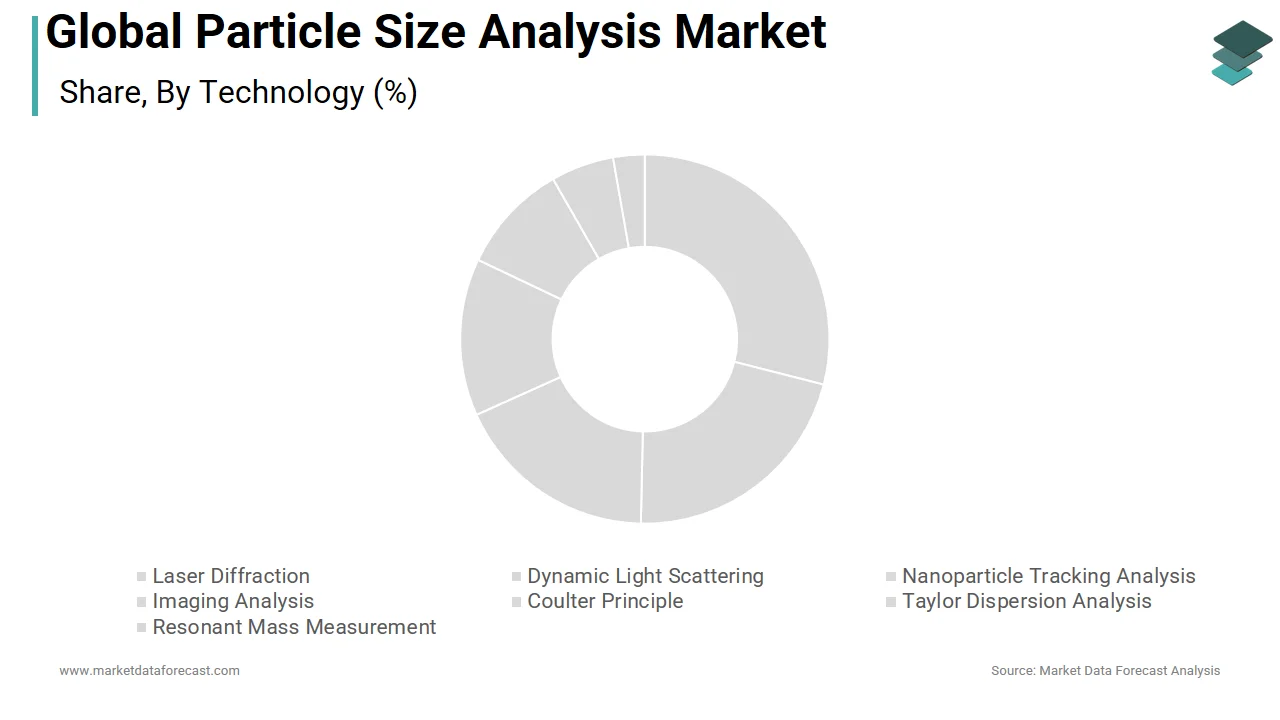
On the other end, the imaging analysis segment is predicted to record a promising CAGR of 15.4% over the forecast period in the global market as industries recognize that particle shape profoundly influences functional performance beyond what size alone can predict. According to the Powder Technology journal, needle-shaped active pharmaceutical ingredients exhibit 40% lower tablet tensile strength compared to equant particles of identical size distribution, necessitating shape quantification for formulation optimization. Traditional laser diffraction assumes spherical geometry, generating misleading equivalent diameters for irregular particles, causing process failures in powder flow, compaction, and dissolution critical to manufacturing success. According to the Food and Drug Administration, the Process Analytical Technology initiative encourages multidimensional particle characterization, recognizing that shape attributes constitute critical quality parameters affecting bioavailability and stability. Modern dynamic image systems capture over 100,000 particles per minute, generating statistically robust shape distributions impossible through manual microscopy counting. According to research from the National Institute of Standards and Technology, imaging-based aspect ratio measurements correlate with powder flowability coefficients at R-squared values exceeding 0.45, while laser diffraction correlations remain lower for the same materials. As additive manufacturing and advanced ceramics industries expand, where particle morphology determines sintering behavior and mechanical properties, demand for shape-sensitive analytics grows faster than conventional size-only markets. This functional relevance drives adoption despite higher instrument costs and more complex data interpretation requirements.
By Dispersion Type Insights
The wet dispersion systems segment commanded 60.9% of the global market share in 2025 because liquid media provide superior deagglomeration energy transfer compared to dry air streams, enabling accurate primary particle measurement for cohesive powders. According to the Royal Society of Chemistry, wet dispersion achieves complete deagglomeration for 85% of fine particulate samples, whereas dry methods leave persistent aggregates skewing results toward coarser apparent sizes. Ultrasonic probes integrated into wet systems deliver controlled cavitation energy, breaking interparticle bonds without fracturing primary crystals, critical for pharmaceutical and pigment characterization where structural integrity matters. According to the American Society for Testing and Materials E1617 standard, wet dispersion is recommended as the preferred method for particles below 50 micrometers due to inherent limitations of pneumatic dispersion at fine size ranges. According to industry surveys, 72% of quality control laboratories utilize wet systems as the default configuration, reserving dry analysis only for moisture-sensitive or water-reactive materials. Liquid carriers also enable density matching techniques, suspending particles uniformly and preventing sedimentation artifacts that plague dry free-fall measurements for heterogeneous samples. Vendors have enhanced wet system appeal through automated solvent exchange modules, reducing cross-contamination risks and enabling sequential analysis of incompatible materials without manual intervention. This operational flexibility, combined with superior dispersion efficacy, ensures wet analyzers remain workhorse instruments across diverse industrial sectors despite longer preparation times compared to dry alternatives.
On the other end, the dry particle analyzers segment is estimated to experience a noteworthy CAGR of 10.2% over the forecast period owing to the industrial quality control environments requiring rapid sequential measurements without liquid handling delays. According to the Mining Engineering journal, mineral processing plants analyze over 200 samples per shift using dry systems, achieving 3-minute total cycle times versus 12 minutes for equivalent wet analyses, enabling real-time process adjustments impossible with slower methods. Elimination of solvent preparation, disposal, and cleaning steps reduces consumable costs by 85%, according to cost-benefit analyses published by the Society for Mining, Metallurgy, and Exploration, improving economics for high-volume routine testing. Modern venturi dispersers generate sufficient shear forces to deagglomerate many industrial powders previously considered wet-only, expanding the applicable sample universe significantly. According to the Cement Sustainability Initiative, 90% of global cement producers now employ inline dry analyzers for continuous fineness monitoring, replacing grab sampling and offline wet testing that introduced hours-long feedback delays. Battery material manufacturers increasingly adopt dry systems for cathode powder characterization, avoiding moisture introduction that degrades electrochemical performance and complicates subsequent processing steps. As automation integration advances and dispersion technology improves, dry systems overcome historical limitations, capturing applications traditionally dominated by wet methods while offering superior throughput and operational simplicity for production environments prioritizing speed over ultimate dispersion perfection.
By Mode of Analysis Insights
The offline laboratory systems segment occupied 70.3% of the global market share in 2025 because they provide unmatched versatility for developing and validating methods before transferring to production environments. According to the Analytical Chemistry journal, 94% of new particle characterization methods originate in offline systems, where operators can systematically optimize dispersion parameters, optical models, and measurement sequences without disrupting manufacturing operations. This developmental role remains irreplaceable even as online systems proliferate, because process analyzers require pre-validated methods derived from controlled laboratory experimentation. According to the International Conference on Harmonisation Q2 guideline, method validation using offline reference systems is mandated, establishing them as the regulatory gold standard against which all alternative approaches must demonstrate equivalence. Contract testing laboratories, representing 28% of total market demand, rely exclusively on offline systems serving diverse client portfolios with varying material types and specification requirements that dedicated online systems cannot accommodate economically. Academic and government research institutions, constituting another 22% of installations, prioritize configurability over automation, needing interchangeable modules for exploring novel materials outside predefined industrial parameters. Vendor business models reinforce this dominance through modular accessory ecosystems allowing a single base unit to address wet, dry, and specialty applications, maximizing return on capital investment. Until online systems achieve comparable flexibility and regulatory acceptance, offline laboratories will remain foundational infrastructure for particle characterization across all sectors.
On the other side, the online and at-line particle analysis systems segment is predicted to expand at a notable CAGR of 14.4% over the forecast period as manufacturers transition from retrospective quality testing to proactive process control, preventing off-specification production. According to the International Society of Automation, implementing real-time particle monitoring reduces batch rejection rates by 42% through immediate corrective actions before deviations propagate through entire production runs. According to the US Food and Drug Administration Process Analytical Technology framework, online measurement is explicitly incentivized as a pathway to real-time release testing, eliminating end-product laboratory hold times averaging 5 to 7 days per batch. Chemical manufacturers report 18% yield improvements after installing inline crystallization monitors, enabling optimal endpoint determination based on actual particle growth rather than fixed time recipes. Modern probe designs withstand harsh process conditions, including temperatures exceeding 200 degrees Celsius and pressures above 10 bar, expanding deployment scope beyond benign laboratory environments. Edge computing integration enables local data processing, reducing latency to milliseconds and facilitating closed-loop control strategies impossible with delayed offline feedback. As Industry 4.0 initiatives mature and connectivity infrastructure improves, online systems transition from luxury investments to operational necessities for competitive manufacturing. This paradigm shift from quality detection to quality prevention sustains growth rates substantially exceeding traditional offline segments, despite higher implementation complexity and validation requirements.
REGIONAL ANALYSIS
North America Particle Size Analysis Market Analysis
North America dominated the market by capturing 35.1%of the global market share in 2025 and is expected to experience steady industrial expansion and heightened technological adoption over the next few years, primarily due to United States pharmaceutical manufacturing concentration and defense materials research funding. According to the Pharmaceutical Research and Manufacturers of America, US-based companies invested 122 billion dollars in research and development during 2024, with particle characterization integral to formulation development workflows across thousands of active programs. The US Department of Defense allocated 4.8 billion dollars for advanced materials research in fiscal year 2024, including energetic materials and armor ceramics requiring specialized particle analysis capabilities not found in commercial sectors. National Institute of Standards and Technology maintains world-leading particle metrology infrastructure, providing traceability services supporting 85% of North American analytical laboratories. The Food and Drug Administration, headquartered in Maryland, sets global regulatory expectations for particle characterization, influencing instrument procurement decisions across multinational corporations seeking US market access. Canada contributes through mining sector demand, with Natural Resources Canada reporting 38 billion dollars in mineral exploration spending during 2024, driving comminution optimization analytics. Mexico’s growing pharmaceutical contract manufacturing sector adds incremental demand as nearshoring trends redirect production from Asia. However, currency fluctuations and trade policy uncertainty create procurement volatility, distinguishing North American market dynamics from more stable European counterparts. Federal research grants and defense contracts provide counter-cyclical demand, stabilizing the market during commercial downturns and ensuring sustained vendor investment in regional support infrastructure.

Europe Particle Size Analysis Market Analysis
Europe is anticipated to achieve steady regulatory compliance modernization and sustainable manufacturing upgrades over the next few years due to the stringent regulatory standards and sustainability-driven analytical requirements differing from a pure performance focus elsewhere. According to the European Chemicals Agency, REACH registration dossiers submitted in 2024 included particle characterization data for over 12,000 substances, creating baseline analytical demand independent of manufacturing volumes. The European Pharmacopoeia establishes harmonized particle testing standards adopted by 39 member states, eliminating fragmentation that complicates other regional markets. Germany leads continental demand, with the Fraunhofer Institute reporting 2.4 billion euros in materials research funding during 2024 supporting advanced particle characterization infrastructure. Switzerland hosts major pharmaceutical headquarters, generating disproportionate analytical instrument procurement relative to population size. Nordic countries emphasize environmental particle monitoring, with the Norwegian Institute for Air Research deploying extensive aerosol characterization networks addressing Arctic pollution concerns. Brexit created UK regulatory divergence, requiring duplicate analytical validations, increasing workload for companies serving both EU and British markets. The European Green Deal’s Circular Economy Action Plan mandates recycled material characterization, creating an emerging demand stream absent in regions lacking equivalent sustainability legislation. However, fragmented language requirements and national procurement preferences slow pan-European vendor consolidation compared to the unified North American market. Regulatory leadership position ensures European standards influence global instrument design priorities despite smaller absolute market size than Asia-Pacific.
Asia-Pacific Particle Size Analysis Market Analysis
Asia-Pacific is projected to witness accelerated manufacturing automation and massive infrastructure investments over the next few years owing to the heterogeneity between Chinese volume leadership and Japanese precision specialization. According to the China National Bureau of Statistics, domestic pharmaceutical production value reached 3.8 trillion yuan in 2024, driving massive particle analyzer installations across thousands of generic drug manufacturers upgrading to meet WHO prequalification standards. Japan maintains technological leadership, with the Ministry of Economy, Trade and Industry supporting advanced materials and semiconductor packaging initiatives that mandate nanoscale particle metrology.
COMPETITIVE LANDSCAPE
Competition in the particle size analysis market intensifies as established instrumentation giants face pressure from specialized niche players and emerging Chinese manufacturers offering cost-competitive alternatives. Incumbent advantage stems from decades of regulatory acceptance and installed base loyalty, yet newcomers disrupt through innovative detection principles and aggressive pricing targeting price-sensitive segments excluded by premium positioning. Competitive differentiation increasingly centers on software ecosystems and data integration capabilities rather than pure hardware specifications, as customers seek seamless workflow connectivity across laboratory information management systems and enterprise quality platforms. Vendor consolidation accelerates through strategic acquisitions as larger players absorb specialized technology providers to fill capability gaps in nanoparticle characterization or shape analysis domains. Geographic expansion creates new battlegrounds as Western vendors compete against domestic Asian suppliers benefiting from government procurement preferences and localized service networks. Success ultimately requires balancing technological sophistication with regulatory compliance and user accessibility in an environment where measurement credibility matters as much as analytical performance for sustaining long-term market position amid evolving customer expectations about ease of use and total cost of ownership across diverse application contexts worldwide.
KEY MARKET PLAYERS
The leading companies operating in the global particle size analysis market include:
- Malvern Panalytical Ltd.
- Horiba Ltd.
- Beckman Coulter Inc.
- Agilent Technologies Inc.
- Microtrac MRB
- Micromeritics Instruments Corporation
- IZON Science Limited
- Sympatec GmbH
- Shimadzu Corporation
- Anton Paar GmbH
- Brookhaven Instruments Corporation
- Bettersize Instruments Ltd.
- Particle Sizing Systems, LLC
- Jinan Winner Particle Instrument Stock Co., Ltd.
- Retsch GmbH
- Otsuka Electronics Co. Ltd.
- LS Instruments AG
- CORDOUAN Technologies SAS
- Metso Outotec
TOP PLAYERS IN THE MARKET
- Malvern Panalytical leads global particle characterization through comprehensive laser diffraction and nanoparticle tracking analysis platforms serving pharmaceutical and advanced materials sectors worldwide. The company strengthened its position by launching Mastersizer 4000E in early 2025, featuring enhanced dry dispersion capabilities for battery materials and improved software compliance with 21 CFR Part 11 requirements. This innovation addresses growing electric vehicle supply chain characterization demands while maintaining regulatory alignment for pharmaceutical customers. Malvern continues expanding application support centers across Asia Pacific to provide localized technical expertise, reducing customer validation burdens. Their integrated data management solutions connect laboratory instruments with enterprise quality systems, creating ecosystem lock-in effects that sustain long-term customer relationships across diverse industrial applications requiring precise particle measurement and regulatory documentation.
- Beckman Coulter contributes significantly to particle size analysis through complementary laser diffraction and dynamic light scattering technologies, addressing broad size ranges from nanometers to millimeters. The company recently introduced the LS 13 320 XR system in late 2024, incorporating extended-range optics and automated polarization intensity differential scattering for improved submicron resolution without multiple detector configurations. Beckman strengthens market position through strategic bundling of particle analyzers with flow cytometry and centrifugation platforms, offering integrated workflows for biopharmaceutical development laboratories. Their digital service platform enables remote diagnostics and predictive maintenance, reducing instrument downtime for high-throughput quality control environments. Continuous investment in user interface simplification addresses operator skill gaps while maintaining analytical rigor required for regulated industries seeking compliant yet efficient particle characterization solutions across research and manufacturing settings globally.
- Horiba Scientific advances particle characterization through a unique combination of laser diffraction, dynamic image analysis, and zeta potential measurement within a unified software environment. The company reinforced its market standing by releasing Partica LA 960V2 in January 2025, featuring upgraded camera resolution and AI-assisted dispersion optimization for challenging samples, including pigments and food powders. Horiba integrates particle analysis with Raman spectroscopy, enabling simultaneous chemical and physical characterization, streamlining formulation development workflows. Their global network of calibration laboratories provides traceable certification services supporting regulatory compliance for multinational customers operating across multiple jurisdictions. Strategic partnerships with academic institutions facilitate method development for emerging applications like additive manufacturing powders and environmental microplastics, ensuring technology relevance beyond traditional industrial segments while building a next-generation user base through educational collaborations and joint research publications demonstrating practical utility.
TOP STRATEGIES USED BY KEY MARKET PARTICIPANTS
Key players employ vertical integration strategies, acquiring specialized detector manufacturers to enhance measurement capabilities within existing platforms rather than developing technologies internally. Companies increasingly offer subscription-based software models, providing continuous updates and cloud connectivity, transforming one-time hardware sales into recurring revenue streams aligned with customer operational expenditures. Vendors prioritize regulatory compliance features, embedding audit trails and electronic signatures directly into instrument firmware, addressing pharmaceutical customer requirements without costly custom validation services. Strategic expansion into emerging geographic markets establishes local application laboratories, reducing adoption barriers for customers lacking internal expertise or facing import restrictions on analytical equipment. Market leaders invest substantially in artificial intelligence integration, automating method optimization and result interpretation, reducing operator dependency while improving measurement reproducibility across distributed laboratory networks. Partnerships with raw material suppliers create reference databases, enhancing the instrument value proposition through preloaded application methods accelerating customer onboarding and demonstrate immediate return on investment compared to blank-slate implementations requiring extensive empirical development efforts before achieving productive analytical throughput.
MARKET SEGMENTATION
The global particle size analysis market research report is segmented and sub-segmented based on the technology, dispersion type, mode of analysis, end-user industry, and region.
By Technology
- Laser Diffraction
- Dynamic Light Scattering
- Nanoparticle Tracking Analysis
- Imaging Analysis
- Coulter Principle
- Taylor Dispersion Analysis
- Resonant Mass Measurement
By Dispersion Type
- Wet Particle Analyzers
- Dry Particle Analyzers
- Spray Particle Analyzers
By Mode of Analysis
- Offline / Laboratory Systems
- Online / At-Line Systems
- Inline / Real-Time Process Systems
By End-User Industry
- Pharmaceuticals and Biopharmaceuticals
- Chemicals and Petrochemicals
- Food, Beverage and Nutrition
- Mining, Minerals and Cement
- Agriculture and Forestry
- Energy and Battery Materials
- Environmental and Regulatory Labs
By Region
- Latin America
- Europe
- Asia Pacific
- North America
- Middle-East & Africa