Global Mushrooms Market Size Share, Trends, And Growth Analysis Report, Segmented By Type (Button, Shiitake, Oyster, Others), Form & Region (North America, Europe, Latin America, Asia Pacific, Middle East & Africa), Industry Forecast From 2025 To 2033
Global Mushrooms Market Summary
The global mushrooms market size was valued at 18.24 million tonnes in 2024, projected to reach 19.54 million tonnes in 2025, and is anticipated to grow significantly to 33.88 million tonnes by 2033, expanding at a CAGR of 7.12% from 2025 to 2033. The market is being driven by increasing consumer preference for plant-based proteins, rising health awareness, and expanding use of mushrooms in functional foods, nutraceuticals, and pharmaceuticals. Additionally, mushrooms’ low-fat, high-fiber, and rich vitamin content position them as a sustainable and nutritious alternative to meat.
Key Market Trends
- Strong growth in demand for mushrooms as a meat substitute in vegan and vegetarian diets.
- Increasing use of mushrooms in nutraceuticals and dietary supplements for immunity and wellness.
- Expansion of processed and packaged mushroom products, including canned, dried, and powdered forms.
- Rising investment in controlled environment agriculture (CEA) and vertical farming to ensure year-round supply.
Segmental Insights
- By type, the button mushroom (Agaricus bisporus) segment dominated the market with 58.4% share in 2024, owing to its wide availability, affordability, and high culinary use.
- By form, the fresh mushroom segment held the largest share at 67.4% in 2024, reflecting strong consumer preference for fresh produce in both household and foodservice sectors.
Regional Insights
- Asia-Pacific was the top-performing region, accounting for 74.3% of the global mushrooms market in 2024, supported by strong production capacity in China, India, and other Asian countries.
- Europe is expected to witness significant growth due to rising adoption of mushrooms in healthy diets and expanding processed mushroom industries.
- North America is showing steady growth fueled by increasing demand for functional foods and sustainable protein sources.
- Latin America and the Middle East & Africa are emerging regions, with gradual market expansion driven by growing consumer awareness and dietary diversification.
Competitive Landscape
Key players in the global mushrooms market include Monaghan Mushrooms, Costa Group, Bonduelle, Giorgio Fresh, Monterey Mushrooms, Drinkwater’s Mushrooms, CMP Mushrooms, Shanghai Finc Bio-Tech, Fujishukin, Okechamp, Banken Champignons, Mycofarm, and Hughes Mushrooms. These companies are focusing on vertical integration, advanced cultivation technologies, and value-added mushroom products to strengthen their market presence.
Global Mushrooms Market Size
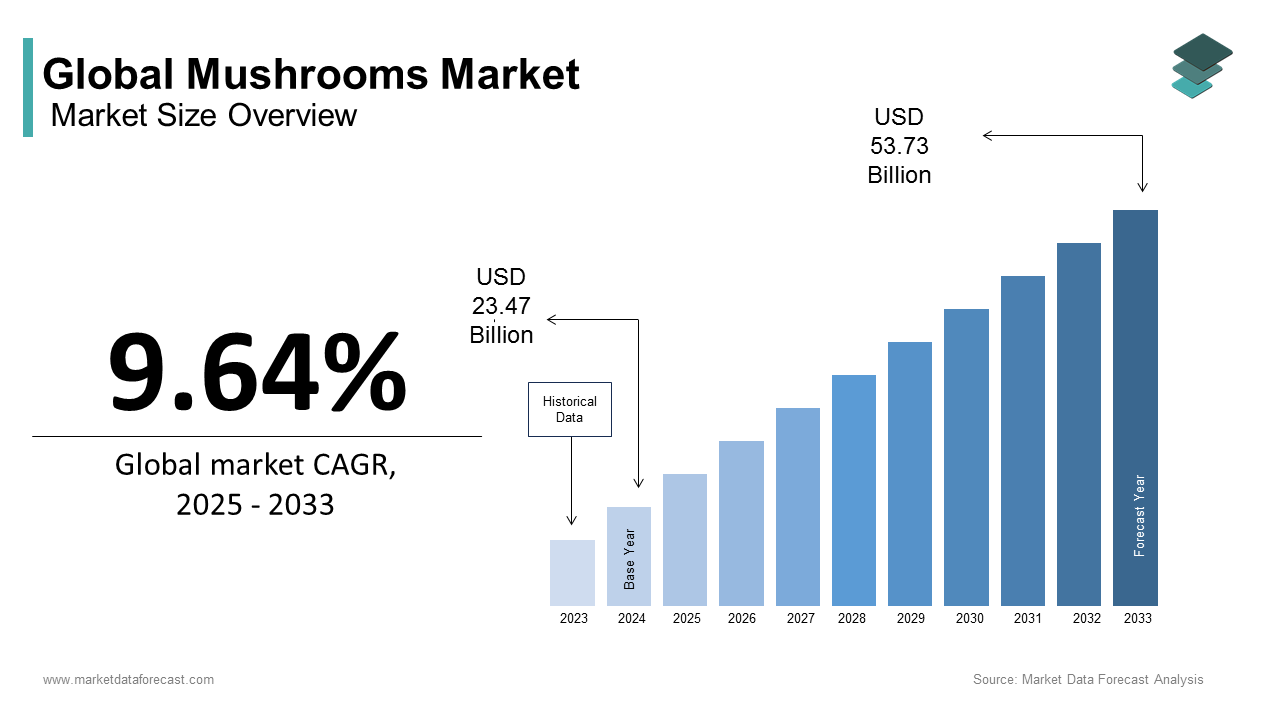
The global mushrooms market size was calculated to be USD 23.47 billion in 2024 and is anticipated to be worth USD 53.73 billion by 2033 from USD 25.73 billion in 2025, growing at a CAGR of 9.64% during the forecast period.
Mushrooms refers to the edible fungi, including species such as Agaricus bisporus (button, cremini, portobello), Pleurotus (oyster), Lentinula edodes (shiitake), and specialty varieties like Hericium erinaceus (lion’s mane) and Ganoderma lucidum (reishi). These fungi are cultivated through controlled substrate-based agriculture, often in climate-regulated indoor environments, allowing year-round production independent of seasonal fluctuations. According to data compiled from FAO and FAOSTAT for 2023, the total global mushroom production was approximately 44 million metric tons. The United States saw per capita mushroom consumption in the U.S. reached kilograms annually, reflecting growing integration into mainstream diets. Unlike most crops, mushrooms require minimal land and generate high yields per square meter. Their low environmental footprint and nutritional density, rich in selenium, B vitamins, and protein, position them as a sustainable food source in urban and resource-constrained settings.
MARKET DRIVERS
Rising Consumer Demand for Plant-Based and Alternative Protein Sources
The global shift toward plant-forward diets has elevated mushrooms as a key meat substitute due to their umami-rich flavor, fibrous texture, and high protein content is driving the growth of mushroom market. According to the study, sales of plant-based meats surge, with mushroom-based products capturing a growing share. The blend reduces saturated fat and enhances moisture retention while cutting production costs. Companies like Meati Foods and Prime Roots are leveraging mycelium fermentation to develop whole-cut mushroom steaks by capitalizing on clean-label appeal. Thus, mushrooms are increasingly viewed as a scalable, low-impact protein solution in both retail and foodservice sectors.
Expansion of Functional and Medicinal Mushroom Applications in Health Supplements
Mushrooms are gaining prominence in nutraceuticals due to their bioactive compounds, including beta-glucans, polysaccharides, and triterpenoids, which exhibit immunomodulatory and neuroprotective properties, is driving the growth of mushroom market. In Japan, Maitake and Reishi extracts are integrated into over-the-counter immune support supplements, with the functional mushroom trade surged, as per the study. The United States recorded a year-on-year increase in mushroom-based supplement sales, according to the research.
MARKET RESTRAINTS
High Post-Harvest Perishability and Limited Shelf Life
Limited shelf life of fresh mushroom is leading to significant spoilage and economic loss, which is challenging the growth of mushroom market. A portion of harvested mushrooms are lost between farm and retail due to moisture loss, browning, and microbial degradation. In India, post-harvest losses in mushroom supply chains is notable, primarily due to inadequate cold storage and fragmented logistics, as per study. Even in developed markets, spoilage remains a challenge The sensitivity of mushrooms to temperature fluctuations and ethylene exposure further complicates storage and transport. Modified atmosphere packaging (MAP) and anti-browning treatments are being adopted, but their high cost limits accessibility for small-scale producers. This perishability constrains geographic reach, discourages long-distance exports, and increases price volatility, particularly for specialty varieties.
Stringent Regulatory Barriers for Medicinal Mushroom Claims
Strict regulatory frameworks governing health claims are hindering the commercialization in western countries, which is straightly to hamper the growth of mushroom market. The U.S. Food and Drug Administration does not approve mushroom extracts as drugs unless supported by rigorous clinical trials, limiting marketing to general wellness statements. In the European Union, the European Food Safety Authority has rejected many of health claim applications for mushroom-based products due to insufficient evidence, as per resarch. For example, claims linking Ganoderma lucidum to cancer prevention are prohibited without pharmaceutical authorization. This regulatory ambiguity discourages investment in clinical research and restricts product differentiation.
MARKET OPPORTUNITIES
Advancements in Vertical Farming and Controlled Environment Agriculture (CEA)
Innovations in vertical farming are revolutionizing mushroom cultivation by enabling year-round, soil-free production in urban and peri-urban settings with minimal resource use is proving opportunity for the growth of mushroom market. According to the research, mushroom-specific CEA facilities consume less water than traditional agriculture and yield more per square meter. In Singapore, where land is scarce, companies operate multi-tiered facilities producing Pleurotus and Shiitake, achieving harvest cycles of just days, as per the study. These systems also minimize contamination risks and allow precise control over texture and nutrient content.
Utilization of Agricultural Waste as Mushroom Substrate
Transforming farm by-products like banana leaves and sugarcane bagasse into mushroom feedstock is providing growth opportunities for the global mushroom market. According to the research, notable metric tons of crop residues are burned annually in South and Southeast Asia, contributing to air pollution and carbon emissions. Mushroom farming offers a sustainable alternative; in Vietnam, smallholder farmers using rice straw to grow Pleurotus increased household income while reducing open-field burning, as per the study. This circular economy model not only enhances rural livelihoods but also aligns with global sustainability goals, including the United Nations’ Sustainable Development Goal 12 on responsible consumption and production.
MARKET CHALLENGES
Contamination Risks from Microbial and Fungal Pathogens in Cultivation
Mushroom farming is highly susceptible to contamination by competing molds, bacteria, and mites, which can decimate entire batches if not controlled, is restricting the growth of mushroom market. Trichoderma species, known as “green mold,” are among the most destructive pathogens, capable of infecting up to a portion of substrate in commercial facilities, according to the study. In India, contamination-related losses in Pleurotus farms average 20–25% per cycle, as per research. The problem is exacerbated by inadequate sterilization practices, especially in small-scale operations. In China, where a portion of mushroom farms are family-run, inconsistent hygiene protocols have led to recurring outbreaks of Pseudomonas tolaasii, causing bacterial blotch disease, as per the study. Biosecurity measures such as HEPA filtration, UV sterilization, and pasteurization tunnels are effective but costly, limiting adoption. Therefore, ensuring contamination control without inflating production costs remains a important operational challenge as the market scales.
Lack of Standardization in Cultivation and Quality Grading
The absence of uniform quality standards across regions hampers market integration, export competitiveness, and consumer confidence is impeding the growth of mushroom market. Unlike fruits and vegetables, mushrooms lack globally harmonized grading systems for size, color, texture, and freshness. In the European Union, member states apply varying criteria for classifying button mushrooms, leading to trade disputes and rejections at borders. This inconsistency affects yield, shelf life, and nutritional content.
REPORT COVERAGE
| REPORT METRIC | DETAILS |
| Market Size Available | 2024 to 2033 |
| Base Year | 2024 |
| Forecast Period | 2025 to 2033 |
| CAGR | 9.64% |
| Segments Covered | By Type, Form and Region |
| Various Analyses Covered | Global, Regional & Country Level Analysis; Segment-Level Analysis; DROC, PESTLE Analysis; Porter’s Five Forces Analysis; Competitive Landscape; Analyst Overview of Investment Opportunities |
| Regions Covered | North America, Europe, APAC, Latin America, Middle East & Africa |
| Market Leaders Profiled | Monaghan Mushrooms, Costa Group, Bonduelle, Giorgio Fresh, Monterey Mushrooms, Drinkwater’s Mushrooms, CMP Mushrooms, Shanghai Finc Bio-Tech, Fujishukin, Okechamp, Banken Champignons, Mycofarm, Hughes Mushrooms |
SEGMENTAL ANALYSIS
By Type Insights
The button mushroom (Agaricus bisporus) segment dominated the mushrooms market by capturing 58.4% of share in 2024. The growth of the button mushroom is primarily driven by its widespread acceptability, mild flavor, and integration into mainstream culinary practices across Western and urban Asian markets. In the United States, button mushrooms represent a portion of fresh mushroom sales, with per capita consumption reaching kilograms annually, according to the study. The variety’s adaptability to mechanized cultivation systems enables large-scale and cost-efficient production. Apart from these, its use in processed foods, such as canned slices and dehydrated powders, further entrenches its market position. The mushroom’s role in blended meat products has also expanded its application in foodservice and retail sectors, ensuring sustained demand.
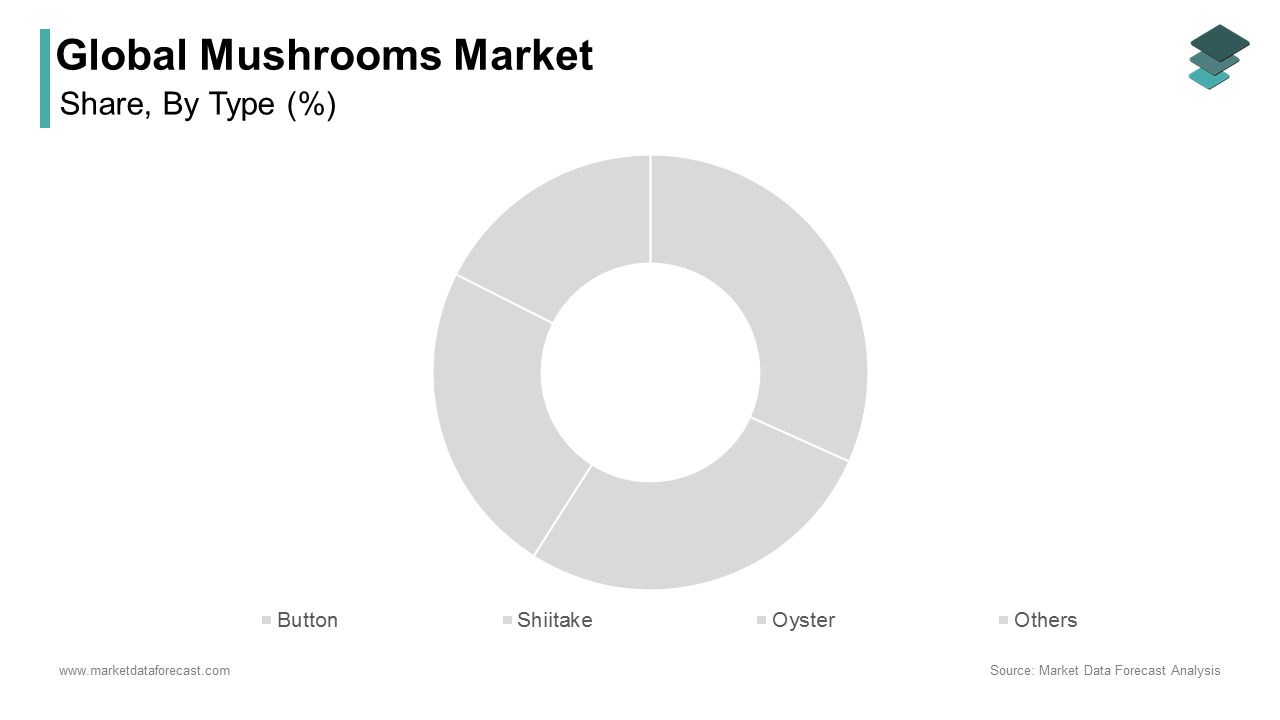
The oyster mushroom (Pleurotus spp.) segment is predicted to witness the highest CAGR of 12.6% during the forecast period due to its rapid cultivation cycle, resilience to diverse climates, and suitability for circular economy models. Oyster mushrooms can be grown on agricultural waste such as rice straw, sugarcane bagasse, and coffee pulp, making them ideal for smallholder farmers in developing economies. In Vietnam, households cultivate oyster mushrooms using low-cost substrates, generating an average supplemental income per year, according to the study. The species also exhibits superior nutritional value, higher than most edible fungi, as per the research. Apart from these, its meaty texture and umami flavor have made it a preferred ingredient in plant-based meat alternatives.
By Form Insights
The fresh mushroom segment dominated the mushroom market by capturing 67.4% of the global market share in 2024. The growth of fresh mushroom segment is primarily driven by consumer preference for natural, minimally processed foods and the integration of mushrooms into daily cooking routines. In Europe, a portion of mushroom purchases are in fresh form, particularly in countries like Germany and France, where they are used in soups, sauces, and sautés. The expansion of modern retail and cold chain infrastructure has extended shelf life and improved availability, reducing spoilage rates in well-refrigerated supply chains, according to the research. In India, the number of refrigerated transport units dedicated to perishable horticulture products, including mushrooms, increased, as per the study. The rise of farm-to-table restaurants and clean-label trends further reinforces the appeal of fresh mushrooms across both home and professional kitchens.
The dried mushroom segment is predicted to witness the highest CAGR of 10.9% from 2025 to 2033 due to the rising demand for concentrated flavor ingredients, extended shelf life, and convenience in food manufacturing. Dried shiitake and porcini mushrooms are increasingly used in instant noodles, soups, and seasoning blends due to their intense umami profile. In Japan, dried shiitake consumption accounts for a portion of total shiitake usage, particularly in dashi broth and traditional dishes, according to the Japan Mushroom Association. Apart from these, dried mushrooms are easier to transport and store, reducing logistical costs.
REGIONAL ANALYSIS
Asia Pacific Mushrooms Market Insights
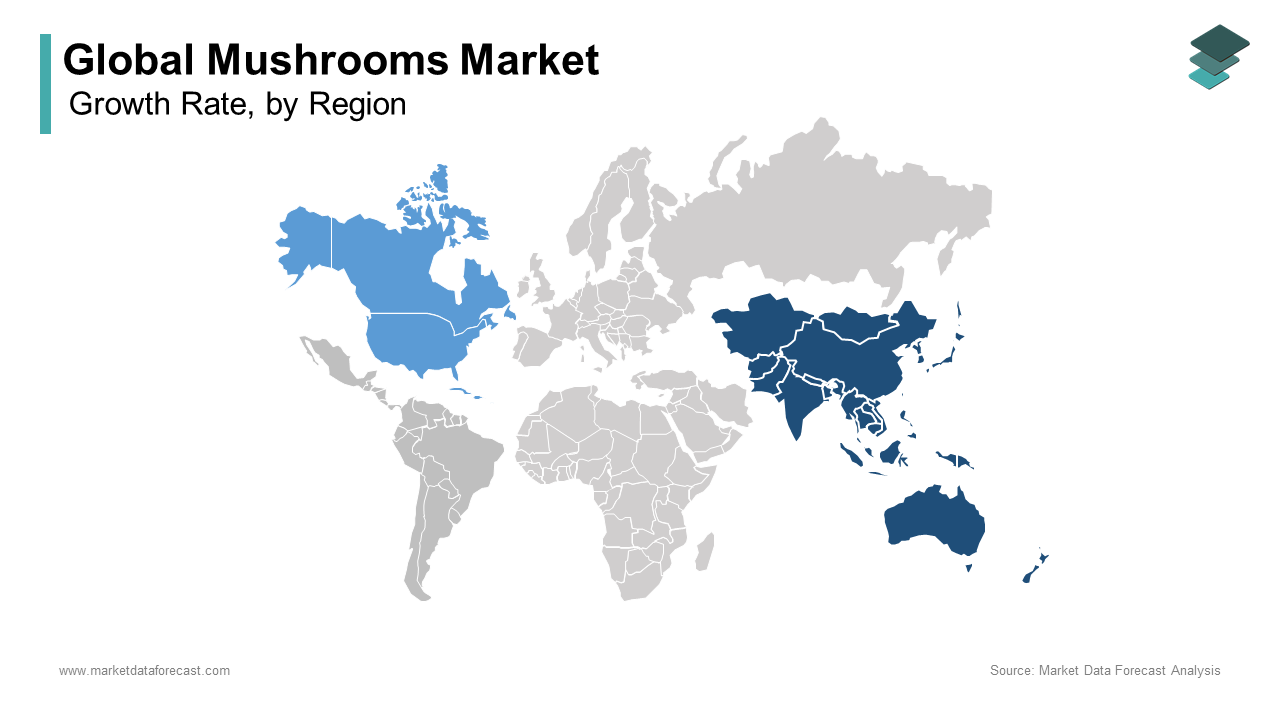
Asia Pacific was the top performer in the global mushrooms market and accounted for 74.3% of the global market share in 2024. The growth of the market in this region is driven by the large-scale commercial farming with widespread smallholder participation in China, which alone produces millions of metric tons annually. China’s dominance is supported by state-supported agricultural programs and advanced substrate-based growing techniques, enabling year-round output. India has emerged as a fast-growing producer. Japan and South Korea maintain high per capita consumption by integrating shiitake and enoki into daily diets. The region also leads in export value, with dried and frozen mushrooms shipped to North America and Europe. However, inconsistent quality standards and limited cold chain access in rural areas constrain further commercialization, despite strong domestic and international demand.
North America Mushrooms Market Insights
North America mushrooms market held 14.2% of share in 2024. The United States is the largest consumer in the region, with annual fresh mushroom intake metric tons, driven by health trends and culinary innovation. Pennsylvania alone produces a portion of U.S. mushrooms, as per the study. The rise of functional foods has boosted demand for medicinal varieties like lion’s mane and reishi, with supplement sales growing, according to the research. Canada has also seen increased adoption of gourmet and specialty mushrooms in urban markets. E-commerce platforms and meal kit services like HelloFresh have further expanded access. Regulatory support for organic certification and sustainable farming continues to shape production standards across the region.
Europe Mushrooms Market Insights
Europe grew steadily in the mushrooms market. Th growth of Europe in the global market is driven by food safety, traceability, and sustainability, with many commercial mushroom farms in the Netherlands and the UK operating under certification, as per the study. Button mushrooms dominate retail shelves, but demand for specialty varieties like shiitake and oyster is rising in Germany, France, and Scandinavia due to plant-based diet trends. The European Union imported metric tons of mushrooms, primarily from Poland and the Netherlands, which serve as regional hubs. Poland produced metric tons, making it the largest EU producer, according to the research. Urban farming initiatives in cities like Berlin and Copenhagen are also promoting local as well as low-carbon mushroom production by aligning with the EU’s Farm to Fork strategy and reinforcing the sector’s sustainability credentials.
Latin America Mushrooms Market Insights
Latin America is expected to be the most lucrative region in the mushrooms market. Brazil leads the region with an annual output of notable metric tons, primarily button and shiitake varieties, as per the study. Mexico has seen rapid growth in oyster mushroom cultivation. Urbanization and rising health awareness are driving demand in cities like São Paulo and Bogotá, where supermarkets now dedicate dedicated mushroom sections. Chile has emerged as a key exporter of dried and frozen mushrooms to North America by leveraging its phytosanitary compliance and cold chain infrastructure. However, limited access to certified spawn and technical training hinders scalability. Thus, the region’s agro-climatic diversity and growing entrepreneurial interest position it for accelerated expansion in the coming decade.
Middle East and Africa Mushrooms Market Insights
The mushrooms market in the Middle East & Africa is likely to grow considerably over the forecast period and the growth of the Middle East & Africa is driven by expatriate populations, luxury hotels, and health-conscious consumers in cities like Dubai and Riyadh. The Gulf subregion is a high-value import market, while Sub-Saharan Africa is witnessing grassroots cultivation growth. In contrast, Sub-Saharan Africa produces less share of global output, but small-scale farming is expanding rapidly. Nigeria supports mushroom farming as a youth employment initiative, with many new farms established since 2020. Despite logistical and educational barriers, the region holds untapped potential for decentralized, sustainable food production.
COMPETITIVE LANDSCAPE
KEY MARKET PLAYERS
Companies playing a promising role in the global mushrooms market include
- Monaghan Mushrooms
- Costa Group
- Bonduelle
- Giorgio Fresh
- Monterey Mushrooms
- Drinkwater’s Mushrooms
- CMP Mushrooms
- Shanghai Finc Bio-Tech
- Fujishukin
- Okechamp
- Banken Champignons
- Mycofarm
- Hughes Mushrooms
Top Strategies Used by the Key Market Participants
Key players in the mushrooms market are leveraging vertical integration, technological innovation, sustainable sourcing, strategic export partnerships, and product diversification to strengthen their market positions. Companies are investing in controlled-environment agriculture to ensure consistent quality and year-round supply. Automation in spawning, harvesting, and packaging is reducing labor dependency and contamination risks. Firms are also expanding into value-added segments such as dried extracts, functional foods, and mycelium-based materials. Collaborations with smallholder farmers enhance supply chain resilience, while digital traceability platforms improve consumer trust. Apart from these, alignment with global sustainability goals, such as zero-waste cultivation and biodegradable packaging, is becoming a competitive differentiator in premium and export markets.
COMPETITION OVERVIEW
The mushrooms market features a fragmented yet evolving competitive landscape, where large-scale commercial producers coexist with thousands of smallholder farms and emerging agri-tech startups. Multinational companies dominate export channels and high-end retail, leveraging automation, branding, and global logistics. Regional players compete through cost efficiency and local market knowledge, particularly in Asia and Africa. The rise of urban farming and mycelium-based innovation has introduced disruptive entrants focused on sustainability and health applications. Competition is increasingly defined by traceability, freshness, and compliance with food safety standards rather than price alone. In Asia Pacific, the interplay between traditional cultivation and modernization drives differentiation.
Top Players In The Market
Monaghan Mushrooms
Monaghan Mushrooms has established a strong presence in the Asia Pacific market through strategic partnerships and technology transfer initiatives that support local production scalability. The company, headquartered in Ireland, has extended its expertise in controlled-environment cultivation to countries, where it collaborates with agricultural cooperatives to implement high-yield, hygienic growing systems. Monaghan has positioned itself as a knowledge leader by sharing best practices in automation and quality control which enables regional producers to meet export-grade standards and improve shelf life and thereby strengthening the overall competitiveness of Asia Pacific mushroom supply chains.
Greenyard Foods
Greenyard Foods plays a pivotal role in connecting Asian mushroom producers with global markets through its integrated fresh produce logistics and processing network. The company has expanded its sourcing operations by establishing long-term contracts with certified farms to ensure consistent supply of oyster and shiitake mushrooms for European and North American clients. The facility adheres to BRCGS and GlobalG.A.P. standards, ensuring compliance with stringent food safety regulations. These efforts not only enhance supply reliability but also reinforce the company’s commitment to ethical sourcing and circular agriculture in the Asia Pacific region.
Mushroom Company (Australia)
The Mushroom Company (Australia) is a leading regional player that has significantly influenced the premium fresh mushroom segment across Oceania and Southeast Asia. Based in Victoria, the company specializes in high-quality Agaricus bisporus and specialty varieties such as king oyster and enoki, distributed through major retailers like Woolworths and Coles. The company also introduced biodegradable packaging made from mushroom mycelium waste by aligning with Australia’s National Plastics Plan.
MARKET SEGMENTATION
This research report on the global mushrooms market is segmented and sub-segmented based on type, form and region.
By Type
- Button
- Shiitake
- Oyster
- Others
By Form
- Fresh
- Frozen
- Dried
- Canned
By Region
- North America
- Europe
- Latin America
- Asia Pacific
- Middle East & Africa
Frequently Asked Questions
1. What are the major factors driving the mushrooms market growth?
Key drivers include increasing health consciousness, demand for plant-based proteins, rising vegetarian and vegan populations, and the use of mushrooms in functional foods and nutraceuticals.
2. Which types of mushrooms are most popular in the market?
Button mushrooms dominate global consumption, followed by shiitake, oyster, portobello, and specialty mushrooms like enoki and maitake.
3. How is the demand for functional and medicinal mushrooms influencing the market?
Medicinal mushrooms such as reishi, chaga, lion’s mane, and cordyceps are gaining traction in supplements and nutraceuticals due to their immune-boosting and adaptogenic properties.
4. Which end-use industries contribute to mushroom demand?
Key industries include food & beverages, dietary supplements, pharmaceuticals, cosmetics, and nutraceuticals.
5. What role does sustainability play in the mushrooms market?
Mushroom cultivation is considered sustainable since it uses agricultural byproducts, requires less land, and has a lower environmental footprint compared to meat production.
6. What are the key distribution channels for mushrooms?
Supermarkets/hypermarkets, specialty stores, direct sales, and increasingly, e-commerce platforms are driving distribution.
7. What challenges does the mushrooms market face?
Challenges include perishability and short shelf life, high storage and transportation costs, and price fluctuations due to supply chain issues.
8. How is technology impacting mushroom farming?
Technologies like climate-controlled indoor farming, vertical farming, and biotechnology are enhancing yield, quality, and year-round availability.
9. What are the recent trends in mushroom-based products?
Trends include mushroom powders, plant-based meat alternatives, mushroom coffee, mushroom snacks, and fortified supplements.
10. What is the forecasted growth of the mushrooms market in the next 5–10 years?
The market is projected to grow at a strong CAGR, fueled by rising demand for plant-based protein, functional food innovations, and expansion into emerging markets.
Related Reports
Access the study in MULTIPLE FORMATS
Purchase options starting from
$ 2500
Didn’t find what you’re looking for?
TALK TO OUR ANALYST TEAM
Need something within your budget?
NO WORRIES! WE GOT YOU COVERED!
Call us on: +1 888 702 9696 (U.S Toll Free)
Write to us: sales@marketdataforecast.com