- Product Description Description
- Table of Contents TOC
- List of Table & Figure LOT
- Get Free Sample PDF Sample PDF
Market Size, 2025
$3.14 BnMarket Estimate, 2026
$3.49 BnMarket Forecast, 2034
$8.15 BnCAGR, 2026–2034
11.18%Executive Summary: Global Pen Needles Market
- Market Scope: Comprehensive global market analysis of the pen needles industry covering therapies (insulin, GLP-1, and growth hormone therapy), types (standard and safety needles), needle lengths (4mm, 6mm, 8mm, 10mm, 12mm), modes of purchase (retail and non-retail), and regional landscapes across North America, Europe, Asia Pacific, Latin America, and the Middle East & Africa.
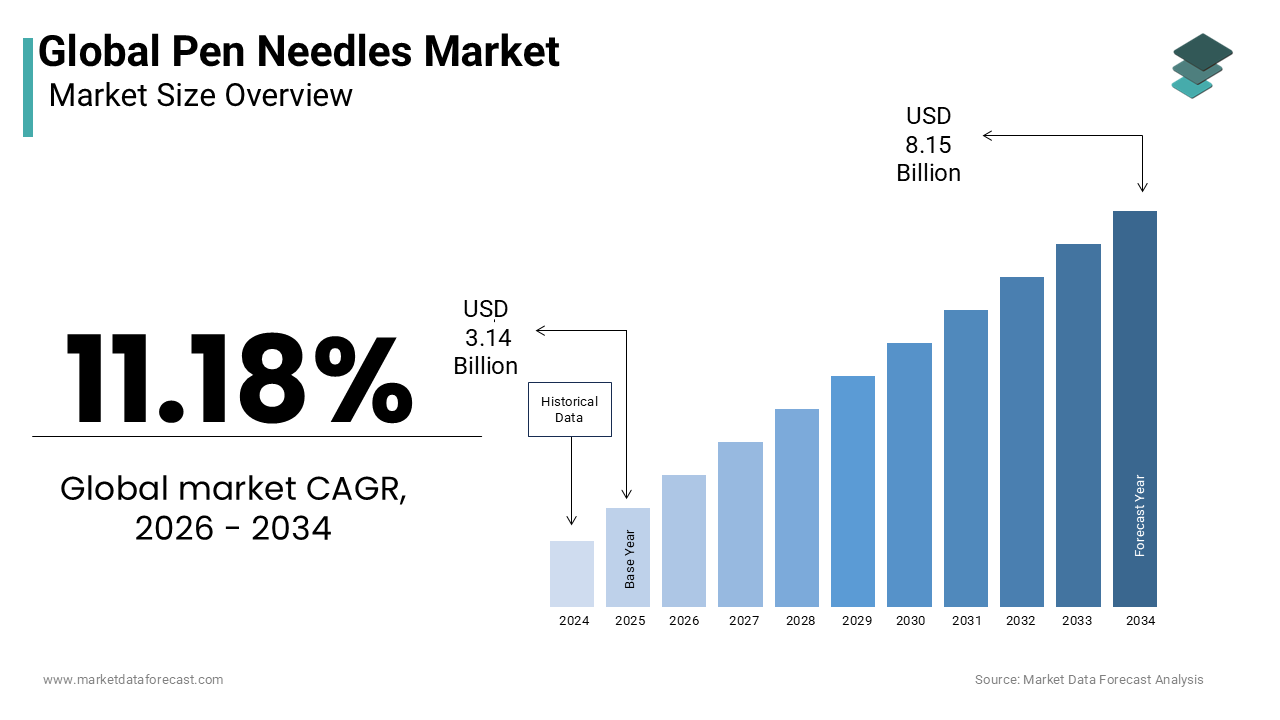
- Market Valuation: Valued at USD 3.14 billion in 2025, estimated at USD 3.49 billion in 2026, and projected to reach USD 8.15 billion by 2034, registering a strong CAGR of 11.18% (2026–2034).
- Primary Growth Drivers: Escalating global prevalence of diabetes and obesity rates; growing aging population highly susceptible to metabolic disorders; and continuous technological advancements enhancing needle safety, comfort, and patient convenience in self-administration.
Key Market Segment Metrics (2026–2034)
| Category | Leading Segment / Position | Growth Dynamics |
|---|---|---|
| By Therapy | Insulin Therapy (held the largest market share in 2025 and remains the fastest-growing segment driven by rising diabetes patient populations) | GLP-1 and growth hormone therapy segments are gaining substantial traction for weight management and specialized hormone care. |
| By Type | Standard Pen Needle (accounts for a larger overall volume share due to cost-effectiveness and broad pen compatibility) | Safety pen needles are projected to grow at a higher CAGR driven by worker safety mandates and needlestick injury prevention guidelines. |
| By Needle Length | 8mm & 4mm (8mm commands the largest share for standard adult body builds, while 4mm shows high growth for enhanced patient comfort) | Shorter needle options are increasingly favored to minimize the risk of intramuscular injection. |
| By Region | North America (accounted for 32.5% of the global market share in 2025, anchored by strong healthcare expenditure and favorable reimbursement policies) | Asia Pacific is expanding at the highest CAGR of 14.10%, fueled by surging diabetic populations and improved healthcare access in China and India. |
Major Market Players & Market Structure
Market Structure: Highly competitive global marketplace dominated by established multinational medical technology companies focusing on product innovation, safety features, and strategic healthcare partnerships.
Key Companies: Becton, Dickinson & Company, Novo Nordisk A/S, Ypsomed Holding AG, UltiMed, Inc., Allison Medical, Inc., Owen Mumford, Ltd., B. Braun Melsungen, Artsana S.p.A., HTL-STREFA S.A., and Terumo Corporation.
 Download Free Sample Report
Global Pen Needles Market Size
The worldwide pen needles market size was valued at USD 3.14 billion in 2025. The market size is expected to be worth USD 8.15 billion by 2034 from USD 3.49 billion in 2026, growing at a CAGR of 11.18% between 2026 to 2034.
The pen needles are specialized thin-walled hollow tubes designed for use with insulin pens and other injectable medication delivery systems to facilitate subcutaneous administration of therapeutic agents. These devices feature a standardized hub that attaches securely to pen injectors, ensuring precise dosing and minimal patient discomfort during self-administration. The global prevalence of diabetes mellitus has surged dramatically creating an urgent need for reliable and user-friendly injection accessories. According to the International Diabetes Federation, approximately 537 million adults were living with diabetes in 2021, a figure projected to rise to 643 million by 2030. This escalating health burden necessitates widespread adoption of convenient delivery methods such as pen needles which offer superior ease of use compared to traditional syringes. The World Health Organization emphasizes that effective management of chronic conditions relies heavily on patient adherence to treatment regimens which is significantly enhanced by the simplicity and portability of pen-based systems. Furthermore, the aging global population contributes to increased demand as older adults often require assistance with complex medical routines. As per the United Nations Department of Economic and Social Affairs the number of people aged 65 years or older is expected to double from 703 million in 2019 to 1.5 billion by 2050.
MARKET DRIVERS
Rising Global Prevalence of Diabetes Mellitus Drives Sustained Demand for Injection Accessories
The escalating incidence of diabetes mellitus due to the direct correlation between disease prevalence and the need for daily insulin therapy is propelling the growth of the pen needles market. Patients with type 1 diabetes require multiple daily injections to maintain blood glucose levels, while many individuals with type 2 diabetes eventually progress to insulin dependence, as the disease advances. This substantial patient base generates consistent and high-volume demand for disposable injection accessories. The one in ten adults globally lives with diabetes, highlighting the magnitude of the healthcare challenge, as per the study. Pen needles are preferred over conventional syringes because they reduce injection anxiety and improve accuracy, which is crucial for effective glycemic control. The convenience of pre filled pens combined with ultra fine gauge needles minimizes pain and encourages regular adherence to prescribed treatment plans. As healthcare systems worldwide struggle to manage, the economic burden of diabetes complications the focus shifts toward preventive care and proper disease management tools. The increasing diagnosis rates in developing nations further amplify this trend as access to modern diabetes care improves.
Growing Preference for Home Healthcare and Self Administration Enhances Product Adoption
The shifting paradigm toward home based healthcare and patient led self-administration significantly boosts the adoption of pen needles, as they empower individuals to manage their conditions independently. The growing preference for home healthcare and self-administration enhances product adoption, which is also fuelling the growth of the pen needles market. Modern healthcare models emphasize reducing hospital visits and empowering patients to take charge of their own treatment which aligns perfectly with the design philosophy of pen injectors. Pen needles facilitate this transition by offering a simple safe and discreet method for administering medications, such as insulin growth hormones and fertility drugs. The ease of use associated with these devices reduces the psychological barrier to injection therapy, particularly for newly diagnosed patients who may feel overwhelmed by complex medical procedures. Studies indicate that patients using pen devices report higher satisfaction levels and better adherence rates compared to those using vials and syringes. The portability of pen systems allows individuals to maintain their daily routines without disruption fostering a sense of normalcy and independence. Additionally, the rising cost of hospital stays incentivizes insurance providers and healthcare systems to promote home based treatments that are both cost effective and clinically efficient.
MARKET RESTRAINTS
High Cost of Advanced Ultra Fine Gauge Needles Limits Accessibility in Price Sensitive Regions
The premium pricing associated with advanced ultra fine gauge pen needles poses, particularly in low and middle income countries, where out of pocket expenditure remains high is hindering the growth of the pen needles market. While thinner needles, such as those with a diameter of 32 gauge or less offer reduced pain and improved patient comfort they are considerably more expensive to manufacture than standard gauge options. Nearly half of the global population lacks access to essential health services due to financial constraints limiting their ability to purchase premium medical supplies. In many developing nations, patients rely on basic syringes or reusable needles due to affordability issues despite the clinical benefits of disposable pen needles. The lack of comprehensive insurance coverage for diabetes supplies exacerbates this problem forcing patients to prioritize cost over comfort and safety. As per the International Society for Pharmacoeconomics and Outcomes Research, the out of pocket costs for diabetes care can consume up to 30% of household income in some regions. This financial burden discourages regular use of high-quality pen needles leading to potential complications, such as lipohypertrophy and inconsistent dosing. Manufacturers face challenges in balancing innovation with affordability as research and development costs for finer needles drive up prices.
Stringent Regulatory Requirements and Safety Standards Impede Rapid Product Launches
The rigorous regulatory landscape governing medical device approval creates substantial barriers for manufacturers seeking to introduce new products, which is additionally hindering the growth of the pen needles market. Regulatory bodies, such as the Food and Drug Administration in the United States and the European Medicines Agency in Europe enforce strict guidelines regarding safety efficacy and biocompatibility. The manufacturers must undergo extensive clinical evaluations and conformity assessments that can take up to 24 months to complete. These stringent requirements ensure patient safety but also increase development costs and delay revenue generation for companies. The complexity of compliance is further compounded by varying standards across different jurisdictions requiring manufacturers to tailor submissions for each region. Additionally, recent updates to safety standards regarding needle stick injuries and waste disposal impose additional design constraints that manufacturers must address. The improper disposal of sharps remains a public health hazard prompting stricter regulations on device design and packaging. Small and medium sized enterprises often struggle to meet these demanding regulatory hurdles due to limited resources and expertise. This regulatory burden stifles innovation and limits the diversity of products available to consumers.
MARKET OPPORTUNITIES
Integration of Smart Technology and Digital Health Solutions Opens New Avenues for Growth
The emergence of pen needles with smart technology and digital health platforms to differentiate their offerings and enhance patient engagement is likely to create new opportunities for the growth of the pen needles market. Smart pen needles equipped with sensors can track injection data, including dosage time and location transmitting this information to mobile applications for real time monitoring. The integration of connected devices in chronic disease management is expected to grow by 20% annually driven by the demand for data driven healthcare solutions. These intelligent systems enable healthcare providers to monitor patient adherence remotely allowing for timely interventions and personalized treatment adjustments. The ability to analyze injection patterns helps identify barriers to compliance and optimize therapeutic strategies improving overall health outcomes. Furthermore, smart pen needles reduce the risk of dosing errors by providing audio or visual feedback during administration enhancing safety for elderly patients or those with visual impairments. Manufacturers can leverage this technology to create ecosystems that connect patients caregivers and physicians fostering a collaborative approach to disease management.
Expansion into Emerging Markets with Rising Healthcare Infrastructure Creates Untapped Potential
The rapid development of healthcare infrastructure in emerging countries is another factor to promote new opportunities for the growth of the pen needles market. Countries in Asia Pacific, Latin America, and Middle East and Africa are witnessing substantial investments in hospital facilities diagnostic centers and primary care networks, which facilitate better access to chronic disease management tools. This infrastructural growth enables wider distribution of medical supplies including pen needles to rural and semi urban areas, where diabetes prevalence is rising. Local manufacturing partnerships and joint ventures allow international companies to navigate regulatory complexities and reduce costs making products more affordable for local consumers. Additionally, increasing awareness campaigns about diabetes management educate patients about the benefits of modern injection devices over traditional methods. The rising middle class in these regions possesses greater purchasing power and willingness to invest in quality healthcare products. Governments are also implementing national health insurance schemes that cover essential diabetes supplies further boosting demand. By targeting these high growth regions, manufacturers can diversify their revenue streams and mitigate saturation in mature markets.
MARKET CHALLENGES
Risk of Needle Stick Injuries and Improper Disposal Poses Persistent Safety Challenges
Despite advancements in design, the risk of needle stick injuries and the environmental impact of improper disposal is expected to be a challenge for the growth of the pen needles market. Healthcare workers and patients face potential exposure to blood borne pathogens, if needles are not handled or discarded correctly. According to the Centers for Disease Control and Prevention, approximately 385000 needle stick injuries occur annually among healthcare workers in the United States alone, the ongoing safety concern. While safety engineered pen needles with retractable or shielding mechanisms exist, their higher cost limits widespread adoption particularly in resource limited settings. Improper disposal of used needles contributes to environmental pollution and poses risks to waste management personnel and the general public. This gap in infrastructure leads to unsafe practices, such as burning or burying needles, which can contaminate soil and water sources. Manufacturers face pressure to develop eco-friendly materials and integrated safety features without compromising usability or affordability. Regulatory mandates for safe disposal vary widely across regions creating compliance complexities for global suppliers. Addressing these safety and environmental concerns requires coordinated efforts among manufacturers healthcare providers and policymakers to establish standardized protocols and promote education on proper handling techniques.
Counterfeit Products and Quality Variability Undermine Market Integrity and Patient Trust
The proliferation of counterfeit pen needles and variability in product quality is also to inhibit the growth of the pen needles market. Illicit manufacturers produce substandard needles that may lack proper sterilization sharpness or structural integrity leading to increased pain infection risks and ineffective drug delivery. As per the World Health Organization, counterfeit medical products constitute a multi billion dollar illegal industry, affecting millions of patients worldwide. These fake products often enter the supply chain through unregulated online platforms or informal areas, making them difficult to detect and remove. Patients using counterfeit needles may experience adverse events, such as tissue damage or allergic reactions, undermining trust in legitimate brands. The lack of stringent tracking and tracing systems in certain regions facilitates the circulation of fake products complicating enforcement efforts. Genuine manufacturers invest heavily in quality control and authentication technologies but struggle to compete with the low prices of counterfeit alternatives. This price disparity attracts cost conscious consumers, who may unknowingly compromise their health. Additionally, inconsistent quality among legitimate generic brands can lead to variability in patient experience, affecting adherence and outcomes. Strengthening regulatory oversight implementing serialisation technologies and educating consumers about authorized distributors are essential steps to combat this challenge.
REPORT COVERAGE
| REPORT METRIC | DETAILS |
| Market Size Available | 2025 to 2034 |
| Base Year | 2025 |
| Forecast Period | 2026 to 2034 |
| Segments Covered | By Therapy, Type, Needle Length, Mode of Purchase and Region |
| Various Analyses Covered | Global, Regional & Country Level Analysis, Segment-Level Analysis, DROC, PESTLE Analysis, Porter’s Five Forces Analysis, Competitive Landscape, Analyst Overview on Investment Opportunities |
| Regions Covered | North America, Europe, APAC, Latin America, Middle East & Africa |
| Market Leader Profiled | Becton, Dickinson & Company, Novo Nordisk A/S, and Ypsomed Holding AG (Switzerland). TUltiMed, Inc. (U.S.), Allison Medical, Inc. (U.S.), Owen Mumford, Ltd. (U.K.), B. Braun Melsungen (Germany). |
SEGMENTAL ANALYSIS
By Therapy Insights
The insulin therapy segment was the largest by accounting for 45.3% of the pen needles market share in 2025 due to the sheer volume of patients requiring daily insulin administration for diabetes management. The global burden of diabetes has reached epidemic proportions necessitating consistent and reliable delivery mechanisms for this life saving hormone. According to the International Diabetes Federation, approximately 537 million adults were living with diabetes in 2021 with projections indicating a rise to 643 million by 2030. This vast patient population creates an insatiable demand for pen needles as the preferred accessory for insulin pens which offer superior convenience and dosing accuracy compared to vials and syringes. The American Diabetes Association states that over 8 million people in the United States alone use insulin making it one of the most widely prescribed injectable therapies globally. The chronic nature of diabetes requires lifelong treatment ensuring recurring revenue streams for pen needle manufacturers. Furthermore, clinical guidelines increasingly recommend pen based systems for their ability to improve glycemic control and reduce hypoglycemic events. The ease of titrating doses with pen devices encourages better patient adherence, which is crucial for preventing long term complications, such as neuropathy and retinopathy. As healthcare providers prioritize patient centered care the simplicity of insulin pen therapy drives the widespread adoption of compatible needles.
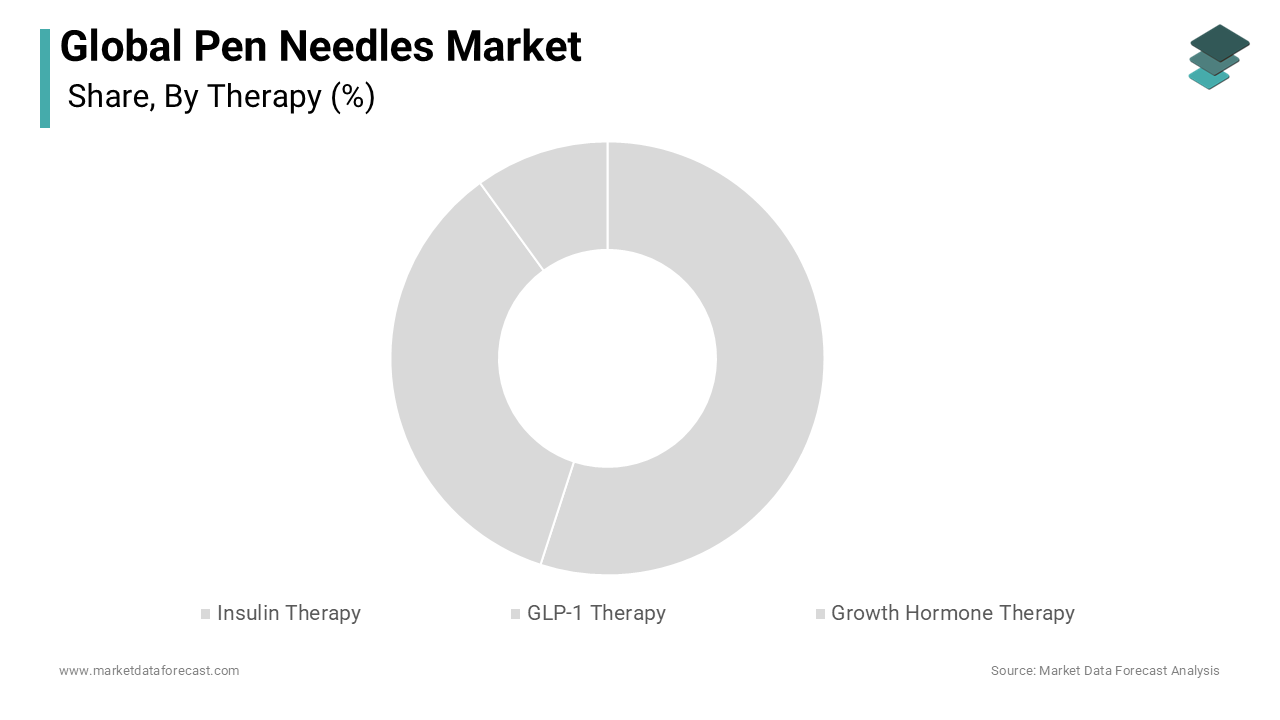
The GLP-1 therapy segment is likely to register a fastest CAGR of 12.5% during the forecast period with the surging popularity of glucagon like peptide 1 agonists for weight loss and diabetes management. Drugs, such as semaglutide and liraglutide have gained mainstream acceptance due to their efficacy in promoting significant weight reduction and improving metabolic health. According to the Centers for Disease Control and Prevention, more than 40% of adults in the United States are obese creating a massive addressable market for these therapies. The approval of new indications for GLP-1 agonists has expanded their use beyond diabetes care into general weight management attracting a broader demographic of users. These medications are typically administered via pre filled pens requiring specialized pen needles for subcutaneous injection. The high visibility of these treatments in media and social platforms has accelerated consumer awareness and demand. Pharmaceutical companies are investing heavily in marketing campaigns that amplifies the benefits of GLP-1 therapies, further driving prescription rates. The trend toward outpatient management of obesity and metabolic disorders supports the shift toward self-administered injectables.
By Type Insights
The standard needles segment was the largest by holding 49.2% of the hold the largest share of the pen needles market in 2025 due to their widespread availability cost effectiveness and established usage patterns among patients and healthcare providers. These needles lack additional safety features, such as retractable shields or automatic covers, making them simpler to manufacture and more affordable for consumers. The standard needles remain the primary choice in many low and middle income countries, where healthcare budgets are constrained and out of pocket expenses are high. The familiarity of standard needles among long term diabetes patients, who have used them for years contributes to their continued dominance. Many insurance plans and government reimbursement schemes cover standard needles at lower copayments encouraging their selection over premium safety alternatives. The manufacturing process for standard needles is well optimized allowing for mass production at scale, which keeps unit costs low. Additionally, the compatibility of standard needles with a wide range of insulin pens from various manufacturers ensures broad accessibility. While safety concerns exist the perceived complexity of safety needles can deter some users who prefer the straightforward design of standard options.
The safety needles segment is swiftly emerging at a fastest CAGR of 12.3% during the forecast period with the increasing regulatory mandates and heightened awareness regarding needle stick injuries and blood borne pathogen transmission. These devices incorporate built in mechanisms, such as retractable shields or sliding covers that automatically encase the needle after use minimizing the risk of accidental punctures. The healthcare workers face significant risks from sharps injuries prompting stricter enforcement of safety standards in clinical settings. Although, pen needles are primarily used for self-administration the push for safety extends to home care environments to protect caregivers and family members. The importance of safety features in medical devices encouraging manufacturers to innovate in this area. Patients are increasingly educated about the benefits of safety needles leading to higher demand for these premium products. Insurance providers in developed nations are beginning to cover safety needles recognizing their role in reducing liability and healthcare associated infections. The aging population, which often requires assistance from caregivers further drives the adoption of safety engineered devices to ensure safe disposal. Technological advancements have made safety needles more user friendly addressing previous concerns about complexity.
By Needle Length Insights
The 4mm needle length segment held a dominant share of the pen needles market in 2025 due to strong clinical recommendations advocating for shorter needles to minimize the risk of intramuscular injection and improve patient comfort. Medical guidelines from organizations, such as the International Diabetes Federation explicitly recommend 4mm needles, as the first choice for most adults, including those with obesity because they reliably deliver insulin into the subcutaneous tissue without penetrating deeper muscle layers. The shorter length also decreases the likelihood of lipohypertrophy a condition caused by repeated injections into the same site, which can impair insulin absorption. Patients, particularly children and elderly individuals prefer 4mm needles due to their reduced visibility and perceived invasiveness, which lowers psychological barriers to injection therapy. The widespread endorsement by healthcare professionals has led to increased prescription rates for this length. Manufacturers have responded by optimizing the design of 4mm needles to ensure consistent flow rates and structural integrity despite their short stature.
The 6mm needle length segment is lucratively growing at an anticipated CAGR of 11.6% during the forecast period with the versatile alternative for patients, who may require slightly deeper penetration, while still avoiding intramuscular injection risks. This length is particularly favored by individuals with moderate adipose tissue thickness, who find 4mm needles too short for effective subcutaneous delivery in certain body areas. According to the American Association of Diabetes Educators, 6mm needles are recommended for patients, who experience leakage or inconsistent absorption with shorter lengths providing a balanced solution for diverse anatomical needs. The growing awareness among patients about proper injection techniques has led to increased experimentation with different needle lengths under medical guidance. Many healthcare providers prescribe 6mm needles, as a transitional option for patients moving from longer traditional needles to shorter modern alternatives. The availability of 6mm needles in ultra fine gauges further enhances their appeal by combining adequate length with minimal pain. As the diabetic population ages and body compositions vary, the demand for customizable injection solutions rises. Manufacturers are expanding their 6mm offerings to include safety features and ergonomic designs catering to this specific niche.
By Mode of Purchase Insights
The retail segment was the largest by accounting for 36.2% of the pen needles market share in 2025 due to the direct access it provides to patients, who manage their diabetes independently at home. According to the study, independent and chain pharmacies dispense millions of units of pen needles annually, reflecting the high volume of outpatient diabetes care. The convenience of purchasing needles alongside other diabetes supplies, such as test strips and glucose monitors encourages bundled buying behavior. Retail outlets offer immediate availability, allowing patients to replenish stocks without waiting for hospital appointments or insurance approvals. The rise of e-commerce has further strengthened the retail segment by enabling discreet and convenient home delivery of medical supplies. Many patients prefer the autonomy of selecting their preferred brand and needle specifications through retail channels rather than relying on institutional procurement. Over the counter availability in many jurisdictions simplifies the purchasing process reducing administrative barriers. The strong brand loyalty developed through retail interactions ensures repeat purchases.
The non-retail segment is likely to grow at a fastest CAGR of 10.2% during the forecast period with the increasing integration of diabetes management programs within healthcare facilities. According to the American Hospital Association, inpatient diabetes management protocols require standardized supplies to ensure consistency and safety during hospital stays. The rise in ambulatory surgical centers and specialized diabetes clinics has created new demand channels for bulk purchases of pen needles. Institutional buyers often negotiate favorable pricing contracts with manufacturers leading to increased volume sales. Additionally, government health programs and public health initiatives distribute pen needles through non-retail channels to underserved populations enhancing accessibility. The trend toward value based care encourages healthcare providers to supply patients with high quality injection accessories to improve adherence and reduce readmission rates. Collaborations between pharmaceutical companies and healthcare institutions often include provision of pen needles as part of bundled therapy packages.
REGIONAL ANALYSIS
North America Pen Needles Market Analysis
North America was the top performer in the global pen needles market by capturing 34.2% of share in 2025 by high diabetes prevalence and advanced healthcare infrastructure. The presence of major pharmaceutical companies and medical device manufacturers facilitates easy access to innovative products, including safety and smart needles. High levels of health insurance coverage although variable encourage patients to seek premium injection accessories that enhance comfort and compliance. Regulatory frameworks enforced by the Food and Drug Administration ensure high quality standards fostering consumer trust in available products. The trend toward home healthcare and self-management is particularly strong in this region further boosting retail sales. Educational campaigns by diabetes associations promote best practices in injection techniques, increasing awareness of appropriate needle lengths and types. The aging population in North America also contributes to sustained demand, as older adults require consistent medical supplies. Technological advancements in digital health integration with pen devices are more readily adopted in this mature market driving continuous innovation and market expansion.
Europe Pen Needles Market Analysis
Europe pen needles market was ranked second by holding 20.1% of share in 2025 with the stringent regulatory standards and a strong emphasis on patient safety and environmental sustainability. Countries, such as Germany, France, and the United Kingdom are key contributors driven by well-established healthcare systems and high awareness of diabetes management. According to the International Diabetes Federation, approximately 61 million adults in Europe live with diabetes necessitating reliable injection solutions. The implementation of the Medical Device Regulation has accelerated the adoption of safety engineered pen needles to prevent needle stick injuries and ensure proper waste disposal. Government funded healthcare programs in many European nations provide coverage for essential diabetes supplies reducing financial barriers for patients. The region is also a hub for research and development with several leading manufacturers headquartered there fostering innovation in needle design and materials. Environmental concerns have prompted initiatives to develop eco friendly packaging and recycling programs for used needles. Patient education initiatives supported by national health services promote the use of shorter needles to improve injection outcomes. The harmonization of healthcare policies across the European Union facilitates cross border trade and standardization of products.
Asia Pacific Pen Needles Market Analysis
Asia Pacific pen needles market growth is likely to witness a prominent growth opportunities with the rising disposable incomes, increasing diabetes prevalence, and improving healthcare infrastructure. Countries, such as China, India, and Japan are witnessing a surge in diabetes cases due to urbanization and changing dietary habits. According to the International Diabetes Federation, the Western Pacific region, including China has the highest number of adults with diabetes globally exceeding 200 million. This massive patient pool creates immense potential for market expansion as access to modern diabetes care improves. Government initiatives in countries like India aim to enhance screening and treatment availability driving demand for affordable injection accessories. The growing middle class is increasingly willing to invest in premium healthcare products including insulin pens and compatible needles. Local manufacturing capabilities are expanding reducing costs and improving supply chain efficiency. Awareness campaigns by non-governmental organizations and healthcare providers educate patients about the benefits of pen therapy over traditional syringes. As healthcare spending increases and insurance coverage expands, the Asia Pacific region is poised to become a major contributor to global pen needle consumption in the coming decade.
Latin America Pen Needles Market Analysis
Latin America pen needles market growth is expected to grow with the increasing urbanization and rising awareness of chronic disease management. Brazil and Mexico are the primary contributors owing to their large populations and expanding healthcare networks. According to the Pan American Health Organization, diabetes affects over 60 million people in the Americas with significant concentrations in Latin American countries. Economic improvements have enabled more patients to afford insulin therapy and associated supplies, including pen needles. The presence of international pharmaceutical companies has improved the availability of modern diabetes treatments in the region. Public health systems in countries like Brazil provide free insulin and basic supplies although access to premium pen needles may be limited. Private insurance sectors are growing offering better coverage for advanced medical devices. Educational efforts by local diabetes associations are promoting proper injection techniques and the use of appropriate needle lengths. The shift toward outpatient care and self-management is gaining traction, particularly in urban centers. Challenges such as economic volatility and uneven distribution of healthcare resources persist but the overall trend points toward steady market growth.
Middle East And Africa Pen Needles Market Analysis
The Middle East and Africa pen needles market growth is likely to grow with the high diabetes prevalence in Gulf countries contrasting with limited access in parts of Africa. Countries, such as Saudi Arabia and the United Arab Emirates have some of the highest diabetes rates globally driven by lifestyle factors and genetic predispositions. High government spending on healthcare in wealthy Gulf nations supports the adoption of advanced insulin delivery systems, including pen needles. In contrast, many African nations face challenges related to affordability and infrastructure limiting access to disposable injection accessories. Initiatives by global health organizations aim to improve diabetes care in low resource settings through subsidized supplies and training. The lack of local manufacturing in most African countries relies on imports, which can be costly and subject to supply chain disruptions. Awareness campaigns are gradually improving knowledge about diabetes management and the benefits of pen therapy.
COMPETITIVE LANDSCAPE
The pen needles market features a moderately consolidated landscape characterized by the presence of established medical device manufacturers and specialized injection system providers. Leading companies compete through continuous innovation product differentiation and strategic collaborations to capture greater market influence. Major players leverage their strong brand reputation and extensive distribution networks to maintain dominance, while smaller firms focus on niche segments such as smart needles or eco-friendly options. Price competitiveness remains a critical factor, particularly in emerging countries where affordability influences purchasing decisions. Companies increasingly invest in research and development to introduce advanced features, such as retractable shields and digital integration. Strategic partnerships with pharmaceutical firms are common tactics used to secure bundled supply agreements and enhance product visibility.
KEY MARKET PLAYERS
Some of the noteworthy companies leading the global pen needles market include:
- Becton, Dickinson & Company
- Novo Nordisk A/S
- Ypsomed Holding AG (Switzerland)
- UltiMed, Inc. (U.S.)
- Allison Medical, Inc. (U.S.)
- Owen Mumford, Ltd. (U.K.)
- B. Braun Melsungen (Germany)
- Artsana S.p.A. (Italy)
- HTL-STREFA S.A. (Poland)
- Terumo Corporation (Japan)
Top Players in the Global Market
Novo Nordisk
Novo Nordisk stands as a global leader in diabetes care and plays a pivotal role in the pen needles market through its extensive portfolio of insulin delivery systems. The company actively promotes the use of compatible pen needles to ensure optimal patient outcomes and adherence to therapy regimens. Recent initiatives, include launching educational programs that emphasize proper injection techniques and the benefits of shorter needle lengths for improved comfort. Novo Nordisk collaborates with needle manufacturers to ensure seamless compatibility between their insulin pens and various needle types. The firm invests heavily in research to develop innovative delivery devices that enhance user experience and reduce injection anxiety. By focusing on holistic diabetes management solutions, Novo Nordisk strengthens its position as a trusted partner for patients and healthcare providers worldwide.
Becton Dickinson and Company
Becton Dickinson and Company is a major manufacturer of medical technology, including a wide range of pen needles designed for safety and ease of use. The company leverages its expertise in medical device engineering to produce high quality needles that minimize pain and reduce the risk of complications. Recent actions involve expanding their product line to include ultra fine gauge options and safety engineered features that protect users from accidental needle sticks. Becton Dickinson has strengthened its market presence by forming strategic partnerships with pharmaceutical companies to bundle needles with insulin pens. The firm also focuses on sustainability initiatives by developing eco-friendly packaging and promoting proper disposal methods. Through continuous innovation and rigorous quality control, Becton Dickinson ensures that its products meet the evolving needs of patients and healthcare professionals.
Ypsomed AG
Ypsomed AG is a specialized provider of injection and infusion systems with a strong focus on pen needles and related accessories for chronic disease management. The company distinguishes itself through customized solutions that cater to specific patient needs and preferences, including varying needle lengths and gauges. Recent developments, include the introduction of smart injection technologies that integrate with digital health platforms to track usage and improve adherence. Ypsomed AG has expanded its manufacturing capabilities to meet growing global demand while maintaining high standards of precision and reliability. The firm actively engages with healthcare providers to offer training and support on proper injection techniques. By prioritizing innovation and customer collaboration, Ypsomed AG enhances its reputation as a leading supplier of high quality pen needles. Their commitment to advancing self-administration tools empowers patients to manage their conditions effectively, while reducing the burden on healthcare systems through improved therapeutic outcomes.
Top Strategies Used by Key Market Participants
Key players in the pen needles market, primarily employ product innovation and strategic partnerships to maintain competitive advantage. Companies focus on developing ultra fine gauge and safety engineered needles to enhance patient comfort and reduce injury risks. Investing in research and development allows firms to introduce smart needles with digital connectivity features that support data driven diabetes management. Strategic collaborations with pharmaceutical manufacturers enable bundling of needles with insulin pens ensuring compatibility and convenience for users. Expanding distribution networks in emerging markets facilitates broader access to affordable injection accessories. Additionally, manufacturers prioritize regulatory compliance and quality assurance to build trust and meet stringent safety standards globally. Offering comprehensive patient education programs helps promote proper usage techniques and improves adherence to treatment regimens.
SEGMENTAL ANALYSIS
This research report on the global pen needles market has been segmented and sub-segmented into the following categories.
By Therapy
- Insulin Therapy
- GLP-1 Therapy
- Growth Hormone Therapy
By Type
- Standard Needle
- Safety Needle
By Needle Length
- 4mm
- 6mm
- 8mm
- 10mm
- 12mm
By Mode of Purchase
- Retail
- Non–Retail
By Region
- North America
- Europe
- Asia Pacific
- Latin America
- The Middle East and Africa