- Product Description Description
- Table of Contents TOC
- List of Table & Figure LOT
- Get Free Sample PDF Sample PDF
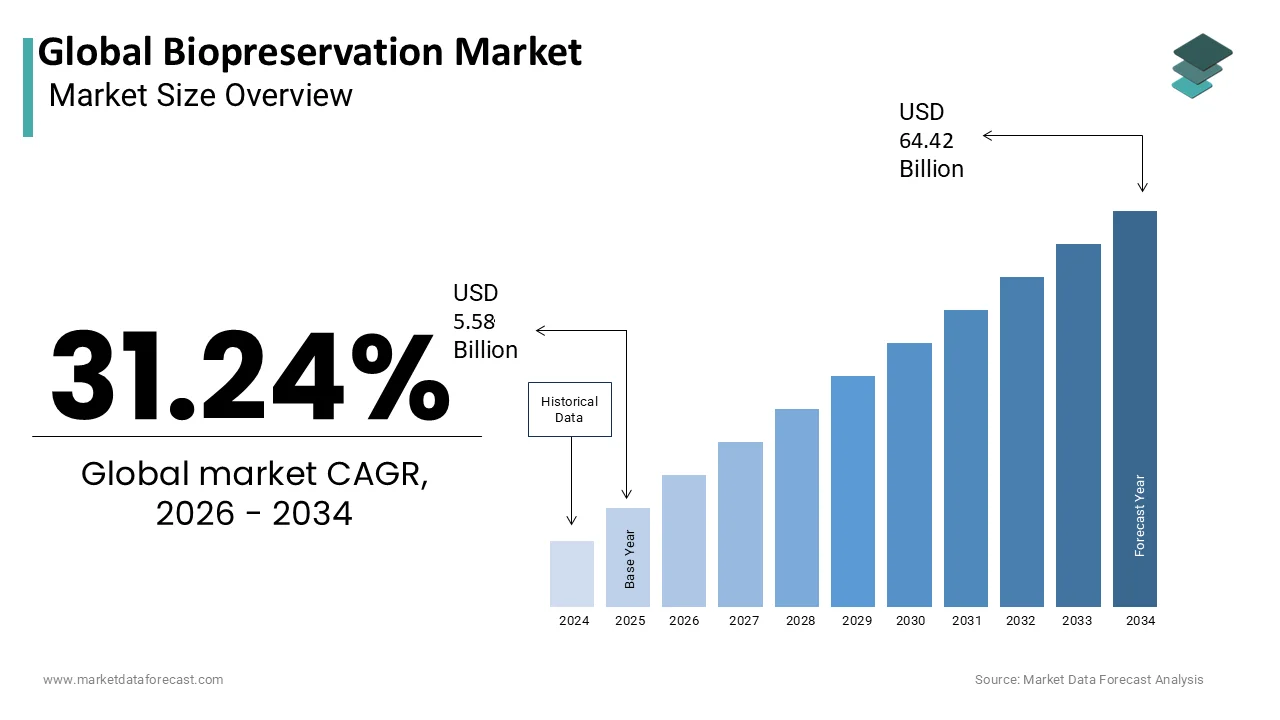
Market Size, 2025
$5.58 BnMarket Estimate, 2026
$7.32 BnMarket Forecast, 2034
$64.42 BnCAGR, 2026–2034
31.24%Executive Summary: Global Biopreservation Market
- Market Scope: Comprehensive global analysis of the biopreservation market covering biological sample storage solutions, regenerative medicine applications, automated biobanking systems, and research frameworks.
- Market Valuation: Valued at USD 5.58 billion (2025), estimated at USD 7.32 billion (2026), and projected to reach USD 64.42 billion by 2034, registering a remarkable CAGR of 31.24% (2026–2034).
- Primary Growth Drivers: Escalating prevalence of chronic diseases requiring long-term biological sample storage and the rapid expansion of regenerative medicine and personalized therapeutics. Key opportunities persist in emerging markets and public-private biorepository partnerships.
Key Market Segment Metrics (2026–2034)
| Category | Leading Segment (2025 Position) | Fastest-Growing Segment |
|---|---|---|
| By Product / Equipment Type | Freezers, Refrigerators & Liquid Nitrogen Systems (core sample preservation infrastructure) | Automated Biobanking Systems & Cryopreservation Media |
| By Biospecimen | Human Organs, Tissues, Stem Cells & Biological Fluid Samples | Cell Lines, Genomic Material & Personalized Therapeutic Samples |
| By Application | Regenerative Medicine, Biobanking & Clinical Trials Storage | Drug Discovery, Genomic Research & Personalized Therapeutics |
| By Region / Country | North America & Established Research Hubs (led by advanced clinical trial infrastructure) | Emerging Global Healthcare Markets & Standardized Biorepository Initiatives |
Major Market Players & Market Structure
Market Structure: Highly competitive global life sciences landscape featuring leading equipment and media manufacturers competing intensely on automated biobanking technology, cryopreservation integrity, sample transport solutions, and biorepository standardization.
Key Companies: Thermo Fisher Scientific Inc., Merck KGaA, BioCision LLC, Azenta Life Sciences, and Chart Industries Inc.
 Download Free Sample Report
Global Biopreservation Market Size
The Global Biopreservation Market is projected to grow from USD 5.58 billion in 2025 to USD 7.32 billion in 2026 and reach USD 64.42 billion by 2034, registering a CAGR of 31.24% from 2026 to 2034.
Biopreservation is the specialized technologies and reagents used to maintain the viability and integrity of biological samples such as cells, tissues,s and organs during storage and transport. As per the World Health Organization, global blood transfusion services process over 118 million donations annually, requiring robust preservation protocols to ensure safety and efficacy for recipients. Such clinical dependencies drive continuous innovation in preservation media and controlled rate freezing systems. Regulatory bodies enforce stringent standards for sample integrity to guarantee therapeutic outcomes. Pharmaceutical companies invest in biopreservation to support complex supply chains for cell and gene therapies. The integration of automated monitoring systems enhances traceability and quality control.
MARKET DRIVERS
Expansion of Cell and Gene Therapy Pipelines
The rapid expansion of cell and gene therapy pipelines, by creating urgent demand for high-fidelity storage solutions, is driving the growth of the biopreservation market. These advanced therapies involve living cells that are highly sensitive to temperature fluctuations and require precise preservation to maintain therapeutic efficacy. As per the Alliance for Regenerative Medicine, many clinical trials involving cell and gene therapies are currently active globally, with a significant portion requiring complex cold chain logistics for multi-site studies. This surge in development activities necessitates reliable cryopreservation media and controlled-rate freezers to prevent cell death during transport. The pharmaceutical developers prioritize premium biopreservation products to ensure regulatory compliance and clinical success. The shift toward autologous therapies, where patient cells are processed and returned,d requires individualized preservation strategies. This personalized approach increases the volume of small-batch processing, requiring specialized equipment. Regulatory agencies mandate strict validation of preservation methods to guarantee patient safety.
Growth in Biobanking and Precision Medicine Initiatives
The proliferation of biobanking and precision medicine initiatives is also boosting the growth of the biopreservation market. Biobanks serve as essential repositories for genomic, proteomic,c and tissue samples that fuel research into personalized treatments. These institutions rely on advanced cryoprotectants to maintain sample integrity over decades of storage. The National Institutes of Health states that precision medicine initiatives in the United States aim to collect data from one million participants, driving unprecedented demand for standardized sample processing and storage solutions. Consistent preservation quality is crucial for downstream analytical accuracy and reproducibility of research findings. Government funding for large-scale cohort studies accelerates the establishment of new biobanking facilities. Academic institutions partner with commercial providers to implement best-practice preservation protocols. The need for interoperability between biobanks drives adoption of universal preservation standards.
MARKET RESTRAINTS
High Costs of Advanced Cryopreservation Equipment
The prohibitive costs of advanced cryopreservation equipment and specialized reagents unfavorably limit access for smaller research institutions and developing regions, slowing the growth of the biopreservation market. High-end controlled-rate freezers and liquid nitrogen storage tanks require significant capital investment that many academic labs cannot afford. This financial constraint restricts the adoption of state-of-the-art preservation technologies in resource-limited settings. Smaller laboratories may resort to less reliable manual freezing methods, compromising sample quality. Lack of funding for infrastructure upgrades hinders participation in global collaborative research networks. Price sensitivity forces buyers to prioritize basic storage over optimized preservation protocols. This economic barrier slows the widespread adoption of best practices. Manufacturers face challenges in pricing products competitively while recovering research and development costs.
Technical Complexity and Risk of Sample Degradation
The technical complexity of preservation protocols and inherent risk of sample degradation unfavorably b, by creating operational challenges and liability concerns, which also limits the growth of the bipreservation market. Achieving optimal cooling rates and preventing ice crystal formation requires specialized expertise that is not universally available. Improper freezing techniques can cause irreversible damage to cell membranes, leading to viability losses in sensitive primary cell lines. This risk discourages some researchers from adopting complex preservation methods due to fear of losing valuable samples. Such variability necessitates rigorous protocol validation,n which is time-consuming and resource-intensive. Human error during manual processing steps further increases the likelihood of sample compromise. Laboratories must invest in extensive staff training to minimize procedural mistakes. Insurance premiums for high-value biological assets rise due to perceived risks. Regulatory audits scrutinize preservation records heavily, adding administrative burden.
MARKET OPPORTUNITIES
Development of Synthetic and Animal-Free Cryoprotectants
The development of synthetic and animal-free cryoprotectants by addressing safety concerns and regulatory preferences for defined components is attributed to escalating new opportunities for the growth of the biopreservation market. Traditional preservation media often contain serum or animal-derived proteins that introduce variability and risk of pathogen transmission. The regulatory guidelines increasingly favor chemically defined media without animal components to enhance product safety and consistency in clinical applications. This shift drives demand for synthetic alternatives that offer reproducible performance and reduced immunogenicity. The Journal of Tissue Engineering and Regenerative Medicine reports that synthetic cryoprotectants demonstrate comparable viability rates to serum-based formulations while eliminating batch-to-batch variability. Pharmaceutical manufacturers prefer these defined systems to streamline regulatory approvals for cell therapies. Research institutions seek to align with ethical standards by avoiding animal-derived products. Innovation in polymer-based cryoprotectants offers improved protection against ice crystal damage. Companies investing in proprietary synthetic formulations can command premium pricing. Patent protection for novel compounds creates competitive advantages.
Integration of Automation and Digital Monitoring Systems
The integration of automation and digital monitoring systems, by enhancing efficiency, traceability, ty and data integration, also leverages the growth of the biopreservation market. Automated liquid handling robots and smart storage units reduce human error and improve throughput in high-volume biobanking operations. This technological advancement appeals to large-scale biobanks and pharmaceutical companies managing thousands of samples. The Journal of Laboratory Automation highlights that automated cryopreservation platforms increase processing consistency and allow for unattended operation during off-hours. Cloud-based monitoring solutions provide real-time alerts for temperature deviations, protecting valuable assets from spoilage. Data analytics tools optimize storage capacity and predict maintenance needs,s reducing downtime. Regulatory compliance is simplified through automated record-keeping and audit trails. Hospitals and research centers invest in digital infrastructure to support precision medicine initiatives. Vendors offering integrated hardware and software solutions gain a competitive edge.
MARKET CHALLENGES
Supply Chain Vulnerabilities for Critical Reagents
The supply chain vulnerabilities for reagents and raw materials are causing disruptions and price volatility that is a major challenge for the growth of the biopreservation market. Many specialized cryoprotectants and culture media components are sourced from a limited number of global suppliers, creating dependency risks. As per the World Health Organization, global supply chain disruptions during recent health crises led to shortages of key laboratory consumables,s affecting 40% of research institutions worldwide. Such interruptions jeopardize ongoing experiments and clinical trial timelines. Laboratories struggle to maintain adequate stock levels without incurring excessive holding costs. Geopolitical tensions and trade restrictions further complicate international procurement of sensitive materials. Quality consistency varies between batches from different suppliers, requiring revalidation effort. Single-source dependencies increase vulnerability to production failures at manufacturing sites. Diversifying supply bases is costly and time-consuming for smaller vendors. These logistical challenges threaten business continuity for end users.
Regulatory Heterogeneity Across Global Markets
Regulatory heterogeneity, by complicating product approval and commercialization strategies, es is additionally impeding the growth of the biopreservation market. Different countries have varying requirements for classification, labeling, and validation of biopreservation reagents and devices. As per the International Conference on Harmonisation of Technical Requirements for Pharmaceuticals for Human Use, lack of unified global standards forces manufacturers to navigate complex and often contradictory regulatory landscapes. This fragmentation increases time to market and compliance costs significantly. The European Medicines Agency and the Food and Drug Administration have differing guidelines for ancillary materials used in cell therapy production, creating duplication of effort. Small and medium enterprises struggle to afford multiple regulatory submissions for each target market. Inconsistent interpretation of good manufacturing practice standards leads to inspection delays. Changes in regulations require rapid adaptation of quality systems and documentation. Legal uncertainties regarding liability for sample loss vary by jurisdiction. These regulatory barriers hinder international expansion and limit market access. Harmonization efforts are slow and politically complex.
REPORT COVERAGE
| REPORT METRIC | DETAILS |
| Market Size Available | 2025 to 2034 |
| Base Year | 2025 |
| Forecast Period | 2026 to 2034 |
| Various Analyses Covered | Global, Regional & Country-Level Analysis, Segment-Level Analysis, Drivers, Restraints, Opportunities, Challenges; PESTLE Analysis; Porter's Five Forces Analysis, Competitive Landscape, Analyst Overview of Investment Opportunities |
| Segments Analysed | By Product Type, Biospecimens, Application, End User, and Region |
| Regions Analysed | North America, Europe, Asia Pacific, Latin America, Middle East, and Africa |
| Key market players
| BioLife Solutions, Inc., Thermo Fisher Scientific, Inc., Sigma-Aldrich Corporation, BioCision LLC |
SEGMENTAL ANALYSIS
By Product type Insights
The biopreservation media segment was the largest, holding 45.2% of the Biopreservation Market share in 2025 due to its essential role in maintaining cellular viability and preventing ice crystal formation during cryopreservation processes. These specialized reagents are consumed continuously in laboratories and biobanks, creating recurring revenue streams that equipment sales cannot match. This high dependency drives consistent demand from pharmaceutical companies and academic research centers. Researchers prioritize high-quality media to protect valuable biological assets from degradation. Regulatory requirements for chemically defined and animal-free media further stimulate innovation and replacement cycles. Manufacturers invest heavily in developing proprietary blends that offer superior protection for sensitive cell types. The widespread use of media in stem cell banking and vaccine production ensures broad market penetration. Supply chain stability for raw materials remains a critical factor for vendors.
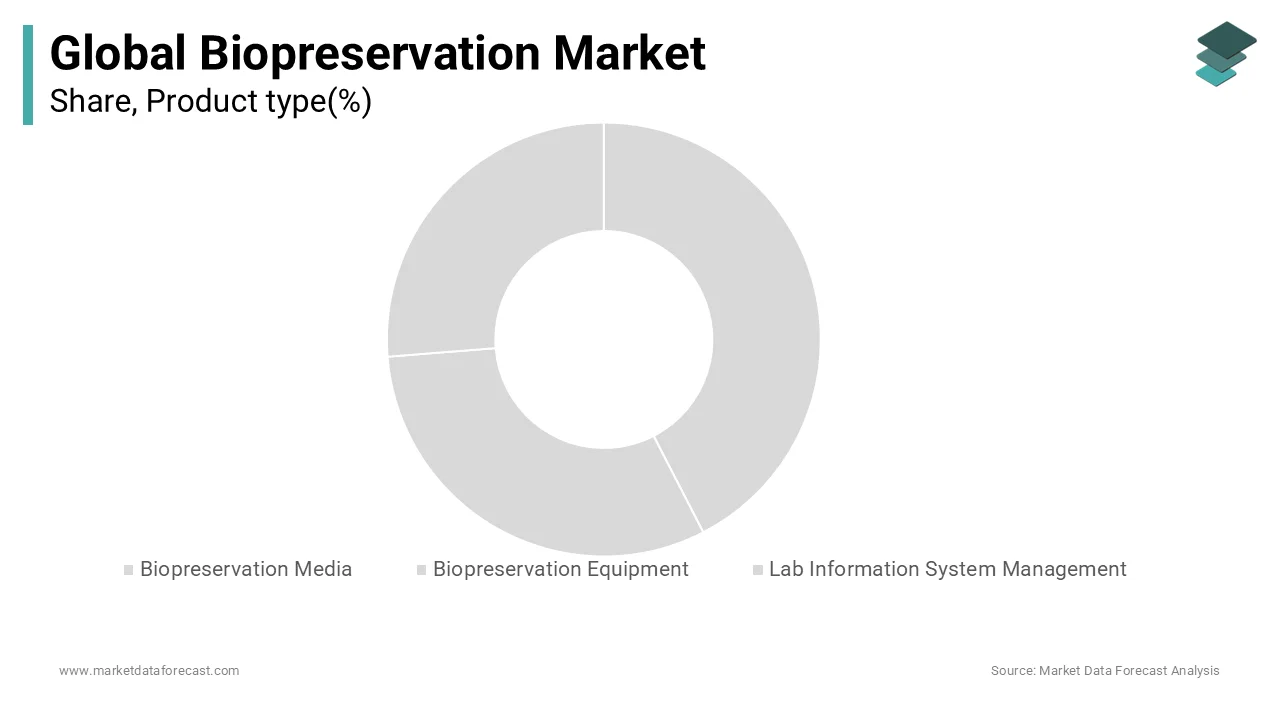
The lab information system management segment is expected to exhibit the fastest CAGR of 12.5% from 2026 to 2034 with the need for digital traceability and regulatory compliance in biobanking. The increasing complexity of biological sample tracking requires robust software solutions to manage metadata, storage conditions,s and chain of custody. As per the International Society for Biological and Environmental Repositories, implementation of automated laboratory information management systems reduces sample misidentification errors by 9,5% ensuring data integrity for clinical research. This accuracy is crucial for reproducibility in precision medicine studies. The Journal of Pathology Informatics highlights that digital integrationallows real-timee monitoring of storage temperatures and inventory levels, preventing catastrophic sample loss. Biobanks face pressure to share data across institutions,s necessitating interoperable software platforms. Regulatory bodies mandate detailed audit trails for samples used in clinicaltrialsa, ls driving adoption of compliantsystems. Cloud-basedd solutions offer scalability and remote access, appealing to multi-site research networks. Artificial intelligence features predict maintenance needs and optimize storage space utilization. Healthcare providers invest in these systems to support large-scale genomic initiatives. The shift from manual records to digital databases accelerates market expansion. This technological transformation creates significant opportunities for software vendors specializing in life sciences.
By Bio-Specimens Insights
The stem cells segment held a dominant share of the biopreservation market in 2025, with importance in regenerative medicine and hematopoietic transplants. The unique ability of stem cells to differentiate into various tissue types makes them invaluable for treating blood disorders and immune deficiencies. This high volume of clinical procedures generates substantial demand for specialized preservation services. These trials require strict adherence to preservation protocols to ensure consistent therapeutic outcomes. Private cord blood banks contribute significantly to market growth by offering storage services for newborns. Advances in expansion technologies increase the number of doses available from single units, boosting storage needs. Regulatory frameworks for stem cell therapies emphasize viability testingpost-thaw,w driving quality standards. Pharmaceutical companies invest in biopreservation infrastructure to support cell therapy pipelines.
The organs segment is likely to grow at the fastest CAGR of 14.2% from 2026 to 2034, with advancements in perfusion technology and urgent demand for transplantation solutions. The severe shortage of donor organs drives innovation in preservation methods that extend viability windows beyond traditional cold storage limits. Extended preservation times allow for better donor-recipient matching and logistical flexibility. Normothermic machine perfusion can extend liver preservation time from 12 hours to over 24 hours, significantly reducing discard rates. This technological breakthrough enables transportation of organs over longer distances. Research into cryopreservation of whole organs aims to create indefinite storage capabilities, though challenges remain. Government funding supports clinical trials for novel preservation techniques. Hospitals invest in perfusion devices to maximize utilization of donated organs. Public awareness campaigns increase donation rates,s expanding the pool of preservable specimens.
By Application Insights
The research applications segment was thelargeste,y accounting for 55.4% of the biopreservation market share in 2025 due to the extensive use of preserved biological samples in basic science, drug discovery,y and genomic studies. Academic institutions and pharmaceutical companies rely on biobanks to store vast collections of tissues and cells for retrospective and prospective analyses. This initiative exemplifies the growing reliance on preserved specimens for precision medicine. Consistent preservation quality is essential for valid scientific conclusions and reproducibility. Funding agencies mandate datasharingi, ng which relies on standardized preservation protocols. Drug developers use preserved cell lines for toxicity screening and efficacy testing. The rise of personalized medicine increases demandfor patient-derivedd samples.
The therapeutic applications segment is expected to grow at the fastest CAGR of 13.8% during the forecast period with the commercialization of advanced cell and gene therapies. These treatments involve living cells that must be preserved from manufacturing to administration to maintain therapeutic efficacy. As per the Food and Drug Administration, approvals for chimeric antigen receptor T cell therapies have increased significantly, requiring robust cold chain logistics and cryopreservation steps. Each patient-specific treatment involves unique preservation needs, driving customization. The Journal of Clinical Oncology highlights that viability loss during transport can compromise treatment success, making high-fidelity preservation critical. Pharmaceutical companies invest heavily in validated preservation protocols to meet regulatory standards. The shift toward autologous therapies, where patient cells are processed and rreturnedd creates complex logistical chains. Insurance reimbursement policies increasingly cover these advanced treatments,ts expanding patient access. Manufacturing facilities integrate preservation steps into automated production lines. Global distribution networks require standardized preservation methods to ensure consistency.
COUNTRY LEVEL ANALYSIS
North America Biopreservation Market Analysis
North America was the top performer in the global Biopreservation Market by occupying 33.2% of the share in 2,025 wthe advanced healthcare infrastructure and substantial research funding. The region benefits from a high concentration of biotechnology companies and academic medical centers driving demand for preservation technologies. This financial backing facilitates adoption of state-of-the-art preservation systems. The Food and Drug Administration maintains rigorous standards for cell therapy products, ensuring high-quality preservation practices. Major players in the industry are headquartered in the region, fostering innovation and collaboration. High prevalence of chronic diseases drives demand for regenerative medicine solutions. Regulatory clarity encourages investment in new preservation technologies. The presence of leading pharmaceutical companies supports clinical trial infrastructure.
Europe Biopreservation Market Analysis
Europe biopreservation market was ranked second,y holding a 20.8% share in 2025, with strong regulatory frameworks and collaborative research networks. The European Union promotes harmonization of biobanking standards,facilitating cross-borderr sample sharing and research. As per the European Commission, the Horizon Europe program allocates billions of euros to health research,h including infrastructure for biological sample management. This funding supports modernization of preservation facilities across member states. The General Data Protection Regulation imposes strict requirements on sample datahandlingi, ng influencing laboratory information system adoption. Countries like Germany and the United Kingdom lead in stem cell research and transplantation services. Public health systemsprioritize cost-effectivee preservation methods for national biobanks. Academic collaborations drive innovation in synthetic cryoprotectants. Regulatory agencies emphasize ethical sourcing and consent processes.
Asia-Pacific Biopreservation Market Analysis
Asia Pacific biopreservation market growth is to have lucrative opportunities throughout the forecast period, with increasing healthcare expenditure and rising prevalence of chronic diseases. Countries like China and India are investing heavily in biotechnology and pharmaceutical sectors, creating demand for preservation solutions. This strategic focus drives infrastructure development. Growing medical tourism in Thailand and Singapore boosts demand for advanced transplantation services. Local manufacturers emerge toprovide cost-effectivee preservation media and equipment. Regulatory frameworks are evolving to support cell therapy approvals. Urbanization and aging populations increase the burden of diseases treatable with regenerative medicine. Government partnerships with international firms facilitate technology transfer. Rising awareness of cord blood banking expands the consumer base.
Latin America Biopreservation Market Analysis
Latin America biopreservation market growth is expected to grow with the gradual improvements in healthcare infrastructure and research capabilities. Brazil and Mexico lead the region in biobanking activities and clinical trial participation. These improvements support basic preservation needs. Economic constraints limit adoption of high-end automated systems, but demand for essential media remains steady. Private hospitals in major cities offer advanced transplantation services, driving niche demand. Regulatory harmonization within Mercosur facilitates trade in laboratory supplies. Academic institutions collaborate with international partners to enhance research quality. Awareness of regenerative medicine is growing among medical professionals. Local distributors play a key role in market access.
The Middle East and Africa Biopreservation Market Analysis
The Middle East and Africa biopreservation market is to grow with concentrated investment in Gulf countries and developing infrastructure in Africa. Nations like Saudi Arabia and the United Arab Emirates are building world-class medical cities with advanced biobanking capabilities. As per the World Health Organization Eastern Mediterranean Regional Office, initiatives to combat genetic disorders drive demand for genomic sampling and preservation. This focus supports specialized preservation needs. South Africa serves as a hub for clinical research in the African continent. Limited resources in many African nations restrict widespread adoption,n but international aid supportsspecific disease-focusedd biobanks.
TOP LEADING PLAYERS IN THE MARKET
- Thermo Fisher Scientific Inc maintains a dominant position in the Biopreservation Market through its comprehensive portfolio of cryopreservation media and advanced storage equipment. The company provides integrated solutions that support the entire lifecycle of biological samples from collection to analysis. Thermo Fisher recently expanded its manufacturing capabilities for synthetic cryoprotectants to meet growing demand from cell therapy developers. This expansion ensures consistent supply and high-quality standards for global clients. The firm invests heavily in research and development to create animal-free formulations that align with regulatory preferences. Strategic partnerships with leading biobanks facilitate the adoption of standardized preservation protocols. Thermo Fisher also enhances its digital offerings by integrating laboratory information management systems with storage hardware. These innovations improve traceability and data integrity for researchers.
- Merck KGaA contributes significantly to the Biopreservation Market by offering high-performance reagents and specialized services for complex biological samples. The company focuses on developing chemically defined media that ensure reproducibility and safety in clinical applications. Merck recently launched a new line of optimized cryopreservation solutions specifically designed for sensitive stem cell lines. This launch addresses the need for higher post-thaw viability rates in regenerative medicine. The firm collaborates with academic institutions to validate preservation protocols for emerging cell types. Merck emphasizes quality control and regulatory compliance to support pharmaceutical clients in meeting strict approval standards. The company expands its global distribution network to improve accessibility in emerging markets. Technical support teams provide customized consulting services to optimize laboratory workflows.
- Eppendorf SE plays a pivotal role in the Biopreservation Market through its innovative laboratory equipment and consumables designed for precise sample handling. The company specializes in automated liquid handling systems and controlled rate freezers that minimize human error. Eppendorf recently introduced advanced software features for its storage units, enabling real-time remote monitoring and alert systems. This innovation enhances security and prevents sample loss due to temperature fluctuations. The firm focuses on user-friendly designs that improve efficiency in high-throughput laboratories. Eppendorf collaborates with biobanking associations to establish best practice guidelines for sample management. The company expands its production capacity to meet rising demand for sterile consumables. Training programs for laboratory personnel ensure proper use of preservation technologies. Eppendorf prioritizes sustainability by developing energy-efficient devices and recyclable materials.
TOP STRATEGIES USED BY KEY MARKET PARTICIPANTS
Key players in the Biopreservation Market employ diverse strategies to maintain competitive advantage and drive sustainable growth. Product innovation remains central as companies develop synthetic and animal-free cryoprotectants to meet regulatory demands. Strategic partnerships with biobanks and research institutions facilitate validation of new preservation protocols. Expansion into emerging markets through local manufacturing and distribution networks enhances accessibility. Companies invest in digital integration by linking storage equipment with laboratory information management systems for better traceability. Mergers and acquisitions allow firms to acquire specialized technologies and broaden product portfolios. Sustainability initiatives focus on energy-efficient equipment and eco-friendly packaging to reduce environmental impact. Regulatory compliance efforts ensure products meet stringent global standards for clinical applications. Customer education programs promote best practices in sample handling and storage.
COMPETITIVE LANDSCAPE
The competition in the Biopreservation Market is characterized by the presence of established global life science corporations and specialized niche providers striving for dominance. Major players compete primarily on product quality, technical support, and regulatory compliance rather than price alone. Specialized companies differentiate themselves through innovative formulations and customized services for specific cell types. Regulatory heterogeneity across regions creates barriers to entry that protect incumbent providers with established compliance frameworks. Trust remains a critical factor as researchers prioritize proven reliability over novel untested products. Innovation in automation and digital monitoring serves as a key differentiator for premium brands. Strategic alliances with academic institutions help shape industry standards and drive adoption. Supply chain resilience is increasingly important due to global disruptions affecting raw material availability.
KEY MARKET PLAYERS
Some of the notable market participants in this report who lead the global biopreservation market are
- BioLife Solutions, Inc.
- Thermo Fisher Scientific, Inc.
- Sigma-Aldrich Corporation
- BioCision LLC
- VWR Corporation
- Cesca Therapeutics Inc.
- Taylor-Wharton
- So-Low Environmental Equipment Co
- Panasonic Corporation
- Lifeline Scientific Inc.
GLOBAL BIOPRESERVATION MARKET NEWS
-
In 2023, BioLife Solutions, Inc. partnered with Seattle Children's Therapeutics, a venture at Seattle Children's, to bring advanced technologies and therapies to defeat pediatric cancer and other diseases that affect children.
-
In 2019, Gibco BenchStable MediwanteMedia wanted the Gibco product from Thermo Fisher Scientific, which provides a good supplement for biological researchers.
- In 2020thehe Merck Biotech Development Center invested in biotech development and manufacturing for clinical studies. In addition, this center is also used to develop new biological products and address the increasing manufacturing complexity of the next generations of biotech compounds.
MARKET SEGMENTATION
This research report on the global biopreservation market has been segmented and sub-segmented into product type, bio-specimens, application, end-user, and Region.
By Product type
-
Biopreservation Media
- Biopreservation Equipment
- Lab Information System Management
By Bio-Specimens
- Human Tissue Samples
- Organs
- Stem Cells
- Other Bio-specimens
By Application
- Therapeutic Applications
- Research Applications
- Clinical Trials
- Other Application
By End-users
- Biobanks
- Gene banks
- Hospitals
- Others
By Region
- North America
- Europe
- Asia Pacific
- Latin America
- The Middle East and Africa