- Product Description Description
- Table of Contents TOC
- List of Table & Figure LOT
- Get Free Sample PDF Sample PDF
Market Size, 2025
$47.76 BnMarket Estimate, 2026
$50.94 BnMarket Forecast, 2034
$85.33 BnCAGR, 2026–2034
6.66%Executive Summary: CRO Services Market
- Market Scope: Global Contract Research Organization (CRO) services market analysis covering service types, therapeutic areas, end-user categories, regional dynamics, and clinical research technology adoption metrics.
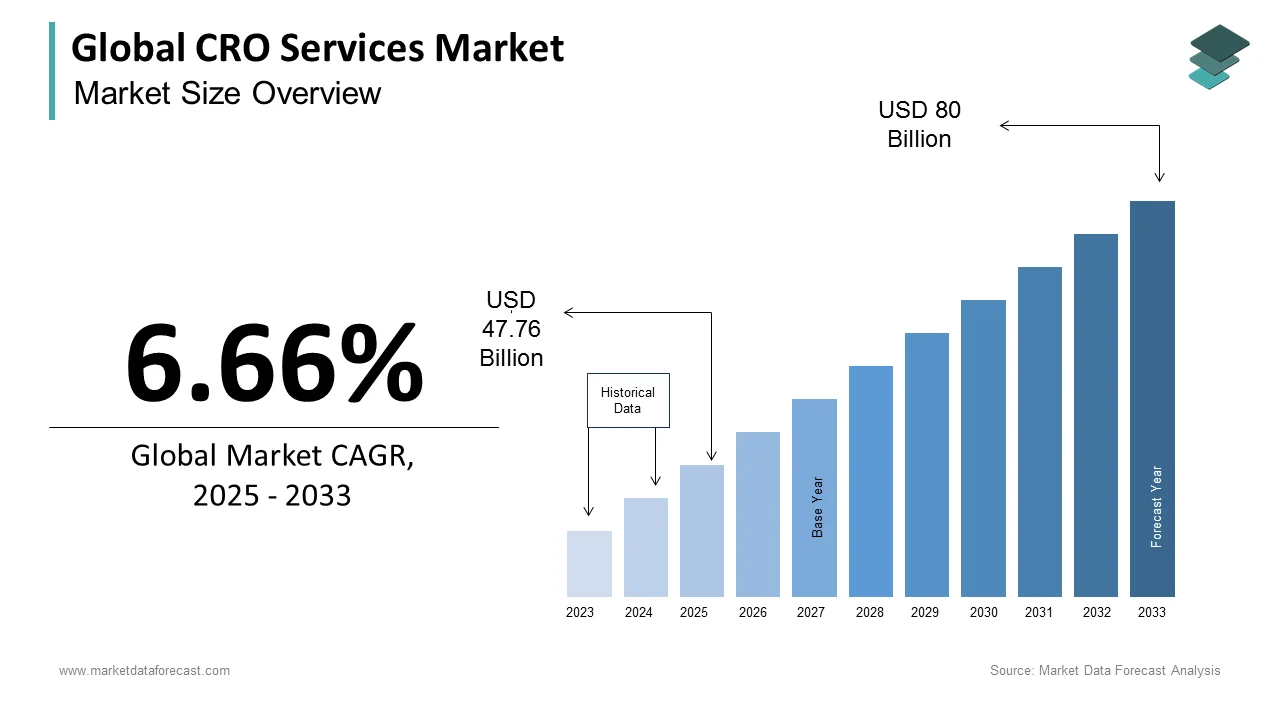
- Market Valuation: Valued at USD 47.76 billion in 2025, estimated at USD 50.94 billion in 2026, and projected to reach USD 85.33 billion by 2034, registering a CAGR of 6.66% from 2026 to 2034.
- Primary Growth Drivers: Escalating R&D expenditure in biopharmaceutical innovation, expansion of clinical trials across emerging geographies, and growing outsourcing of drug discovery, clinical development, and regulatory activities.
Key Market Segment Metrics (2026–2034)
| Category | Leading Segment (Position) | Fastest-Growing / Key Growth Segment |
|---|---|---|
| By Type & Therapeutic Area | Clinical Research Services (largest service type) & Oncology (largest therapeutic area) | Bioanalytical Testing Services (fastest-growing type) & Cell & Gene Therapy (fastest-growing therapeutic area) |
| By End User Segment | Pharmaceutical Companies (largest end user) | Biopharmaceutical Companies (fastest-growing end user) |
| By Technology & Innovation | Traditional site-based clinical trials and conventional data management practices | AI-powered clinical trial management, decentralized clinical trials (DCTs), and digital data analytics |
| By Region Segment | North America (largest region) | Asia-Pacific (fastest-growing region) |
Major Market Players & Market Structure
Market Structure: Highly competitive global clinical research sector characterized by integrated end-to-end service expansions, AI-powered platform investments, decentralized trial infrastructure development, and strategic partnerships in emerging markets.
Key Companies: IQVIA, Labcorp, Charles River Laboratories, Parexel, Syneos Health, WuXi AppTec, Medpace, ICON plc, Evotec, and Quintiles Transnational Holdings Inc.
 Download Free Sample Report
Global CRO Services Market Size
The global CRO services market was valued at USD 47.76 billion in 2025, is estimated to reach USD 50.94 billion in 2026, and is projected to reach USD 85.33 billion by 2034, growing at a CAGR of 6.66% from 2026 to 2034.
Contract Research Organization (CRO) services refer to the outsourced scientific and clinical research support provided to pharmaceutical, biotechnology, and medical device firms. These organizations facilitate drug discovery, preclinical testing, clinical trial management, regulatory consulting, and post-marketing surveillance, enabling sponsors to streamline development timelines and reduce operational burdens. As the complexity of therapeutic innovation intensifies, particularly in areas such as oncology, gene therapy, and personalized medicine, the reliance on specialized external expertise has become indispensable. The global expansion of clinical research is increasingly shaped by cross-border collaborations, with emerging regions contributing significantly to patient recruitment and trial diversity.
According to the World Health Organization, over 400,000 interventional clinical studies were registered globally between 2010 and 2023 across its International Clinical Trials Registry Platform, underscoring the escalating demand for structured research execution. Furthermore, regulatory harmonization initiatives, such as those advanced by the International Council for Harmonisation of Technical Requirements for Pharmaceuticals for Human Use (ICH), have also enhanced the scalability of CRO-led trials across multiple jurisdictions. With rising pressures to accelerate time-to-market and manage escalating R&D costs, biopharmaceutical entities are increasingly adopting strategic outsourcing models, positioning CROs not merely as service providers but as pivotal partners in the innovation lifecycle.
MARKET DRIVERS
Escalating R&D Expenditure in Biopharmaceutical Innovation
The relentless escalation in research and development expenditure by biopharmaceutical enterprises, driven by the need to innovate amidst a competitive therapeutic landscape, is a principal catalyst propelling the CRO services market. This financial commitment is increasingly directed toward high-complexity domains such as immuno-oncology, RNA-based therapeutics, and cell and gene therapies, which demand specialized infrastructure and scientific expertise that many sponsors lack internally. For instance, the U.S. Food and Drug Administration approved 55 novel drugs in 2023, the second-highest annual total on record. The average cost to bring a new drug to market now exceeds $2.6 billion when factoring in failed candidates and capitalized opportunity costs. To mitigate financial and operational risk, sponsors are strategically delegating critical development functions to CROs, leveraging their global footprints, regulatory acumen, and adaptive trial methodologies. Moreover, the increasing adoption of decentralized trial models and real-world evidence generation areas, where CROs have developed niche proficiencies, further amplifies demand. This structural shift toward outsourced innovation management underscores the indispensable role of CROs in sustaining the biopharmaceutical pipeline amid escalating scientific and economic pressures.
Expansion of Clinical Trials in Emerging Geographies
The geographic diversification of clinical trials into emerging economies represents a pivotal driver of growth in the CRO services market, fueled by access to large, treatment-naïve patient populations and cost-efficient research infrastructure. Countries across Asia-Pacific, Latin America, and Eastern Europe have become strategic hubs for multinational trials, enabling faster enrollment and enhanced demographic diversity. This expansion is supported by improving regulatory frameworks. Additionally, the availability of skilled clinical research professionals in these regions enhances operational feasibility. CROs with established regional networks are uniquely positioned to capitalize on this shift, offering end-to-end trial management across complex regulatory environments. The integration of digital health technologies such as electronic data capture and remote monitoring further strengthens trial execution in geographically dispersed settings. As sponsors prioritize global representativeness in clinical data to meet regulatory expectations in major markets like the U.S. and EU, the strategic deployment of CROs in emerging regions has become a cornerstone of modern drug development strategy.
MARKET RESTRAINTS
Stringent Regulatory Scrutiny and Compliance Burdens
Intensifying regulatory oversight across key markets poses a significant constraint on the operational agility of CROs, necessitating substantial investments in compliance infrastructure and quality assurance systems. Regulatory bodies such as the U.S. Food and Drug Administration (FDA) and the European Medicines Agency (EMA) have heightened their inspection frequency and enforcement actions in response to data integrity concerns and protocol deviations. These regulatory interventions not only delay drug approvals but also erode sponsor confidence in outsourcing models. Moreover, the heterogeneity of national regulations, particularly in emerging markets where trial activity is expanding, complicates harmonized execution. CROs must therefore maintain extensive legal and compliance teams, increasing operational costs and reducing profit margins. These systemic challenges impede the seamless delivery of services, particularly for smaller CROs lacking the resources to navigate evolving global standards.
Shortage of Skilled Clinical Research Professionals
The global deficit of trained clinical research personnel, particularly in high-demand roles such as clinical research associates (CRAs), biostatisticians, and regulatory specialists, is a critical impediment to the sustained expansion of the CRO services market. Despite the rising volume of clinical trials, the talent pipeline has failed to keep pace, resulting in operational bottlenecks and increased labor costs. The situation is more acute in emerging markets, where rapid trial expansion has outstripped local training capacity. CROs are increasingly investing in internal training academies. Parexel and IQVIA, for example, have each trained over 5,000 employees since 2020, but these initiatives require time and capital. The scarcity of expertise also heightens the risk of protocol deviations and audit failures, further straining sponsor-CRO relationships. Without systemic interventions in education and workforce development, the talent shortage will remain a structural drag on the industry’s growth trajectory.
MARKET OPPORTUNITIES
Integration of Artificial Intelligence in Clinical Trial Design and Execution
The integration of artificial intelligence (AI) into clinical research operations presents a transformative opportunity for CROs to enhance efficiency, accuracy, and predictive capability across the drug development continuum. AI-powered tools are increasingly deployed for patient identification, site selection, risk-based monitoring, and data analytics, enabling faster trial initiation and reduced dropout rates. According to a 2023 analysis by McKinsey & Company, AI applications in clinical development can reduce trial timelines by up to 30% and lower operational costs by as much as 25%. For instance, natural language processing algorithms can mine electronic health records to identify eligible patients faster than manual screening. Furthermore, machine learning models are being utilized to predict patient recruitment rates with high accuracy, minimizing delays due to under-enrollment. CROs such as PPD and Syneos Health have established dedicated AI divisions to develop proprietary platforms for real-time data monitoring and adaptive trial design. By embedding AI into core service offerings, CROs can transition from reactive service providers to proactive innovation partners, delivering higher-value insights and improving trial success rates. This technological evolution positions forward-thinking CROs to capture premium contracts and reshape the economics of drug development.
Rising Adoption of Decentralized Clinical Trials (DCTs)
The accelerating adoption of decentralized clinical trials (DCTs) represents a pivotal growth vector for the CRO services market, driven by patient-centric innovation and digital health advancements. DCTs leverage telemedicine, wearable sensors, home health nursing, and direct-to-patient drug delivery to minimize site visits and enhance participant retention. Also, patient dropout rates in traditional trials are around 30%, whereas DCTs have demonstrated retention improvements, significantly enhancing data integrity and trial completion rates. CROs are uniquely positioned to orchestrate these complex, technology-driven models by integrating electronic consent platforms, remote monitoring systems, and secure data transmission networks. Regulatory support further bolsters this trend; the FDA released guidance in 2023 endorsing the use of decentralized methods in pivotal trials, validating their scientific rigor. This paradigm shift not only expands trial accessibility but also enables enrollment of historically underrepresented populations, improving the generalizability of clinical data.
MARKET CHALLENGES
Data Security and Privacy Risks in Global Trial Operations
The globalization of clinical trials exposes CROs to escalating data security and privacy risks, particularly as sensitive patient information traverses multiple jurisdictions with divergent regulatory frameworks. With the proliferation of electronic health records, mobile health apps, and cloud-based data repositories, the attack surface for cyber threats has expanded significantly. The enforcement of stringent data protection laws such as the EU’s General Data Protection Regulation (GDPR) and Brazil’s Lei Geral de Proteção de Dados (LGPD) imposes rigorous requirements on data localization, consent management, and breach notification, complicating cross-border data flows. Penalties for non-compliance are severe. Moreover, data breaches erode sponsor trust and can lead to trial suspension or regulatory rejection. CROs must invest heavily in encryption, zero-trust architectures, and continuous staff training to mitigate these risks. However, the dynamic nature of cyber threats and the lack of global regulatory harmonization present persistent operational and reputational challenges.
Operational Fragmentation in Multi-Vendor Outsourcing Models
The increasing reliance on multi-vendor outsourcing models in clinical development introduces significant operational fragmentation, undermining coordination, data consistency, and accountability across the research ecosystem. Sponsors often engage multiple CROs and specialized service providers, such as central laboratories, imaging vendors, and eCOA platform operators, for different trial components, leading to siloed workflows and communication gaps. The lack of interoperability between disparate data systems exacerbates inefficiencies. Furthermore, misaligned incentives and contractual ambiguities often result in finger-pointing during protocol deviations or audit findings. The absence of a single point of accountability also complicates risk management and quality oversight. While some CROs are responding by offering end-to-end solutions or forming strategic alliances, the industry remains fragmented. The integration of unified trial management platforms remains limited. Overcoming this fragmentation requires cultural, technological, and contractual realignment, a complex undertaking in a highly competitive and decentralized market landscape.
REPORT COVERAGE
| REPORT METRIC | DETAILS |
| Market Size Available | 2025 to 2034 |
| Base Year | 2025 |
| Forecast Period | 2026 to 2034 |
| Segments Covered | By Type, Therapeutic Area, and Region. |
| Various Analyses Covered | Global, Regional and Country-Level Analysis, Segment-Level Analysis, Drivers, Restraints, Opportunities, Challenges; PESTLE Analysis; Porter’s Five Forces Analysis, Competitive Landscape, Analyst Overview of Investment Opportunities |
| Regions Covered | North America, Europe, Asia Pacific, Latin America, Middle East & Africa |
| Market Leaders Profiled | Quintiles Transnational Holdings Inc., Laboratory Corporation of America Holdings, Pharmaceutical Product Development, PAREXEL International Corporation, ICON Plc, PRA Health Sciences Inc., InVentiv Health Inc., Charles River Laboratories International Inc., INC Research Holdings Inc., and Wuxi PharmaTech. |
SEGMENTAL ANALYSIS
By Type Insights
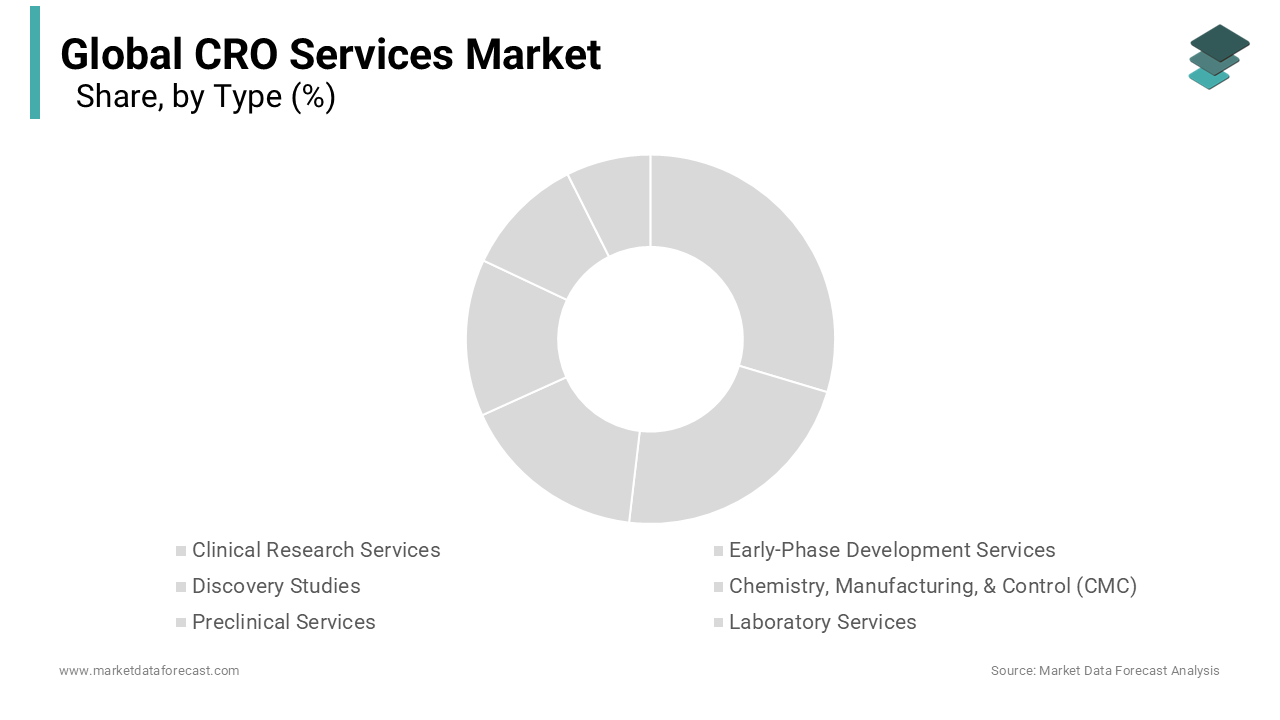
The Clinical Research Services segment commanded the largest share of the market at 42.5% of global CRO revenue in 2025. This dominance is anchored in the sheer scale and complexity of late-phase clinical trials, which constitute the most resource-intensive phase of drug development. Phase III trials alone involve tens of thousands of patients across hundreds of sites, necessitating extensive project management, monitoring, data collection, and regulatory coordination all core competencies of clinical research CROs. Additionally, the increasing global regulatory emphasis on real-world evidence and post-marketing surveillance has expanded the scope of clinical research beyond traditional trial endpoints. CROs such as IQVIA and PRA Health Sciences have capitalized on this trend by integrating pharmacovigilance and health economics teams into their clinical service lines. Moreover, the geographic dispersion of trials, now spanning several 130 countries, requires CROs to manage intricate logistics, multilingual case report forms, and local ethics committee approvals, reinforcing their indispensability. As sponsors prioritize speed and compliance over internal capacity building, the reliance on full-service clinical CROs continues to deepen, solidifying this segment’s preeminent position.
The Bioanalytical Testing Services segment is expanding at the fastest pace within the CRO services market and is registering a CAGR of 12.8% in the coming years. This acceleration is primarily driven by the rising complexity of novel therapeutics, particularly biologics, antibody-drug conjugates, and cell and gene therapies, which demand highly sensitive and specific bioanalytical methodologies for pharmacokinetic and pharmacodynamic assessment. These techniques require specialized instrumentation and expertise, which many biopharmaceutical firms lack in-house. Furthermore, regulatory agencies are imposing stricter validation requirements for bioanalytical methods. The expansion of biomarker-driven trials has also intensified demand for high-throughput bioanalysis. With bioanalysis now embedded in nearly every stage of drug development, this segment is poised for sustained high-growth momentum.
By Therapeutic Area Insights
The oncology stands as the prominent therapeutic area in the CRO services market by capturing an estimated 33.5% share of total clinical outsourcing expenditure in 2025. This position is due to the unprecedented volume of oncology drug development programs and the inherent complexity of cancer trials, which require large patient cohorts, adaptive designs, and sophisticated endpoint assessments such as progression-free survival and minimal residual disease. The shift toward immuno-oncology, personalized vaccines, and combination therapies has further amplified the need for specialized CRO support in biomarker testing, patient stratification, and safety monitoring. CROs like PPD and Syneos Health have established dedicated oncology divisions with access to global investigator networks and centralized imaging cores, reinforcing their role as strategic partners. Thus, the oncology-CRO nexus will remain central to pharmaceutical innovation.
The Central Nervous System (CNS) disorders segment is emerging as the fastest-growing therapeutic area in the CRO services market, projected to grow at a CAGR of 11.6% from 2026 to 2034. This surge is catalyzed by a confluence of unmet medical needs, demographic shifts, and recent breakthroughs in neurodegenerative disease research. The Alzheimer’s Association reports that over 6.7 million Americans were living with Alzheimer’s disease in 2023, a figure expected to rise to nearly 13 million by 2050 due to aging populations. Despite decades of failure, the approval of anti-amyloid therapies such as lecanemab and donanemab has reinvigorated investment in CNS drug development. Additionally, the expansion of digital biomarkers, such as voice analysis, gait monitoring, and wearable EEG devices, is enabling more precise patient tracking in trials for Parkinson’s, epilepsy, and depression. CROs are responding by building specialized neuroscience units equipped with cognitive assessment tools and remote monitoring capabilities. As CNS disorders impose the highest per-patient economic burden among chronic diseases, sponsors are increasingly partnering with CROs to navigate the scientific and regulatory complexities of this challenging yet promising domain.
By End User Insights
The Pharmaceutical sector remained the dominant end user of CRO services by representing 56.3% of total CRO revenue in 2025. This predominance is because of the entrenched R&D models of large-cap pharmaceutical companies, which continue to outsource significant portions of their clinical and regulatory operations despite possessing in-house capabilities. Legacy pharmaceutical firms, many of which are grappling with patent expirations and generic competition, are leveraging CROs to optimize development costs and accelerate pipeline replenishment. The operational scale of late-phase trials necessitates external expertise in site management, data integration, and regulatory submissions. Furthermore, the shift toward global harmonization of regulatory standards, such as the ICH E6(R3) guidelines, has increased the demand for CROs with multinational compliance experience. With blockbuster drugs facing biosimilar threats and payers demanding comparative effectiveness data, pharmaceutical companies are increasingly adopting hybrid resourcing models, blending internal oversight with outsourced execution. This strategic reliance on CROs for agility and scalability ensures the sector’s continued dominance in shaping the outsourcing landscape.
The Biopharmaceutical segment is the fastest-growing end user of CRO services and is expanding at a CAGR of 13.4% from 2026 to 2034. This growth is fueled by the proliferation of small and mid-sized biotech firms that operate asset-light models, relying almost entirely on CROs for end-to-end development. Unlike traditional pharmaceutical companies, many biopharmaceutical startups lack internal infrastructure for clinical operations, manufacturing, or regulatory affairs, making outsourcing not just strategic but existential. These entities typically focus on niche therapeutic areas such as rare diseases, gene editing, and RNA therapeutics, where trial designs are highly specialized. The success of mRNA vaccines during the pandemic has spurred investment. CROs like WuXi AppTec and Charles River Laboratories have developed dedicated biotech support programs, offering modular services and flexible pricing. Additionally, the rise of virtual biotechs, companies with no physical labs, has further entrenched CRO dependency.
REGIONAL ANALYSIS
North America CRO Services Market Analysis
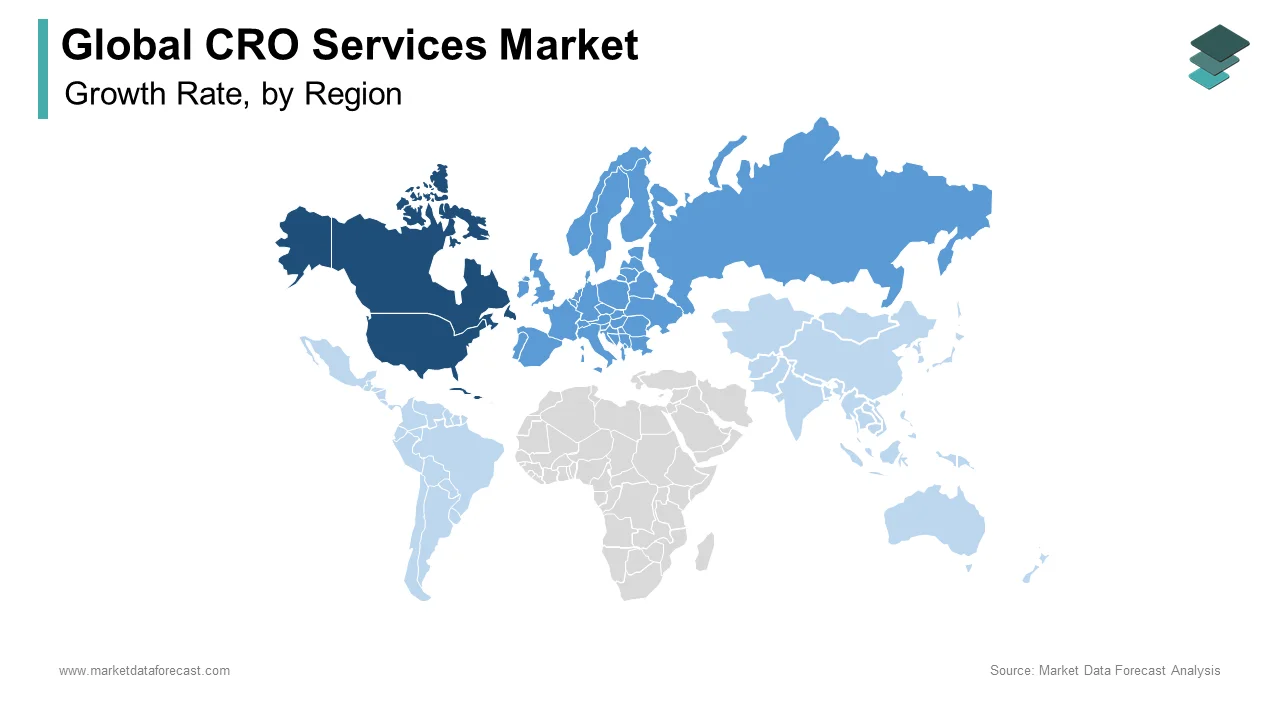
North America held a commanding position in the global CRO services market by securing an estimated 41.5% share in 2025. The region’s position is anchored in the concentration of major pharmaceutical and biotech firms, a well-established regulatory framework, and a robust clinical research infrastructure. The United States alone sponsors a large share of global clinical trials, driven by the presence of the FDA, which remains the most influential regulatory body in drug approval decisions. The country’s National Institutes of Health allocated substantial funds for medical research, fostering a vibrant ecosystem of academic medical centers and contract research networks. Additionally, the U.S. has the highest per capita clinical trial density. The proliferation of decentralized trials, supported by advanced digital health platforms and telemedicine adoption, has further enhanced trial efficiency. States like California, Massachusetts, and North Carolina host innovation clusters with deep integration between biotech firms and CROs. The presence of leading CROs such as IQVIA, Labcorp, and Medpace reinforces operational excellence. Moreover, the Inflation Reduction Act’s emphasis on domestic drug development has incentivized nearshoring of clinical operations. With over 1,200 biopharmaceutical companies headquartered in the U.S., as documented by PhRMA, North America remains the epicenter of high-value, complex outsourcing demand.
Europe CRO Services Market Analysis
Europe maintains a substantial footprint in the CRO services market. The region’s strength lies in its highly skilled workforce, advanced healthcare systems, and strong tradition of academic research, particularly in countries like Germany, the United Kingdom, and Sweden. This harmonization has enhanced the region’s attractiveness for multinational sponsors. Germany leads in trial volume, hosting a significant number of active studies, the highest in Europe. The UK, despite Brexit-related uncertainties, remains a key hub due to its world-class research institutions and the National Institute for Health and Care Research’s annual funding commitment. However, data localization requirements under GDPR pose operational challenges for cross-border data sharing. Nevertheless, CROs like Parexel and Evotec have strengthened their European operational bases to serve both local and global clients. With aging populations driving demand for chronic disease therapies, Europe continues to be a critical market for high-quality, ethically governed clinical research.
Asia-Pacific CRO Services Market Analysis
The Asia-Pacific region is rapidly ascending as a pivotal player in the CRO services market. Countries such as China, India, and South Korea are emerging as preferred destinations for clinical trial execution due to their vast, treatment-naïve patient populations and cost-efficient research environments. Regulatory reforms, including the 2019 revision of China’s Drug Administration Law, have shortened clinical trial approval timelines from 18 months to 60 working days, accelerating study start-up. The region’s cost advantage is significant. Additionally, the rise of domestic biotech firms has created new demand for integrated CRO services. Japan, with its aging population and strong focus on regenerative medicine, has approved several cell therapy trials since 2014. With governments actively investing in research infrastructure and digital health, Asia-Pacific region is poised to become the next frontier of clinical innovation.
Latin America CRO Services Market Analysis
Latin America holds a modest but strategically growing share of the CRO services market. The region’s appeal lies in its diverse genetic pool, high disease burden, and relatively fast patient recruitment rates, particularly in countries like Brazil, Mexico, and Argentina. Brazil leads the region with a notable number of active clinical trials registered, supported by a centralized ethics review system that reduces approval delays. The country’s public healthcare system, Sistema Único de Saúde (SUS), provides access to large, heterogeneous patient populations, enhancing trial representativeness. Mexico has also strengthened its clinical research framework, with the Federal Commission for the Protection against Sanitary Risk (COFEPRIS) reducing average trial approval times to several days. However, infrastructure disparities and regulatory fragmentation across countries pose challenges. Despite this, CROs are expanding regional hubs to capitalize on the demand for cardiovascular, diabetes, and infectious disease studies. With increasing investment in healthcare digitization and clinical training programs, Latin America is evolving into a complementary research hub for North American and European sponsors seeking geographic diversification.
Middle East and Africa CRO Services Market Analysis
The Middle East and Africa collectively represent a small share of the global CRO services market, with growth concentrated in select countries such as the UAE, Saudi Arabia, and South Africa. The region’s clinical research landscape is transforming, driven by government-led healthcare modernization and increasing investment in life sciences. The UAE, particularly Dubai and Abu Dhabi, has positioned itself as a regional clinical trial hub, with the Dubai Health Authority launching a fast-track approval system that reduces trial authorization to 30 days. Saudi Arabia’s Vision 2030 initiative includes a significant funds allocation for healthcare infrastructure, involving the establishment of research parks and biotech incubators. South Africa remains the most mature market in sub-Saharan Africa, with a strong focus on HIV, tuberculosis, and maternal health. The country’s well-established regulatory framework and English-speaking medical community enhance its appeal. However, limited research funding, uneven healthcare access, and ethical oversight gaps in some countries constrain broader expansion. Nonetheless, rising disease prevalence creates long-term potential for CRO engagement in public health-oriented research.
COMPETITIVE LANDSCAPE
The competitive landscape of the CRO services market is characterized by a blend of global giants, regional specialists, and niche technology-driven players vying for strategic positioning in an increasingly complex drug development ecosystem. Incumbent leaders such as IQVIA, Labcorp, and Charles River Laboratories leverage their extensive global networks, regulatory expertise, and integrated service portfolios to maintain dominance, particularly in late-phase clinical trials and real-world evidence generation. However, the rise of agile, full-service Asian CROs like WuXi AppTec and Syneotec has disrupted traditional dynamics, offering cost-effective, end-to-end solutions with rapid turnaround times. Mid-tier CROs are differentiating through therapeutic specialization, particularly in oncology, rare diseases, and CNS disorders, or technological innovation in decentralized trials and AI-powered analytics. The proliferation of virtual biotech firms has further intensified competition, as sponsors demand flexible, scalable, and digitally enabled outsourcing partners. Strategic consolidation is rampant, with frequent mergers and acquisitions aimed at enhancing technological capabilities and geographic reach. At the same time, clients are increasingly favoring single-vendor models to reduce operational fragmentation, pushing CROs to expand service breadth. Regulatory scrutiny and data security concerns add layers of complexity, requiring robust compliance frameworks. As the industry evolves beyond mere service provision toward strategic partnership, competition is shifting from price and scale to innovation, speed, and reliability, redefining the value proposition across the CRO spectrum.
KEY MARKET PLAYERS
The major players operating in the global healthcare advertising market profiled in this report are
- Quintiles Transnational Holdings Inc.
- Laboratory Corporation of America Holdings
- Pharmaceutical Product Development
- PAREXEL International Corporation
- ICON Plc
- PRA Health Sciences Inc.
- InVentiv Health Inc.
- Charles River Laboratories International Inc.
- INC Research Holdings Inc.
- Wuxi PharmaTech
TOP LEADING PLAYERS IN THE MARKET
- IQVIA maintains a dominant presence in the Asia Pacific CRO landscape by integrating advanced analytics with comprehensive clinical research services. The company has significantly expanded its footprint across China, Japan, and India, establishing regional innovation centers focused on real-world evidence and digital trial solutions. In 2023, IQVIA launched an AI-powered patient recruitment platform in Singapore, enhancing trial enrollment efficiency for oncology and rare disease studies. It strengthened its laboratory network in Shanghai and partnered with local biotechs to support accelerated drug development pathways. The company also invested in decentralized trial infrastructure, enabling remote monitoring and e-consent across multiple APAC markets. By leveraging its proprietary data assets and global regulatory expertise, IQVIA has become a preferred partner for both multinational pharmaceutical firms and emerging domestic innovators, driving end-to-end trial execution with localized precision.
- Charles River Laboratories has intensified its engagement in the Asia Pacific region by expanding preclinical and early-phase development capabilities in China, Japan, and South Korea. In 2022, the company opened a state-of-the-art discovery research facility in Shanghai, focusing on oncology and immunology drug screening. It further enhanced its bioanalytical testing capacity in Yokohama to support biologics development. Charles River forged strategic alliances with academic institutions in Australia and Singapore to accelerate translational research. In 2023, it acquired a local pharmacokinetics firm in India to strengthen its IND-enabling study offerings. The company’s integrated model, spanning discovery, safety assessment, and manufacturing suppor,t positions it as a critical enabler for biotech startups navigating complex regulatory landscapes. Its emphasis on scientific excellence and rapid turnaround times has solidified its reputation as a trusted development partner across the region’s evolving life sciences ecosystem.
- WuXi AppTec plays a transformative role in the Asia Pacific CRO market by offering a fully integrated, end-to-end open-access platform for global drug developers. Headquartered in China, the company has built a vast network of R&D and manufacturing facilities across Shanghai, Nanjing, and Suzhou, serving over 5,000 clients worldwide. In 2023, WuXi expanded its clinical research arm by launching a decentralized trial initiative in collaboration with digital health providers across Southeast Asia. It also enhanced its gene therapy testing capabilities in its Tianjin facility to meet rising demand. The company actively supports early-stage biotechs through its “lab-to-market” incubation model, providing outsourced R&D, regulatory consulting, and scale-up support. By promoting global collaboration and maintaining compliance with U.S. FDA and EMA standards, WuXi AppTec has become a pivotal force in bridging regional innovation with international commercialization.
TOP STRATEGIES USED BY KEY MARKET PARTICIPANTS
Key players in the CRO services market are deploying multifaceted strategies to consolidate their competitive advantage and respond to evolving sponsor demands. Vertical integration is a prevalent approach, with leading CROs expanding capabilities across the drug development continuum from discovery and preclinical testing to commercialization support, enabling seamless, end-to-end service delivery. Strategic acquisitions are frequently employed to enhance technological capabilities, particularly in bioanalytics, real-world evidence, and decentralized trial platforms. Companies are investing heavily in artificial intelligence and machine learning to optimize trial design, patient recruitment, and risk-based monitoring, thereby reducing development timelines. Geographic expansion, especially in high-growth Asia Pacific and Latin American markets, allows CROs to access diverse patient populations and cost-efficient operational environments. Partnerships with academic institutions, biotech incubators, and digital health firms are fostering innovation and accelerating early-stage development. Additionally, CROs are adopting modular, flexible pricing models tailored to the needs of small and mid-sized biopharmaceutical firms. Emphasis on regulatory agility, ensuring compliance with FDA, EMA, and NMPA standards, is critical for maintaining global trial credibility. Investment in talent development through specialized training academies addresses the industry-wide shortage of clinical research professionals. Lastly, sustainability initiatives and digital transformation programs are being implemented to improve operational efficiency and data integrity, reinforcing trust among sponsors and regulators alike.
GLOBAL CRO SERVICES MARKET NEWS
- In January 2022, Charles River Laboratories expanded its preclinical research facility in Shanghai, enhancing its capacity for oncology and immunology studies to better serve the growing biotech sector in China.
- In March 2022, IQVIA launched a decentralized clinical trial platform in Singapore, integrating remote monitoring and e-consent tools to accelerate trial execution across Southeast Asia.
- In September 2022, WuXi AppTec acquired a U.S.-based gene therapy testing laboratory, strengthening its global CMC and bioanalytical capabilities for advanced therapeutics.
- In June 2023, Labcorp Drug Development opened a new central laboratory in Mumbai, increasing its sample processing capacity and supporting multinational trials in emerging markets.
- In April 2025, PPD, part of Thermo Fisher Scientific, introduced an AI-driven patient recruitment system in Japan, improving enrollment efficiency for Phase III trials in cardiovascular and metabolic diseases.
MARKET SEGMENTATION
This research report on the global CRO services market has been segmented and sub-segmented based on type, therapeutic area, end-user, and region.
By Type
- Clinical Research Services
- Phase I Clinical Research Services
- Phase II Clinical Research Services
- Phase III Clinical Research Services
- Phase IV Clinical Research Services
- Early-Phase Development Services
- Discovery Studies
- Chemistry, Manufacturing, & Control (CMC)
- Preclinical Services
- Pharmacokinetics/Pharmacodynamics (PK/PD)
- Toxicology Testing Services
- Other Preclinical Services
- Laboratory Services
- Bioanalytical Testing Services
- Analytical Testing Services
- Physical Characterization
- Raw Material Testing
- Batch-Release Testing
- Stability Testing
- Other Analytical Testing Services
- Consulting Services
- Data Management Services
By Therapeutic Area
- Oncology
- CNS
- Cardiovascular
By End User
- Pharmaceutical
- Biopharmaceutical
- Medical Device Companies
By Region
- North America
- Europe
- Asia Pacific
- Latin America
- Middle East and Africa