- Product Description Description
- Table of Contents TOC
- List of Table & Figure LOT
- Get Free Sample PDF Sample PDF
Market Size, 2025
$8.5 BnMarket Estimate, 2026
$9.27 BnMarket Forecast, 2034
$18.61 BnCAGR, 2026–2034
9.1%Global Biopharmaceutical Contract Manufacturing Market Size, Growth, Trends & Forecast (2026–2034)
The size of the global biopharmaceutical contract manufacturing market was valued at USD 8.50 billion in 2025, is anticipated to reach USD 9.27 billion in 2026, and is projected to scale up to USD 18.61 billion by 2034, registering a compound annual growth rate (CAGR) of 9.10% during the forecast period from 2026 to 2034. Driven by the complex nature of biologic drug production, high R&D cost-saving pressures, and the rising adoption of contract manufacturing organizations (CMOs) by major pharma players, the market continues to experience robust worldwide expansion.
Key Executive Metrics (At-a-Glance)
- 2025 Base Valuation: USD 8.50 Billion
- 2026 Current Valuation: USD 9.27 Billion
- 2034 Forecast Valuation: USD 18.61 Billion
- Compound Annual Growth Rate (CAGR): 9.10% (2026–2034)
- Dominant Product Type, Therapeutic Area & Application: Vaccines & Insulin / Oncology & Cardiovascular Diseases / Clinical Application
- Fastest-Growing Application & Region: Commercial Segment / Asia-Pacific (propelled by low operating costs and high biologics demand)
- Dominant Region: North America (leading market share backed by extensive investments in CMO infrastructure and strong IP laws)
Core Market Drivers
- Operational Efficiency & Cost Reduction: Faster production pacing and lower overhead costs compared to establishing proprietary manufacturing facilities.
- Strategic Resource Allocation: Allowing major pharmaceutical companies to divert capital from routine manufacturing toward core research and development (R&D) divisions.
Primary Market Restraints & Challenges
- Technical & Quality Gaps: Lack of specialized experience, resource management challenges, and quality oversight deficits among smaller contract manufacturing participants.
- IP & Security Risks: Vulnerabilities associated with patent sharing, reverse engineering of drug formulas, and inconsistent intellectual property rights across developing regions.
Global Biopharmaceutical Contract Manufacturing Market Segmentation Breakdown
| Segment Category | Leading Sub-Segment (2025 Base) | Fastest-Growing Sub-Segment (2026–2034) |
|---|---|---|
| By Product Type | Vaccines & Insulin (leading due to high global diabetes prevalence and seasonal immunization needs) | Monoclonal Antibodies & Recombinant Proteins (steady uptake via targeted biologics) |
| By Therapeutic Area | Oncology & Cardiovascular Diseases (dominating due to high global mortality and widespread outsourcing) | Infectious & Metabolic Diseases (expanding alongside novel therapeutic pipelines) |
| By Application | Clinical (highest growth share driven by mandatory trial frameworks and FDA compliance validation) | Commercial (growing significantly as enterprises prioritize large-scale revenue generation) |
| By Region | North America (leading market share driven by robust investments, collaborations, and IP frameworks) | Asia-Pacific (promising growth rate propelled by cost-effective outsourcing hubs in China and India) |
Major Industry Players Profiled
Key enterprises shaping the competitive global biopharmaceutical contract manufacturing market include Patheon N.V. (Thermo Fisher Scientific), Rentschler Biotechnologie GmbH, AbbVie Contract Manufacturing, Boehringer Ingelheim GmbH, WuXi Biologics, Lonza Group AG, Fujifilm Diosynth Biotechnologies, Catalent, Inc., and Samsung Biologics Co., Ltd.
Global Biopharmaceutical Contract Manufacturing Market Size
The size of the global biopharmaceutical contract manufacturing market was worth USD 8.50 billion in 2025. The global market is anticipated to grow at a CAGR of 9.10% from 2026 to 2034 and be worth USD 18.61 billion by 2034 from USD 9.27 billion in 2026.

Biopharmaceutical is a complicated field that combines both pharmaceuticals and healthcare requirements. Formulating, getting approvals, and distributing drugs made for human consumption is difficult, as it has many steps. The manufacturing, research and development, clinical trials, FDA approvals, and logistics/retail and marketing are all critical for the success of a biopharmaceutical company. Therefore, the work and management on multiple fronts can get quite complicated; this is where biopharmaceutical companies hire contract manufacturing agencies to do their work. In addition, contract tract manufacturing companies can help clear the strict regulations of drug manufacturing so that the companies can focus on more research and development.
MARKET DRIVERS
The global biopharmaceutical contract manufacturing market is majorly driven by the faster pace of production with contract manufacturing organizations, less cost compared to their own manufacturing facilities, and entry-level pharmaceutical production companies looking for investors. In addition, faster approvals for patent sharing, intellectual property copyright rules, higher demand for the drugs by the people, less production capacity, and others are expected to promote the growth rate of the biopharmaceutical contract manufacturing market. Any big pharma giant cannot manufacture every single drug on its own, so they opt for contractual obligations with small companies to produce drugs by entering into an MOU or by investing in the production. The growing adoption of CMOs by biopharmaceutical manufacturers is one of the significant factors propelling the market growth.
There have been a lot of budding entries in the field of CMOS in recent years. This has allowed critical pharmaceutical manufacturers to independently reduce the burden of manufacturing every new drug. Pharma industries see this as an opportunity to reduce their investments in manufacturing by going for outsourcing to these organizations. Due to this, the amount spent on manufacturing can be diverted to the R&D division for efficient drug inventions. For CMOs, there is an opportunity with the biopharmaceutical contract manufacturing market expansion in the form of Mergers, acquisitions, and joint ventures with big companies. These actions make the CMOS realize the opportunities to make their organizations financially stable and technologically capable.
MARKET RESTRAINTS
There are a few restraints for the global biopharmaceutical contract manufacturing market to expand, as the small companies lack specialized experience in biopharmaceutical manufacturing, abuse of patent sharing details, easy reverse engineering of the drug composition formula, etc., are restraining the market from further expansion. These factors provoke the pharma giants to install their production facilities with huge investments, undermining the efficacy of contract manufacturing organizations (CMOS).
Significant challenges faced by the key market players are the lack of technological capabilities of small companies, the lack of strategic management of resources, and the lack of quality oversight. Due to these factors, many big companies opt for in-house production facilities to manufacture biopharmaceutical products. This poses a threat to the expansion of CMOs for further expansion, the lack. Furthermore, the lack of intellectual property rules in many countries and unbridled patent rights in some countries also challenge the market growth of contract manufacturing organizations.
REPORT COVERAGE
| REPORT METRIC | DETAILS |
| Market Size Available | 2025 to 2034 |
| Base Year | 2025 |
| Forecast Period | 2026 to 2034 |
| Segments Covered | By Product Type, Therapeutic Area, Application, and Region. |
| Various Analyses Covered | Global, Regional and Country-Level Analysis, Segment-Level Analysis, Drivers, Restraints, Opportunities, Challenges; PESTLE Analysis; Porter’s Five Forces Analysis, Competitive Landscape, Analyst Overview of Investment Opportunities |
| Countries Covered | North America, Europe, APAC, Latin America, Middle East & Africa |
| Market Leaders Profiled | Patheon N.V., Rentschler Biotechnologie GmbH, AbbVie Contract Manufacturing (An AbbVie Company), Biomeva GmbH, Boehringer Ingelheim GmbH, WuXi Biologics, Abzena Plc, Lonza Group AG, Probiogen AG, Sandoz International GmbH, Fujifilm Diosynth Biotechnologies, KBI Biopharma, Inc., Cytovance Biologics, Inc., Baxter Biopharma Solutions, Vetter Pharma International GmbH, Catalent, Inc., Samsung Biologics Co., Ltd., and Ajinomoto Althea, Inc. |
SEGMENTAL ANALYSIS
By Product Type Insights
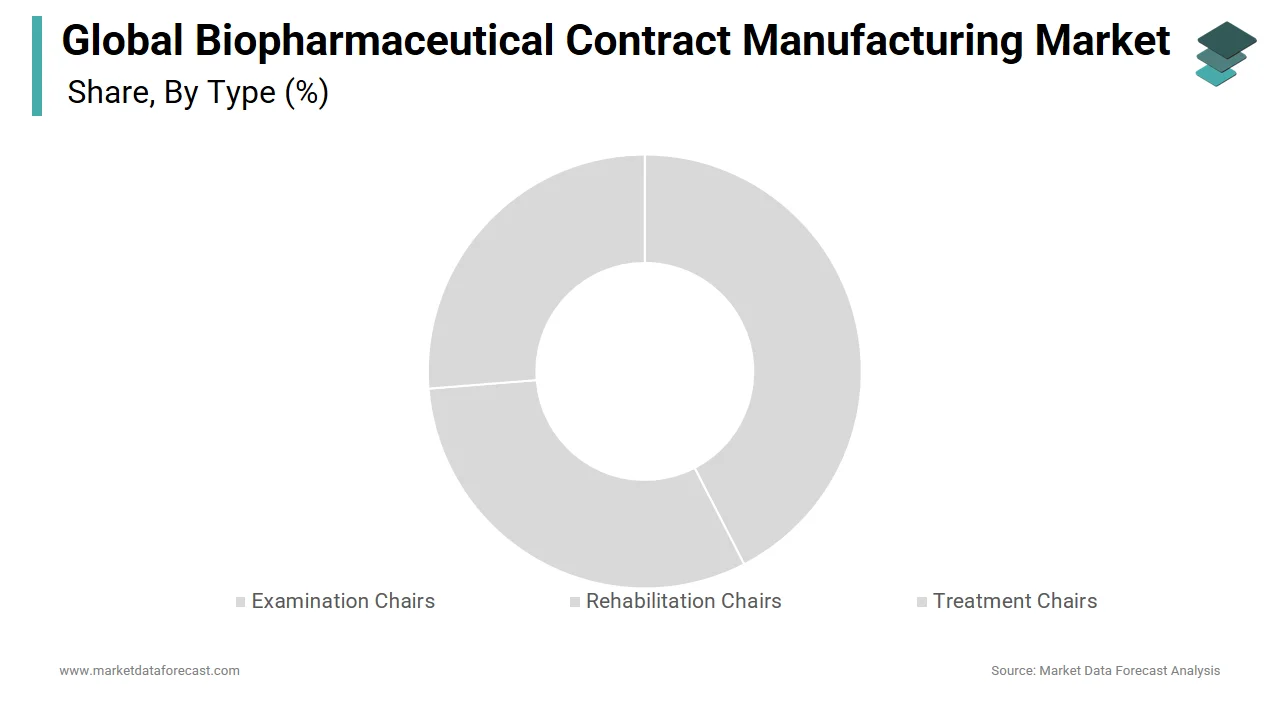
The vaccines and insulin segments lead the way as these are used in inhibiting diabetes and other seasonal flu cases. Diabetes is a rising problem with growing prevalence worldwide. According to WHO statistics, around 422 million people worldwide have diabetes, further promoting the segment. Additionally, the rising spread of infectious diseases is leading to more vaccines. For instance, the COVID-19 pandemic led to rising demand for vaccination against the disease. According to WHO, as of November 2022, 12,959,275,260 vaccine doses have been delivered worldwide.
By Therapeutic Area Insights
Out of all these segments, oncological and cardiovascular disease-related segments lead the market, as many pharma companies outsource their oncological drug production to different companies. Additionally, rising cancer and cardiovascular problems worldwide support the growth of the segments. For instance, according to WHO statistics, nearly 10 million deaths, or nearly one in six deaths, were caused by cancer in 2020, making it the leading cause of death globally. On the other hand, with 17.9 million deaths per year, cardiovascular diseases (CVDs) are the leading cause of death worldwide.
By Application Insights
The clinical application market segment registers the highest growth in biopharmaceutical pharma production based on the application. Clinical trials to produce new drugs are essential to determine their capacity in market potential. These trials also help to clear the FDA guidelines for life-saving drugs. Therefore, the entire investment in the research and development of a drug relies heavily on clinical trial procedures. Therefore, the segment is gaining traction because of its importance.
However, the commercial segment is also expected to show significant growth during the forecast period due to the heavy emphasis on earning revenue from pharma companies. In addition, commercial contract manufacturing companies help large enterprises properly invest and distribute their revenues to earn more profits, driving the segment.
REGIONAL ANALYSIS

Geographically, the North American biopharmaceutical contract manufacturing market is the leading market for the contract manufacturing of biopharmaceutical products. This can be attributed to the large-scale investments in CMOS and better intellectual property rights-related laws. The North American region takes over the global market primarily based on market collaborations and agreements, as key business strategies lead to growth and expansion worldwide. Such large organizations also buy small-scale biopharmaceutical companies in the Asia Pacific to reinforce their market presence. The Oncology area is witnessing significant growth owing to an increase in cancer-related diseases. The market has also observed growth in R&D and a surge in innovative developments in manufacturing.
The biopharmaceutical contract manufacturing market in Europe had a considerable share of the global market in 2023 and is anticipated to hold a substantial share of the global market during the forecast period.
The APAC biopharmaceutical contract manufacturing market is expected to showcase a promising growth rate with countries such as China, India, Japan, Korea, etc., due to Low operating and manufacturing costs, a desirable location for outsourcing, increasing demand for biologics, partnerships with regional and international organizations, increased consolidation, and the presence of pharma and biopharma companies are all positive factors supporting the growth of the market in the region.
KEY MARKET PARTICIPANTS
Some of the companies that are playing a dominating role in the global biopharmaceutical contract manufacturing market include
- Patheon N.V.
- Rentschler Biotechnologie GmbH
- AbbVie Contract Manufacturing
- Biomeva GmbH
- Boehringer Ingelheim GmbH
- WuXi Biologics
- Abzena Plc
- Lonza Group AG
- Probiogen AG
- Sandoz International GmbH
- Fujifilm Diosynth Biotechnologies
- KBI Biopharma, Inc.
- Cytovance Biologics, Inc.
- Baxter Biopharma Solutions
- Vetter Pharma International GmbH
- Catalent, Inc.
- Samsung Biologics Co., Ltd.
- Ajinomoto Althea, Inc.
GLOBAL BIOPHARMACEUTICAL CONTRACT MANUFACTURING MARKET NEWS
- In November 2022, AstraZeneca agreed to sell its West Chester, Ohio, facility to busy biomanufacturing startup National Resilience. In conjunction with the sale, the pharmaceutical companies reached a "long-term" biomanufacturing agreement, as part of which Resilience will continue to produce "selected AstraZeneca medicines."
- In November 2022, A 15-million-euro ($14.6 million) facility expansion for ReiThera, an Italian biotech and contract manufacturing company, was opened with a focus on large-scale viral vectors for vaccines and gene therapies. According to a November 3 company release, the debut came after operational approval from the Italian Medicines Agency.
- In November 2022, after learning that Fosun Pharma would try to sell off its $3.8 billion company, Gland, the Indian pharmaceutical company, went to the Bombay Stock Exchange to react. Bloomberg News was the first to disclose that Chinese company Fosun consulted an adviser to assess interest in its majority position in Gland. This M&A shock led to a rise in Gland Pharma's shares early on Tuesday. Industry players and buyout firms are evaluating Gland's business, according to people familiar with the situation who spoke with Bloomberg.
- In November 2022, two prominent contract manufacturers from Europe are joining the action amid a wave of CEO changes in the biopharma industry. After seven years as the head of the German CDMO, Frank Mathias, Ph.D., announced Monday that he would be leaving Rentschler.
MARKET SEGMENTATION
This research report on the global biopharmaceutical contract manufacturing market has been segmented and sub-segmented into the following categories.
By Product Type
- Insulin
- Monoclonal Antibodies
- Growth Factors
- Interferons
- Recombinant Proteins
- Vaccines
- Others
By Therapeutic Area
- Infectious Disease
- Cardiovascular Disease
- Oncology
- Metabolic Disease
- Respiratory Disorder
- Autoimmune Disease
- Neurology
- Ophthalmology
- Others
By Application
- Clinical
- Commercial
By Region
- North America
- Europe
- Asia Pacific
- Latin America
- The Middle East and Africa